How to Visit the Black Desert from Cairo: Route & Safari Options
Last reviewed: 7 September 2026
To visit Egypt's Black Desert from Cairo, travel southwest by road to Bahariya Oasis, complete the local guide and permit arrangements, and continue from the oasis in a suitable 4×4 with a licensed desert team. Bahariya—particularly Bawiti—is the practical gateway. The Black Desert is not a separate stop that most travelers reach directly from Cairo by public transport, and a normal rental car does not replace the guided off-road stage.
The Egyptian Tourism Authority places Bahariya about 370 km southwest of Cairo and describes it as the closest Western Desert oasis to the capital. It estimates the Cairo–Bahariya journey at approximately five hours, while Elzaghandi Travel's active itineraries allow roughly four to five hours. Treat both as planning estimates, not promises: pickup location, Cairo traffic, rest stops, checkpoints, weather, road conditions and the vehicle can all change the actual time.
For most first-time visitors, the best route is a two-day, one-night trip that combines the Black Desert with El Heiz, Crystal Mountain, Agabat and a White Desert camp. A three-day itinerary is better if you want a hotel night in Bahariya, a slower pace, more oasis time or two desert nights. A shorter Black Desert outing makes more sense when you are already staying in Bahariya.
Bahariya is more than a fuel stop. It is where the road transfer, local desert team, vehicle, supplies and route normally come together.
Black Desert from Cairo: quick planning facts
| Planning point | Practical answer |
|---|---|
| Main gateway | Bahariya Oasis, especially Bawiti |
| Cairo to Bahariya | About 5 hours is the official tourism estimate; allow extra time for traffic, stops and checkpoints |
| Desert vehicle | Change to a locally operated 4×4 in Bahariya |
| Guide and permits | Arrange in advance through an official guide or authorized operator |
| Best first-time format | 2 days / 1 night combining the Black Desert with the White Desert circuit |
| More relaxed option | 3 days / 2 nights with either a Bahariya hotel night or extra desert time |
| Day trip | More practical from Bahariya than from Cairo |
| Self-drive | Do not use a normal rental car for the off-road safari section |
How to visit Black Desert Egypt from Cairo: the three-stage route
The route is best understood as three separate transport stages rather than one continuous “Black Desert transfer.”
Stage 1: Cairo or Giza to Bahariya Oasis
Your first vehicle covers the paved road southwest from the Cairo–Giza area to Bahariya. A private trip commonly starts with an early hotel or residence pickup, but the exact time must be written into your confirmation. Airport pickup, New Cairo, central Cairo, Giza and locations beyond the normal pickup zone can produce different travel times.
Bahariya is a groundwater-fed depression with settlements, farms, date palms and olive groves. NASA's Bahariya Oasis overview identifies Bawiti as the main town and describes the oasis as roughly 380 km southwest of Cairo. The official Experience Egypt page for Al-Bahariyya gives 370 km and calls it the closest Western Desert oasis to the capital.
The small difference between those figures is not important for a traveler. The important point is that this is a substantial intercity road journey before the desert safari begins. Read the dedicated Cairo to Bahariya Oasis transport guide for pickup choices, private transfers and arrival planning.
Stage 2: Bahariya arrival and operational handover
In or near Bawiti, the road stage becomes a local desert operation. Depending on the confirmed itinerary, this may include:
- meeting the local guide and driver;
- checking traveler names and documents;
- confirming current permissions and checkpoints;
- changing from the Cairo transfer vehicle to a 4×4;
- loading water, food and camping equipment;
- securing luggage that will continue into the desert;
- leaving unnecessary suitcases at an agreed secure location;
- eating lunch before the safari;
- reviewing health, mobility, dietary and emergency information;
- confirming the active route and camp sector.
This handover is why booking two unrelated pieces at the last minute can fail. A cheap ride to Bahariya is not a complete Black Desert plan. If the local team has not received your passport details, group information and requested route early enough, arrival in the oasis does not guarantee immediate desert access.
Stage 3: Bahariya to the Black Desert by local safari vehicle
The Black Desert lies south of the oasis on the broader route toward Farafra. A peer-reviewed geoheritage study of Bahariya and Farafra places the familiar landscape roughly 50 km southwest of Bawiti. This is a geographic research figure, not a promised door-to-viewpoint driving distance: the usable route, stops and access point depend on current conditions and permissions.
The guided circuit may use paved and unpaved sections. The team chooses a suitable stopping place, explains where walking is permitted and controls timing so the itinerary can continue safely. It may be possible to enjoy a panorama close to the vehicle; climbing a hill is optional and should never be assumed.
Use the Black Desert Egypt Travel Guide for the landscape, walking, geology, photography and conservation details. This article focuses on how the Cairo journey works.
What does the Black Desert look like?
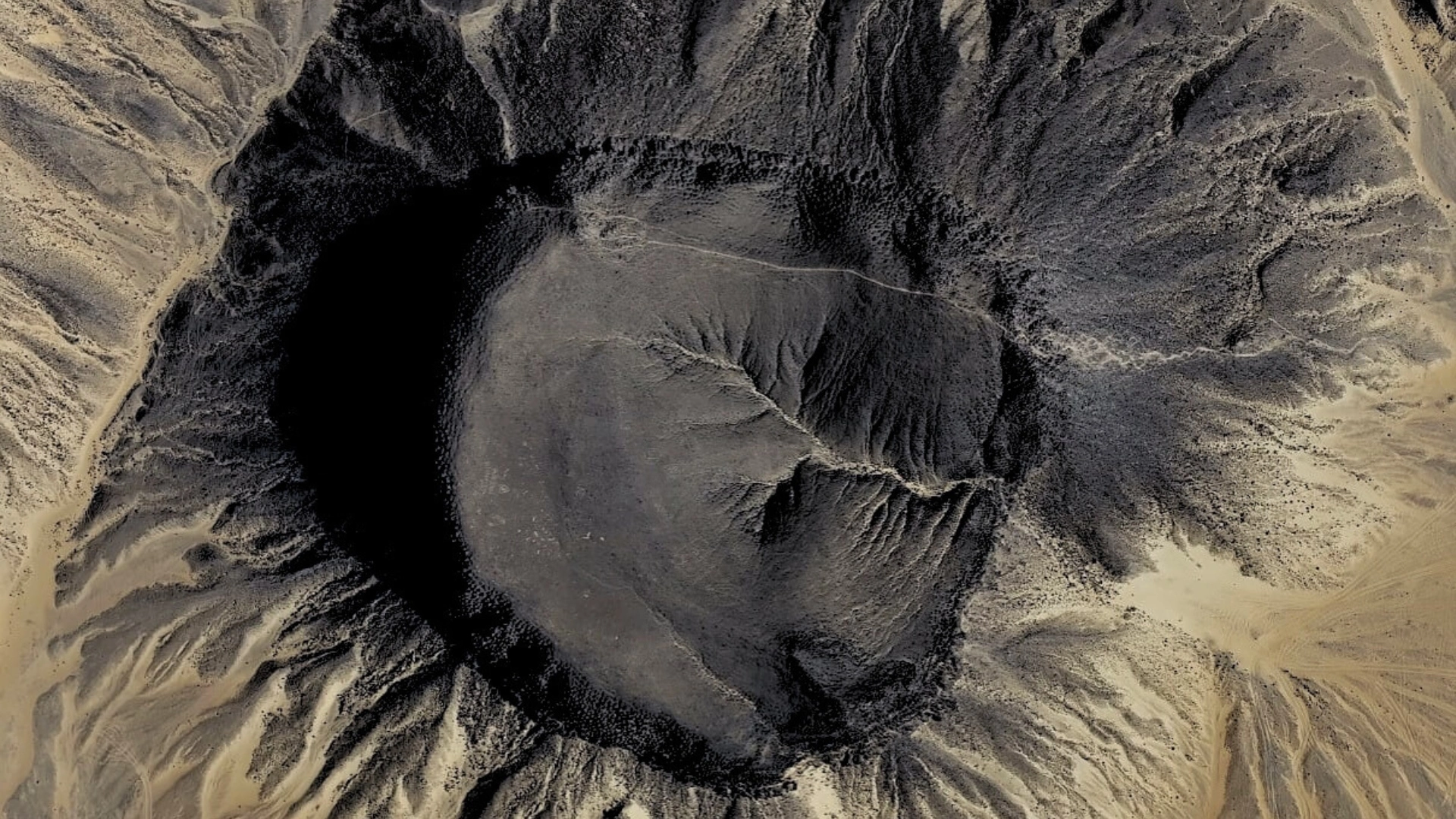
The Black Desert is not a continuous plain of black sand. It is a pale desert interrupted by dark conical hills, mesas, buttes, rusty slopes and sheets of black gravel or rock fragments. The contrast changes with distance and light.
The peer-reviewed study describes ferruginous sandstone and shale in the Bahariya Formation weathering into the recognizable hills, with basaltic caps on many examples. Dark igneous material exists in the region, but “every hill is a volcano” is too simple. Cone shape alone does not classify a landform.
The landscape is best appreciated through:
- a wide view showing dark hills separated by open ground;
- a short guided walk on a suitable surface;
- close observation of black, brown, red and ochre fragments;
- low-angle morning or afternoon light;
- a comparison with the pale White Desert later in the route;
- a local explanation of which areas are protected or unsuitable for climbing.
For a deeper introduction to the landscape itself, use the published Black Desert Egypt Travel Guide. For the full combined journey, see the White Desert Egypt Travel Guide.
A licensed local team chooses a current stopping point. Do not create a new track or climb a fragile slope simply to reproduce a photograph.
Can you visit the Black Desert on a day trip from Cairo?
The phrase “Black Desert day trip” can mean two very different products.
A day outing from Bahariya
If you sleep in Bawiti or elsewhere in Bahariya, a shorter daytime excursion can be realistic. You have already completed the long Cairo transfer, so the local team can focus on the Black Desert and nearby stops. This format can suit travelers who:
- do not want to camp;
- need a hotel bathroom and bed;
- have already included Bahariya in a longer Egypt itinerary;
- want a lower-intensity desert introduction;
- cannot manage a full southbound White Desert circuit;
- need to return to the oasis before dark.
The exact duration, route and included stops still require confirmation. “Half day” is not a universal product specification.
A same-day Cairo–Black Desert–Cairo journey
A same-day return starts with a major road transfer, requires local coordination and vehicle handover, adds the desert stage, then repeats the road transfer to Cairo. Even when physically possible, it can leave little time for the landscape and produces a very long day.
The main problems are:
- Cairo traffic can consume the margin at either end;
- a late oasis arrival compresses the safari;
- meals, toilets and rest stops still take time;
- checkpoints or document checks cannot be skipped;
- the return may extend after dark;
- road fatigue increases;
- there is no room for a weather or vehicle contingency;
- you miss the White Desert sunset and overnight experience;
- the result may cost nearly as much operationally as a better-paced overnight.
For those reasons, Elzaghandi Travel's active Black Desert route is integrated into two-day and three-day Western Desert itineraries rather than presented as a rushed Cairo day tour.
Is a two-day trip enough?
Yes, two days and one night is the minimum format that makes sense for most Cairo-based first-time visitors who want both the Black and White Deserts.
The active 2 Days / 1 Night White Desert Adventure currently follows this structure:
- early pickup from Cairo or Giza;
- road transfer to Bahariya Oasis;
- change to a 4×4;
- Black Desert stop;
- El Hez or El Heiz for lunch beside a natural spring;
- Crystal Mountain;
- Agabat Valley and Moon Cave, subject to the active route;
- White Desert formations and Valley of Tents;
- sunset and an overnight desert camp;
- breakfast and additional White Desert formations;
- return through Bahariya to Cairo or Giza.
The live tour page lists the Cairo/Giza transfer, 4×4 safari, meals, drinks, desert permits, national-park entrance tickets and camping equipment among the inclusions. Reconfirm every inclusion for your date; a web page is not a substitute for your written booking confirmation.
Two days work because the first day continues south instead of returning to Cairo after the Black Desert. The overnight converts a long transport day into a coherent route.
See the 2-Day White Desert Egypt Itinerary from Cairo for an hour-by-hour planning framework and the points that must remain flexible.
When is three days better?
Three days are better when pace, comfort or depth matters more than minimizing time.
Three days with one Bahariya hotel night
The active 3 Days / 2 Nights Bahariya Oasis & White Desert Adventure currently combines:
- day one in Bahariya, including an oasis hotel night;
- oasis stops such as Zawya Mosque, El Beshmo, Salt Lake, dunes, Pyramid Mountain, a natural hot spring and English Mountain;
- day two through the Black Desert, El Heiz, Crystal Mountain, Agabat and the White Desert;
- one White Desert camp;
- day three formation visits and return to Cairo or Giza.
This format is useful if you want to understand the inhabited oasis instead of treating it only as a vehicle depot. It also gives children, older travelers and anyone arriving after a tiring flight a more gradual transition.
Explore the gateway in the Bahariya Oasis Egypt Travel Guide and review where to stay before a desert tour.
Three days with two desert nights
The active 3 Days / 2 Nights White Desert Adventure currently uses two camp nights and a deeper sequence. Its published route includes the Black Desert, El Hez, Crystal Mountain, an off-road route in the Agabat area, Arch Rock, Karawen dunes, petrified-tree area, Magic Spring, the Waves Area and White Desert formations. The second camp may be in the White or Black Desert according to the confirmed option and permissions.
This is the better fit for travelers who want more desert time than oasis time. It is not automatically more comfortable: two nights of camping, more off-road movement and limited facilities require realistic expectations.
Use 2-Day vs 3-Day White Desert Tour to compare pace and sleeping arrangements rather than choosing only by price.
Safari options compared
| Option | Best for | Main trade-off |
|---|---|---|
| Bahariya-based day outing | Travelers already staying in the oasis who do not want to camp | Does not deliver the full Black Desert–White Desert overnight circuit |
| 2 days / 1 night from Cairo | First-time visitors with limited time | Compact pace and one long first day |
| 3 days / 2 nights with Bahariya hotel | Families, older travelers and anyone wanting oasis time | Less total camping time |
| 3 days / 2 nights with two camps | Travelers prioritizing deeper desert time and photography | More off-road travel and more basic overnight conditions |
The combined route after the Black Desert
Most Cairo-based visitors continue south rather than turning back immediately.
El Heiz or El Hez
El Heiz is commonly used as a meal and spring stop. The exact restaurant, pool, privacy, water condition and swimming arrangement should be checked for the day. A spring visit is not a medical treatment, and swimming is optional.
If springs are important to you, read the Bahariya Oasis Hot Springs Guide and ask whether your itinerary uses an oasis spring or the El Heiz route stop.
Crystal Mountain
Crystal Mountain is a geological landmark rather than a mine where visitors should collect souvenirs. Access may be close to the road, but surfaces are uneven and crystals and rock must remain in place. The planned Crystal Mountain Egypt Travel Guide explains the collapsed structure, mineral material and responsible visit.
Agabat Valley
Agabat introduces pale cliffs, dune corridors and off-road terrain before the White Desert. Route labels vary among operators, so ask what “Agabat,” “Moon Cave” or a named cave means in your exact itinerary. Until the dedicated Agabat guide is published, use the White Desert Egypt Travel Guide for the wider route context.
White Desert
The White Desert normally receives the longest stop because sunset, the camp, stars, sunrise and formation walks happen there. Use the complete White Desert Egypt guide for the protected landscape, and How to Get to the White Desert from Cairo for the broader transfer.
Transport options from Cairo
Private transfer arranged with the safari
This is the simplest option because one company is responsible for:
- pickup details;
- the road vehicle;
- contact between Cairo driver and Bahariya team;
- the local guide and 4×4;
- permit information;
- meals and equipment;
- the return journey;
- handling delays or changes.
It is not automatically a private safari unless the written quote says so. Confirm whether the transfer and desert vehicle are private, shared or mixed.
Bus or shared road transport to Bahariya
Road transport to Bahariya may suit independent travelers who want to start the safari in the oasis. The official Egyptian tourism site notes that tour companies offer bus rides to and from Bahariya, but schedules, pickup points, luggage rules and availability can change.
Before choosing this structure, obtain written answers to four questions:
- Where exactly will the road transport drop you?
- Who will meet you in Bahariya?
- Has the local operator already processed the required information?
- What happens if the bus arrives late?
A ticket to Bahariya is not a ticket into the Black Desert. Do not arrive and assume a compliant 4×4, official guide and permit can be improvised immediately.
Rental car to Bahariya
Renting a car for the paved road is a different decision from driving into the desert. The Egyptian Tourism Authority suggests renting a car with a driver through a hotel or licensed agent as one way to reach Bahariya. The U.S. State Department warns that Egyptian roads present serious hazards and suggests considering a hired driver.
If you rent:
- verify that the contract allows the destination and road;
- confirm insurance coverage outside Cairo;
- do not take a standard car onto unapproved desert tracks;
- avoid treating a navigation app as an off-road safety plan;
- arrange secure parking or vehicle custody in Bahariya;
- confirm where you meet the licensed local team;
- allow for fuel, tires and breakdown support;
- avoid night driving if conditions or experience make it unsafe.
This option rarely saves enough operational complexity for a first visit.
Taxi or hired driver only
A hired driver can cover the paved road if the vehicle, licensing, insurance and return plan are suitable. The driver may wait in Bahariya or return later, but that must be agreed. A Cairo taxi driver should not be expected to become the desert guide.
Starting in Bahariya
Starting in Bahariya is efficient when you have already booked a hotel or arrived as part of a longer oasis trip. It allows:
- a morning rather than midday safari start;
- a shorter Black Desert-only outing;
- more time for oasis sites;
- a hotel night before or after camping;
- less pressure from Cairo traffic;
- a customized return to the oasis.
The tradeoff is coordination. You are responsible for reaching the exact meeting place and preserving enough time for checks, lunch and loading.
Do you need a guide, permit and 4×4?
Plan on all three.
The official Experience Egypt natural-wonders guidance recommends an experienced licensed guide with a 4×4 for excursions outside Bahariya and tells travelers to check permits, transport and logistics with an authorized operator.
Current UK FCDO regional advice for Egypt says tourists entering Bahariya, Farafra, the White Desert and Black Desert must apply for permits in advance and use an official guide. It also warns of limited phone reception and poor medical facilities.
Do not reduce this to “the guide knows the way.” The licensed operation also coordinates:
- traveler documentation;
- current access information;
- security and park requirements;
- an appropriate vehicle and driver;
- legal or operational checkpoints;
- route changes;
- camp authorization where relevant;
- local support;
- water, food and emergency planning.
Permit requirements, processing time and the exact documents can change. Send clear passport copies and requested information only through the agreed secure process, and ask when the operator needs them. Do not publish passport images in a group chat or send them to an unverified social-media account.
UK and U.S. travel advice are not identical
Travel advice depends on nationality, government assessment and date. It should be checked again shortly before departure.
As reviewed on 7 September 2026:
- the UK FCDO lists the Black Desert, White Desert and oasis towns including Bahariya among exceptions to its wider “all but essential travel” Western Desert area, while requiring advance permits and an official guide;
- the FCDO separately advises against all but essential travel on the Al Bawiti–Siwa road and says it is closed; that warning must not be confused with the normal southbound route toward the Black and White Deserts;
- the U.S. State Department advises avoiding Western Desert travel unless with a professionally licensed tour company and specifically says travelers should visit the Black and White Deserts only with a licensed company;
- the U.S. advice warns that emergency and intensive-care facilities may be unavailable in remote areas;
- both approaches support professional planning, but their geographic categories and wording differ.
Follow the advice issued for your own nationality and make sure your insurer covers the itinerary in light of that advice. A tour company's willingness to operate is not proof of insurance coverage.
Read Is the White Desert Egypt Safe? for a fuller comparison of permits, route decisions, communications and medical limits.
What happens at checkpoints?
Checkpoints are an operational part of travel in Egypt. The route, passenger names, documents or vehicle may be checked. Travelers should:
- carry the passport used for the booking;
- keep visa and insurance details accessible;
- follow the guide's instructions;
- avoid photographing police, military positions or sensitive infrastructure;
- allow time rather than demanding that the driver rush;
- expect that access can be delayed or changed;
- keep copies of key documents separate from the originals.
Do not ask for a guaranteed checkpoint duration. Officials determine the process on the day.
How long does the full journey take?
Use a time range and route sequence, not one headline number.
Cairo to Bahariya
The official tourism estimate is approximately five hours. Elzaghandi's current itineraries state around four to five hours. A responsible plan adds margin for:
- pickup from different parts of Cairo or Giza;
- morning traffic;
- a comfort stop;
- road works or reduced visibility;
- checkpoint procedures;
- group delays;
- weather and rare rain;
- vehicle issues.
Bahariya handover
Lunch, document coordination, luggage transfer and changing vehicles take real time. A fast handover is possible only when the operation is prepared.
Bahariya to the Black Desert and onward
The driving time depends on the chosen stop and whether the trip returns to Bahariya or continues through El Heiz, Crystal Mountain and Agabat. Off-road time should not be calculated from a normal road-navigation app.
Return to Cairo
The two-day tour page gives a target Cairo/Giza arrival around late afternoon or early evening, but this is an estimate. Do not book a same-evening international flight, fixed cruise departure or non-refundable train with a narrow connection.
What should be in a written quote?
A useful quote is more than a total price. Ask for:
- trip dates and number of days;
- number and ages of travelers;
- private or shared status;
- exact Cairo/Giza pickup zone;
- road-transfer vehicle type;
- local 4×4 arrangement and seating;
- licensed guide and language;
- Black Desert stop description;
- other named stops;
- hotel name and room basis if included;
- number of camp nights;
- enclosed tent or open sleeping setup;
- mattress, sleeping bag and blanket;
- toilet arrangement;
- meals and drinks;
- dietary accommodations;
- desert permits and protected-area fees;
- luggage plan;
- return location and estimated window;
- cancellation and weather policy;
- payment schedule and accepted method;
- emergency contact;
- exclusions and optional costs.
If the offer says “all included,” ask for the list anyway.
What changes the price?
There is no honest universal Black Desert-from-Cairo price. The quote can change with:
- private versus shared transport;
- one traveler versus a larger group;
- pickup location;
- two versus three days;
- hotel night versus extra camp night;
- number of 4×4 vehicles;
- guide language or specialist guide;
- camp equipment and privacy;
- route length and fuel;
- permit and entrance requirements;
- meals and dietary needs;
- child seating needs;
- single-room supplements;
- seasonal demand;
- last-minute processing;
- custom photography or slower pace.
A suspiciously low online placeholder is not a reliable price. Elzaghandi's site uses a request-a-quote process; send the travel details on WhatsApp and ask for a written, itemized response. The White Desert tour cost guide explains how to compare quotes without inventing a fixed rate.
How to choose a safari operator
Ask operational questions that reveal how the trip is actually run.
Licensing and route
- Is the tour company professionally licensed?
- Who is the official guide?
- Who arranges the permits?
- What passport details are required and by what deadline?
- Which route is currently authorized?
- Where is the planned camp sector?
Vehicles
- What vehicle covers Cairo–Bahariya?
- Where does the change to the 4×4 occur?
- How many passengers will be in each vehicle?
- Are seat belts present and usable?
- Is a child restraint possible?
- How is luggage secured?
- What is the breakdown and spare-tire plan?
Camp and food
- Is the camp private to the group or near others?
- Is sleeping enclosed, open-air or optional?
- What bedding is supplied?
- How is the toilet screened?
- Is there handwashing water?
- How are allergies managed?
- What drinking water is carried?
- What is the wind or rain contingency?
Communication and emergencies
- Who is the Cairo contact?
- Who is the Bahariya contact?
- What communication works when signal is absent?
- What happens if access closes?
- Where is the nearest realistic medical help?
- Does the route require evacuation-capable insurance?
Clear answers matter more than dramatic marketing language.
Luggage: what goes into the 4×4?
Large hard-shell suitcases are awkward in a loaded safari vehicle. For a two-day trip, carry a soft overnight bag or daypack containing:
- passport and protected document pouch;
- prescribed medicine;
- one warm layer;
- lightweight daytime clothing;
- closed shoes;
- sun hat and sunglasses;
- high-protection sunscreen;
- lip balm;
- personal toiletries;
- tissues and waste bags;
- power bank and cable;
- headlamp;
- camera and spare battery;
- motion-sickness supplies if needed;
- reusable water bottle if practical;
- small cash reserve.
Agree in writing where the main suitcase will remain and when you will recover it. Never leave valuables or medication in a bag that may be inaccessible overnight.
The White Desert packing checklist covers seasonal clothing, batteries, hygiene and camp comfort in detail.
Toilets, food and water
On the Cairo–Bahariya road
A comfort stop may be possible, but facility quality varies. Carry tissues, sanitizer and small change. Tell the driver early if a child, older traveler, pregnancy or medical condition requires more frequent stops.
In Bahariya
Lunch is often served before the safari. This is the best time to use a conventional bathroom, refill accessible items and discuss dietary needs.
In the desert
There may be no permanent toilet building. A camp may provide a screened portable arrangement or a privacy area, depending on the confirmed setup and current environmental rules. Ask specifically; “camping equipment” does not explain the toilet.
Meals are normally simple and freshly prepared. Declare allergies, celiac disease, vegetarian requirements, diabetes or other restrictions before the quote is finalized. Cross-contact cannot be ruled out merely because a dish appears suitable.
Carry and drink water regularly, but do not use a generic internet formula as a medical prescription. Needs vary with temperature, exertion, age and health. The CDC's Egypt traveler page provides current destination health information.
Phone signal, electricity and payment
Signal can weaken or disappear outside the oasis. The FCDO explicitly notes limited reception in these Western Desert areas.
Plan accordingly:
- download essential documents before departure;
- send the itinerary and operator contact to someone at home;
- do not promise continuous live location;
- switch unnecessary apps to offline mode;
- carry a charged power bank;
- protect batteries from heat and cold;
- ask whether the vehicle has charging;
- keep cash for incidental local needs;
- do not depend on card terminals in remote areas.
A lack of signal is not an attraction to romanticize. It changes emergency planning.
Road comfort and motion sickness
The trip combines hours of paved road with uneven 4×4 movement. Travelers prone to nausea should plan before departure. The CDC's motion-sickness guidance explains why visual and inner-ear signals can conflict and recommends discussing prevention or treatment with a healthcare professional.
Practical measures include:
- sit where motion is easiest to tolerate if seating allows;
- look toward a stable distant point;
- avoid reading on rough sections;
- eat a light, familiar breakfast;
- keep water and a sickness bag accessible;
- tell the driver early rather than waiting;
- check medicine side effects, especially drowsiness;
- never medicate a child without appropriate professional guidance.
If a drug makes you sleepy, account for its effect during walking, heat and camp activities.
Families with children
There is no universal minimum age that makes every child suitable. The real questions are:
- Can the child manage the long road transfer?
- Is an appropriate child restraint available?
- How do they handle bumpy motion?
- Can meals be adapted?
- Can they sleep with basic camp facilities?
- Will they follow instructions around slopes, vehicles, fire and fragile rock?
- Is the weather appropriate?
- Can the itinerary slow down without affecting other guests?
A private three-day oasis-and-desert trip is often easier than a compressed shared two-day trip. One hotel night provides a bathroom, bed and recovery time before the camp.
Read White Desert Egypt with Kids and disclose children's exact ages, heights and restraint needs before accepting the vehicle plan.
Older travelers, mobility and accessibility
The Black Desert can sometimes be viewed from close to a vehicle, which makes it more adaptable than an itinerary built around climbing. However, “4×4 accessible” does not mean wheelchair accessible.
Potential barriers include:
- a high vehicle step;
- narrow doors;
- uneven gravel;
- no paved path;
- sand;
- basic or unscreened toilet arrangements;
- long periods seated;
- limited shade;
- remote medical care;
- getting onto a low mattress;
- cold or windy nights.
Ask for photographs and measurements of the actual vehicle, hotel room and camp setup. A customized Bahariya hotel base with a shorter Black Desert viewpoint may be better than a full camp circuit.
Do not hide heart, respiratory, mobility or medication issues from the operator. The purpose is not to exclude you; it is to avoid a route that cannot meet your needs.
Best time to travel
The cooler months are generally more comfortable for long drives, walking and camping, but “best” depends on your tolerance and priorities.
Autumn and spring
These periods can offer comfortable daytime conditions, yet afternoons may still be warm and nights cool. Wind and dust remain possible.
Winter
Daylight can be pleasant, but the temperature can fall sharply after sunset. Camp bedding must be confirmed, and a warm layer, hat and socks are useful.
Summer
High daytime heat can make exposed stops and vehicle problems more serious. The route may need shorter walks, more water, more shade planning and different timing. Travelers with health conditions should seek appropriate advice.
Rare rain, fog or sandstorm
Weather can delay the road, reduce visibility or change off-road access. A responsible operator may alter a stop or camp. Flexibility is part of safe planning, not a failure to deliver.
Use Best Time to Visit the White Desert Egypt for month-by-month planning that also applies to the combined Black Desert route.
Camping after the Black Desert
A White Desert camp is typically temporary and basic. Do not expect a permanent lodge unless the quote names one.
Confirm:
- approved location;
- tent style and occupancy;
- whether open-air sleeping is optional;
- mattress and insulation;
- sleeping bag or blanket;
- wind protection;
- toilet privacy;
- no-shower expectation;
- dinner and breakfast;
- drinking water;
- handwashing;
- lighting;
- charging;
- campfire controls;
- waste removal;
- emergency vehicle readiness.
A combined itinerary normally uses the Black Desert as an earlier daytime stop and the White Desert as the overnight focus. The authorized camp sector must be confirmed for the date.
Read the White Desert Egypt Camping Guide before deciding whether the overnight suits you.
Safety and medical planning
This is remote travel. No operator can guarantee that an accident, illness, route closure or security event will not occur.
Before departure:
- check your government's latest Egypt advice;
- verify insurance, including remote activities and evacuation;
- complete destination-specific health planning;
- bring sufficient prescribed medicine in original packaging;
- carry a basic personal first-aid kit;
- tell the operator about serious allergies and conditions;
- protect yourself from sun, cold and dust;
- wear stable footwear;
- keep the guide informed if you feel unwell;
- avoid unnecessary hill climbing;
- maintain distance from moving vehicles;
- do not wander away from camp.
The U.S. State Department warns that emergency and intensive care can be limited or unavailable in remote Egyptian areas. Ask where the team would go for realistic care and how long evacuation could take. Do not publish a fictional response time.
Photography and drones
The Black Desert is well suited to wide landscapes and compressed views of distant hills. A phone or normal camera is enough; the main variables are timing, dust and battery management.
If night images are a priority, use the White Desert Stargazing and Photography Guide to plan moon phase, batteries, light discipline and realistic camp photography.
Do not:
- photograph checkpoints, military facilities or sensitive infrastructure;
- climb a restricted hill for a higher angle;
- move stones into a composition;
- collect rock or fossil material;
- drive off-route for an isolated frame;
- fly a drone without all required approvals.
Egypt's Ministry of Civil Aviation publishes a formal unmanned-aircraft flight permit service. Aviation permission is not automatically the only approval that may apply; security and protected-area rules can also matter. Ask well in advance, and leave the drone at home if the complete permission chain is not confirmed in writing.
Responsible travel in a protected landscape
Egypt's State Information Service says the Bahariya Oasis Reserve includes the Black Desert. Protected status means the visitor experience depends on restraint.
- Follow existing authorized tracks.
- Park only where the guide allows.
- Leave rocks, minerals and fossils in place.
- Do not scratch names into stone.
- Keep food waste controlled.
- Pack out plastic, tissues and hygiene products.
- Use the agreed toilet system.
- Do not feed wildlife.
- Keep sound and lights modest near camp.
- Avoid removing plants or dead wood.
- Accept route changes made for conservation.
A photograph is replaceable; a damaged geological feature is not.
Common planning mistakes
Mistake 1: booking only a ride to Bahariya
Reaching the oasis is only stage one. The desert team, guide, 4×4 and permits must already be coordinated.
Mistake 2: treating the trip as a Cairo day tour
The road transfer in both directions can overwhelm the visit. Stay at least one night unless you are already in Bahariya.
Mistake 3: choosing by the lowest headline price
A placeholder can omit permits, meals, camp equipment, Cairo transfer or private status. Compare itemized inclusions.
Mistake 4: assuming every vehicle is private
A private Cairo car does not prove a private 4×4 or camp. Ask separately.
Mistake 5: bringing a full-size suitcase into the safari
Agree on a soft overnight bag and secure storage.
Mistake 6: expecting reliable signal and bathrooms
Remote sections may have neither. Confirm the camp toilet and communication plan.
Mistake 7: hiding medical or dietary needs
Late disclosure limits safe adaptation.
Mistake 8: calling every dark hill volcanic
The landscape has mixed sedimentary and igneous geology. Use careful language.
Mistake 9: assuming the online route is permanent
Permissions, track conditions and authorized camp locations can change.
Mistake 10: booking a tight onward connection
Do not place a same-evening international flight immediately after a desert return.
A practical booking timeline
Before requesting a quote
Prepare:
- exact dates;
- total travelers;
- children's ages;
- pickup address;
- preferred two- or three-day format;
- hotel versus camp preferences;
- passport nationalities;
- dietary needs;
- health and mobility considerations;
- luggage details;
- preferred guide language.
After receiving the quote
Check:
- itinerary sequence;
- private/shared status;
- inclusions and exclusions;
- permit process;
- cancellation policy;
- payment terms;
- sleeping and toilet arrangements;
- return window;
- contact names.
Several days before departure
Reconfirm:
- pickup time and vehicle;
- passport details received;
- current route and permits;
- weather;
- bedding;
- diet;
- luggage storage;
- emergency contacts;
- government travel advice.
The evening before
- charge devices and power bank;
- move essentials to the small bag;
- set out passport and medicine;
- eat a normal meal and sleep;
- avoid planning a late night;
- keep the pickup phone available.
WhatsApp message template
Copy and adapt this:
Hello, I would like a quote for a private Black Desert and White Desert trip from Cairo or Giza. Our dates are [dates]. We are [number] adults and [number] children aged [ages]. Pickup is from [hotel/area]. We prefer [2 days/1 night or 3 days/2 nights]. Please confirm the Cairo transfer, 4×4, licensed guide, permits, exact route, meals, camp or hotel, toilet setup, bedding, luggage storage, return window, total price and cancellation terms. Our dietary, mobility or medical considerations are [details].
Send it to Elzaghandi Travel on WhatsApp. A written reply makes it easier to compare the final itinerary with the quote.
Related Black Desert guides: Start with the Black Desert travel guide, learn why the landscape is black, and compare the Black Desert vs White Desert before choosing a safari route.
Frequently asked questions
How do I get to the Black Desert from Cairo?
Travel by road from Cairo or Giza to Bahariya Oasis, then change to a locally operated 4×4 with an official guide for the desert stage.
How long does Cairo to Bahariya take?
Egypt’s official tourism portal estimates about five hours by road. In real planning, allow extra time for Cairo traffic, rest stops and checkpoints.
Do I need to pass through Bahariya Oasis?
Yes for the standard Cairo-based safari. Bahariya is the operational gateway where the local guide, 4×4, supplies and route are coordinated.
Can I visit the Black Desert on a day trip from Cairo?
A same-day return is possible only as a very long and compressed journey. A day outing is much more practical if you are already staying in Bahariya.
Is two days enough?
Yes. Two days and one night is the practical minimum for most first-time visitors combining the Black Desert with the White Desert circuit.
When is three days better?
Choose three days if you want a slower pace, a Bahariya hotel night, more oasis time, more photography time or an additional desert night.
Do I need a 4×4?
Yes for the off-road safari stage. The paved Cairo–Bahariya transfer and the desert safari are separate transport stages.
Do I need a guide and permits?
Yes. Current regional guidance requires advance permits and an official guide for tourists entering Bahariya, Farafra, the White Desert and Black Desert areas.
Can I drive a rental car into the Black Desert?
Do not use a normal rental car for the off-road desert stage. Even if you drive the paved road to Bahariya, arrange the local guide and safari vehicle in advance.
Can I visit without camping?
Yes. A Bahariya-based daytime outing can return to a hotel, but it is a different experience from the standard combined Black and White Desert overnight circuit.
What should a complete quote include?
It should specify pickup, road transfer, 4×4, guide, permits, route, meals, water, camp or hotel, bedding, toilet setup, luggage handling, return window and cancellation terms.
Is there phone signal?
Signal can be limited or absent on remote sections, so download key information before departure and ask how the team handles communication when mobile coverage fails.
Is the Black Desert suitable for children?
It can be, but suitability depends on age, road time, child-restraint needs, motion tolerance, heat, food, sleep and basic camp facilities.
What is the best time to visit?
Cooler months are generally more comfortable for long road transfers, off-road driving, walking and camping. Current weather and wind matter more than month names alone.
How do I book with Elzaghandi Travel?
Send your dates, group size, child ages, pickup address, preferred duration and any dietary, mobility or medical needs via WhatsApp and request the full route and inclusions in writing.
Trusted sources used for this guide
- Experience Egypt: Al-Bahariyya Oasis
- Experience Egypt: Natural Wonders and safari guidance
- NASA Earth Observatory: Bahariya Oasis
- Geological heritage of the Bahariya and Farafra oases
- Egypt State Information Service: Bahariya Oasis Reserve
- UK FCDO: Egypt regional risks
- U.S. Department of State: Egypt Travel Advisory
- CDC Travelers' Health: Egypt
- Egypt Ministry of Civil Aviation: unmanned-aircraft flight permit
- Elzaghandi Travel: 2 Days / 1 Night White Desert Adventure
- Elzaghandi Travel: 3 Days / 2 Nights Bahariya Oasis & White Desert Adventure
- Elzaghandi Travel: 3 Days / 2 Nights White Desert Adventure
Plan your Black and White Desert route
For most travelers, the clearest choice is:
- Two days / one night if time is limited and you want both deserts.
- Three days with a Bahariya hotel if comfort, oasis life or family pace matters.
- Three days with two camps if deeper desert time is the priority.
- A Bahariya-based day outing if you do not want to camp.
Request the current route and a personalized quote through Elzaghandi Travel on WhatsApp. Share enough detail for the team to confirm the correct vehicle, guide, permits, sleeping plan and pace before you pay.
For a route that does not match the standard two- or three-day formats, submit the custom trip request with the same traveler details.

Things to Do in Cairo Egypt: 15 Best Attractions & Experiences

Cairo Egypt Travel Guide: Itinerary, Attractions & Practical Tips
Dahshur Pyramids Guide: Bent Pyramid, Red Pyramid & Visiting Tips
Recent Posts

Things to Do in Cairo Egypt: 15 Best Attractions & Experiences

Cairo Egypt Travel Guide: Itinerary, Attractions & Practical Tips
Dahshur Pyramids Guide: Bent Pyramid, Red Pyramid & Visiting Tips