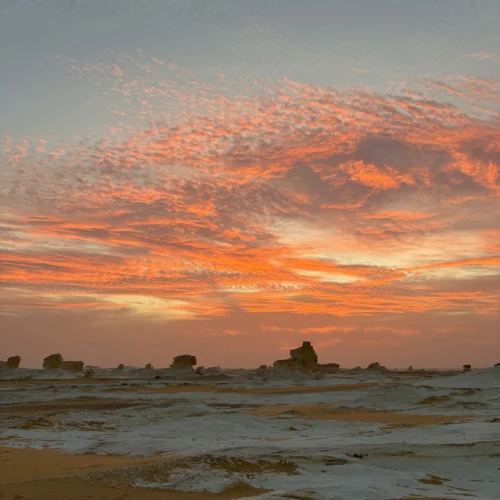
The White Desert is one of Egypt’s most distinctive landscapes: a protected desert of pale chalk formations, wind-shaped towers, open horizons and night skies that feel far removed from Cairo. Yet planning a White Desert trip is less straightforward than booking a city excursion. The journey normally passes through Bahariya Oasis, the off-road section requires a suitable 4×4 and an experienced local team, and an overnight stay means thinking about temperature, meals, sleeping equipment, permits and the practical realities of camping.
This guide explains how a White Desert Egypt trip works from beginning to end. It is designed for travelers comparing itineraries, deciding how many days to allow, or preparing for their first night in Egypt’s Western Desert. It also separates the places that are often grouped under the name “White Desert”—including the Black Desert, Crystal Mountain and Agabat Valley—so you understand what is actually included in a typical route.
Current White Desert access and permits
Last checked: 7 September 2026. The White Desert and Black Desert are currently open for organized tourism and camping experiences. Egypt’s official tourism portal continues to present White Desert excursions and overnight camping as active visitor experiences. Travelers should arrange the trip through an authorized local guide or travel company, with permits and protected-area requirements confirmed in advance.
If you are specifically researching a White Desert Egypt camping tour from Cairo, the practical route normally starts with the paved journey to Bahariya Oasis and then changes to a locally operated 4×4 for the authorized desert section.
White Desert Egypt at a glance
- Location: Egypt’s Western Desert, reached on most Cairo itineraries through Bahariya Oasis.
- Best suited to: travelers who enjoy landscapes, camping, photography, quiet and road-trip style exploration.
- Typical trip length: two days and one night for the classic highlights; three days and two nights for a slower route and more remote stops.
- Transport: a road vehicle between Cairo and Bahariya, followed by a 4×4 for the desert section.
- Accommodation: usually a mobile desert camp; some itineraries combine camping with a night in Bahariya Oasis.
- Main experiences: chalk formations, sunset, stargazing, a Bedouin-style camp dinner, short walks, scenic stops and optional sandboarding.
- Planning requirement: use a qualified operator or authorized guide who can confirm the current route, permits and protected-area rules.
- Price: depends on group size, trip length, pickup arrangements, inclusions and customization; request a quote for your dates rather than relying on a generic placeholder price.
Egypt’s official tourism portal describes White Desert excursions as trips that can range from one night to much longer expeditions and advises travelers to check permits and regulations with an authorized guide or travel agency. That is the right planning principle: this is not a landscape to approach as an unsupported self-drive detour.
What is the White Desert?
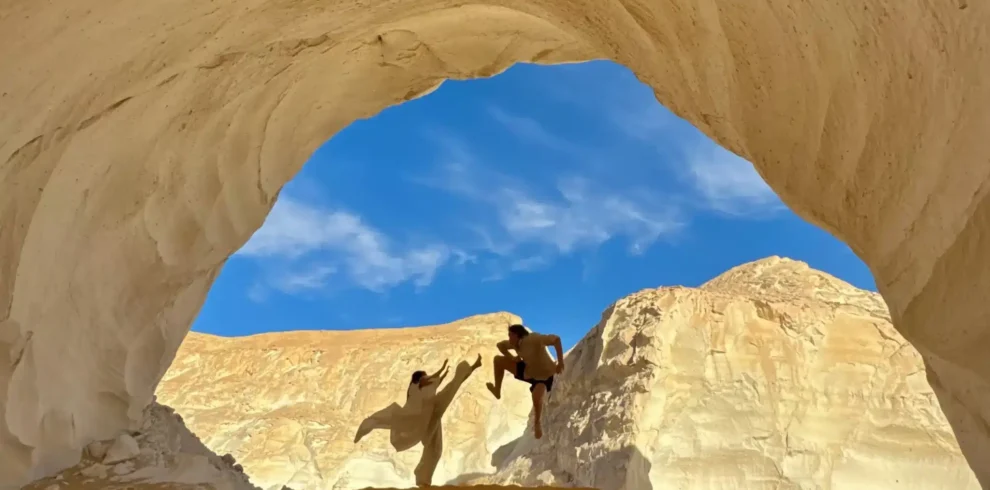
The White Desert, often called the White Desert National Park or Sahara el Beyda, is known for exposed white rock and chalk formations sculpted by long-term erosion. Against the surrounding sand, the pale formations can look like mushrooms, animals, domes, towers or abstract sculptures. Their appearance changes with the light. At midday the landscape can be stark and bright; near sunset it becomes warmer and more dimensional; under moonlight the formations may appear almost luminous.
The White Desert should not be confused with the whole Western Desert. The Western Desert covers a vast part of Egypt west of the Nile. The White Desert is one particular protected landscape within that larger region. A tour sold as a “White Desert tour” often visits several different environments on the journey, not only the white formations.
This distinction matters when comparing packages. Two tours with the same title can have different routes. One may focus on the classic formations and one camping night. Another may spend more time in Agabat Valley, include deeper off-road areas, or combine the White Desert with Bahariya Oasis and the Black Desert. Always compare the actual itinerary, not only the trip name.
Where is the White Desert in Egypt?
The White Desert lies in Egypt’s Western Desert, in the broad region between Bahariya and Farafra. Egypt’s official tourism website places the White Desert about 40 kilometers from Al-Farafra, while many tours from Cairo use Bahariya Oasis as their logistical gateway. Bahariya is practical because it can be reached by road from Cairo and has local drivers, supplies and desert teams.
On Elzaghandi Travel’s classic route, pickup from Cairo or Giza is normally in the morning. The road journey to Bahariya takes approximately four to five hours depending on the pickup point, road conditions and stops. In Bahariya, travelers change to a 4×4 before entering the off-road desert route.
That vehicle change is not a decorative part of the experience. It reflects two different stages of the journey:
- Cairo or Giza to Bahariya Oasis: paved-road transfer.
- Bahariya and the desert circuit: 4×4 travel with a local desert team.
If a route includes hotel pickup, ask whether the quoted travel time starts from central Cairo, Giza or your specific accommodation. Cairo traffic can materially affect the day.
Why does the desert look white?
The defining formations are composed mainly of pale sedimentary material, commonly described as chalk or chalky limestone. Over long periods, wind, blowing sand, temperature changes and other erosional processes have worn away softer material and left unusual shapes standing above the desert floor.
It is tempting to describe every shape as a fixed monument, but the landscape is dynamic. Erosion continues, and formations can change or collapse. That is one reason visitors should avoid climbing fragile structures, scratching surfaces, moving rocks or treating the formations as props. The most responsible way to experience the landscape is to observe and photograph it without altering it.
The famous Mushroom and Chicken formations are recognizable landmarks, but they are not the whole White Desert. The wider setting—open plains, clusters of chalk, changing shadows and the absence of urban noise—is the larger experience.
What do you see on a typical White Desert tour?
A classic two-day route from Cairo usually combines several stops. Exact access and sequence can change, so treat the following as a realistic framework rather than a guaranteed timetable.
Bahariya Oasis
Bahariya is the transition point between the highway journey and the desert safari. Depending on the itinerary, it may be a short operational stop or a destination in its own right. Longer tours can include oasis villages, agricultural landscapes, springs or a hotel night. For a deeper planning overview, see the Bahariya Oasis Egypt Travel Guide.
The Black Desert
The Black Desert looks different from the White Desert. Dark volcanic material covers many hills and gives the landscape a charcoal appearance. Some itineraries allow time for a short climb to a viewpoint. The Black and White Deserts are frequently visited on the same trip; they are complementary landscapes, not necessarily competing choices. Read the Black Desert Egypt Travel Guide for the geology, route and practical visiting details.
El Hez and a natural spring
On the published two-day Elzaghandi Travel itinerary, lunch is taken near a natural sulfur spring in El Hez, with swimming possible when conditions allow. If you plan to enter a spring, pack a swimsuit, quick-drying towel and footwear that can get wet. Current access should be confirmed before departure.
Crystal Mountain
Crystal Mountain is a popular roadside geological stop between the Black Desert and Agabat area. The name can create the impression of a large mountain made from loose collectible crystals. In practice, it is a small and visually interesting formation visited briefly on many safari routes. Do not remove pieces: leave geological material where it belongs.
Agabat Valley
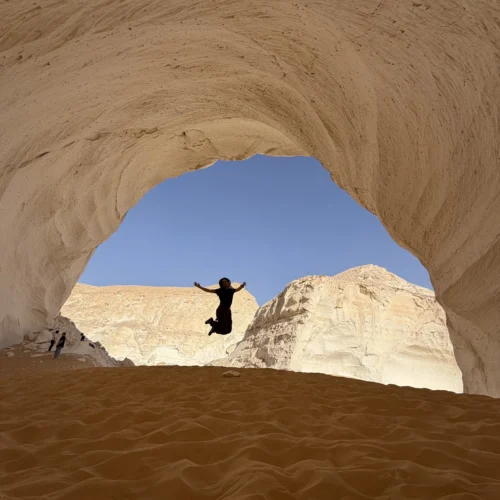
Agabat Valley is characterized by dramatic pale cliffs and sculpted desert scenery. Some routes include Moon Cave or nearby formations within the wider Agabat landscape. The terrain and driving time make the journey itself part of the experience.
The White Desert formations
The classic route includes time among the white formations, often around sunset and again the following morning. Famous shapes include Mushroom Rock and Chicken Rock. Guides may use informal names for other formations based on what they resemble.
The desert camp
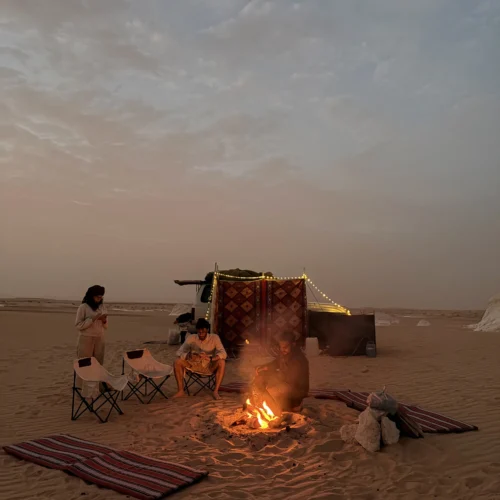
The camp is normally set up before or around sunset. A typical evening includes dinner, tea, a campfire when appropriate, and time under the stars. Elzaghandi Travel’s published two-day tour includes camping equipment, a personal mattress, pillow, sleeping bag and blanket for each guest. Confirm inclusions for your particular booking because customized itineraries may differ.
Two days or three days: how long do you need?
For most first-time visitors, the decision is between a two-day/one-night trip and a three-day/two-night trip. If you are still comparing formats, read 2-Day vs 3-Day White Desert Tour: Which Is Right? before choosing.
Choose two days and one night if:
- you have limited time in Egypt;
- you want the classic route and one desert sunset;
- you are comfortable with a long drive on both days;
- one night of camping is enough;
- your priority is seeing the main landscapes rather than exploring remote areas slowly.
A two-day trip is efficient, but it is not a relaxed weekend in the usual sense. A significant part of both days is spent moving between Cairo, Bahariya and the desert. The reward is that you can experience radically different landscapes in a short period.
Choose three days and two nights if:
- you want more time away from paved roads;
- photography, stargazing or quiet time is a priority;
- you prefer a less compressed schedule;
- you want additional formations, dunes, springs or remote stops;
- you are comfortable camping for two nights;
- you want the possibility of combining different camping areas.
Elzaghandi Travel’s published 3 Days / 2 Nights White Desert Adventure goes beyond the classic highlights to areas such as Arch Rock, large dunes near Karawen, petrified trees, a spring lunch stop and the Waves Area. It also allows a choice, subject to the final plan, between spending both nights in the White Desert or combining White and Black Desert camps.
What about Djara Cave?
Djara Cave requires a more specialized route and should not be casually added to a short White Desert schedule. If the cave is a primary goal, choose the dedicated 3 Days / 2 Nights White Desert & Djara Cave Adventure, which explicitly includes the cave, the required driving time and an experienced desert team. A three-day White Desert and Djara Cave trip is a different product from a standard three-day White Desert trip.
What is camping in the White Desert really like?
Camping is the central experience for many travelers, but expectations should be realistic. A mobile desert camp is not a conventional hotel room placed outdoors. Comfort depends on the equipment, weather, group setup and personal tolerance for simple facilities.
Sleeping
A good operator supplies a mattress and season-appropriate bedding. You should still bring comfortable sleep clothing and clean socks. Night temperatures can feel much colder than daytime temperatures, especially when you have been sitting still after sunset.
Ask these questions before booking:
- Is the sleeping area inside a tent, under a shelter or open to the sky?
- Is bedding supplied individually?
- Are sleeping bags and blankets cleaned between guests?
- Can an additional blanket be requested?
- Is there a private tent option?
- What happens if wind conditions change?
Some travelers enjoy sleeping with a clear view of the stars; others rest better inside a closed tent. Neither preference is wrong. Communicate it in advance.
Food and water
On the current two-day itinerary, lunch, dinner and breakfast are included, along with water, soft drinks and juice. Dinner is described as a traditional Bedouin meal at camp. Travelers with allergies, vegetarian diets, diabetes or other dietary needs should explain them before the team buys supplies.
Carry a personal water bottle even when water is included. Do not assume that every remote stop has a shop or toilet.
Toilets and washing
Facilities vary by camp style and location. Do not assume there will be a fixed bathroom, shower or running water. Ask exactly what is provided. Pack tissues, a small amount of hand sanitizer, personal hygiene items and sealable bags for taking waste out. Avoid scented products that can attract insects or leave residue.
Electricity and connectivity
Mobile signal is unreliable or absent in remote sections. Charge devices before leaving Bahariya and carry a power bank. Download maps, booking details, passport copies and emergency contacts for offline access. The lack of connectivity is part of the appeal, but it also means you should finish essential communications before the off-road section.
Camp etiquette
Keep noise low, especially at night. Use existing camp areas when directed. Do not leave food packaging, tissues or cigarette ends. Avoid feeding wildlife. Follow the guide’s instructions about fire, wind and where it is safe to walk after dark.
Best time to visit the White Desert
The most comfortable period is generally during the cooler part of the year, when daytime exploration and overnight camping are easier. However, “best” depends on your tolerance for cold, heat and crowds.
Autumn
Autumn often brings more comfortable conditions after the intense summer. Early in the season, days can still be hot. Later autumn is popular for overnight trips.
Winter
Winter can provide pleasant daytime temperatures and cold nights. Travelers sometimes underestimate the nighttime chill because Egypt is associated with heat. Layering and proper bedding are essential.
Spring
Spring can be a good balance, but wind and blowing sand are possible. Conditions vary, and flexible planning is valuable.
Summer
Summer desert heat can be severe. Some operators may adjust schedules, routes or availability. If you are considering a summer trip, ask direct questions about operating hours, shade, water, heat management and whether overnight conditions are suitable for your group.
Weather summaries are not a substitute for a current forecast. Check conditions shortly before departure and follow the operator’s advice. For a detailed seasonal breakdown, use the dedicated guide: Best Time to Visit the White Desert Egypt.
What to pack
Pack for strong sun, dust, temperature changes and an overnight stay. Avoid bringing more luggage than you can comfortably manage around vehicles and camp.
Essential clothing
- breathable daytime layers;
- a warm mid-layer for evening;
- a wind-resistant outer layer;
- comfortable trousers;
- closed walking shoes with grip;
- warm socks;
- sun hat;
- sleep clothing appropriate for the season.
Sun and desert protection
- sunscreen;
- sunglasses;
- lip balm;
- reusable water bottle;
- light scarf or buff for dust;
- any personal medication;
- basic personal first-aid items.
Overnight items
- small headlamp or torch;
- power bank;
- tissues and hygiene supplies;
- a compact towel;
- earplugs if you are a light sleeper;
- sealable bag for personal waste;
- spare batteries if your equipment needs them.
Camera equipment
- charged batteries;
- more storage than you expect to need;
- lens cloth and blower;
- protective bag;
- stable mini-tripod or tripod for night photography;
- red-light mode on your headlamp if available.
A full, printable list is covered in What to Pack for the White Desert Egypt.
Is the White Desert safe?
No travel destination can be guaranteed safe. Safety depends on the current regional situation, route, weather, driver, vehicle, permits, communications and traveler behavior.
The UK Foreign, Commonwealth & Development Office currently distinguishes the White Desert, Black Desert, Bahariya and several oasis towns from parts of the Western Desert where it advises against travel. That distinction is important, but advice can change. Travelers should read the complete official Egypt travel advice and check the guidance issued by their own government and insurer.
Practical risk reduction includes:
- travel with an experienced desert team;
- use a maintained 4×4 for off-road sections;
- confirm permits and protected-area entry arrangements;
- share dietary, medical and mobility needs before departure;
- carry sufficient water;
- wear a seat belt whenever one is available;
- do not walk away from camp alone at night;
- follow instructions around cliffs, dunes and formations;
- check that travel insurance covers the itinerary and activities;
- avoid unplanned routes near restricted or border areas.
For a date-sensitive review, see Is the White Desert Egypt Safe? Permits & Travel Advice.
Can children visit the White Desert?
Families can enjoy the trip, but the right answer depends on the child rather than a universal minimum age. Consider the road time, off-road movement, toilet setup, temperature, food preferences and ability to sleep in a simple camp.
A private itinerary is often easier for families because stops and meal timing can be adjusted. Parents should ask about child seats, seat belts, bedding, food, shade and emergency arrangements before confirming. Very young children, children with respiratory sensitivity to dust, or anyone who becomes carsick may need additional planning.
Read the dedicated decision guide: White Desert Egypt with Kids.
White Desert tour cost: what determines the quote?
A credible quote should reflect the actual trip rather than a headline number disconnected from the itinerary. Important factors include:
- number of travelers;
- private or shared arrangement;
- two-day versus three-day duration;
- Cairo or Giza pickup location;
- vehicle and guide requirements;
- number of camping nights;
- permits and entrance tickets;
- meals and drinks;
- specialized stops such as Djara Cave;
- hotel nights in Bahariya;
- seasonal logistics;
- custom requests.
The current Elzaghandi Travel model is quote-based through WhatsApp. Send your dates, number of travelers, pickup area, preferred duration and any special needs. This allows the team to price the correct route instead of advertising a misleading one-size-fits-all figure. For a fuller explanation, see White Desert Egypt Tour Cost.
How to choose a White Desert tour
Do not compare only titles and prices. Request a written outline and check:
- The exact route: Which landscapes and named stops are included?
- Vehicle stages: Is Cairo transfer separate from the off-road 4×4?
- Camping setup: Tent, bedding, toilet arrangements and privacy.
- Meals: Number of meals, drinks and dietary accommodations.
- Permits: Who organizes them and whether fees are included?
- Group format: Private, small group or shared departure.
- Pickup and return: Specific location and realistic time window.
- Weather policy: What happens in strong wind, extreme heat or route restrictions?
- Communication: Who is the contact before and during the trip?
- Insurance: What must the traveler arrange independently?
A short itinerary can still be excellent when the scope is clear. Problems usually arise when the traveler and operator imagine different levels of comfort or different routes.
Responsible travel in the protected desert
The White Desert is not an open-air theme park. Its value comes from fragile formations, geological context and a sense of remoteness. Visitors and operators share responsibility for limiting damage.
- Do not carve names or symbols into rock.
- Do not climb delicate formations.
- Do not collect crystals, fossils or chalk.
- Take all waste out.
- Minimize single-use plastic.
- Keep vehicles to authorized routes.
- Use existing camp areas when instructed.
- Avoid loud music in quiet natural areas.
- Do not chase, feed or photograph wildlife at close range.
- Respect local guides and communities.
Egypt’s official tourism portal advises using authorized guides and checking regulations for desert excursions. That guidance supports both visitor safety and site protection. You can review the official overview of desert excursions in Egypt.
Photography and stargazing
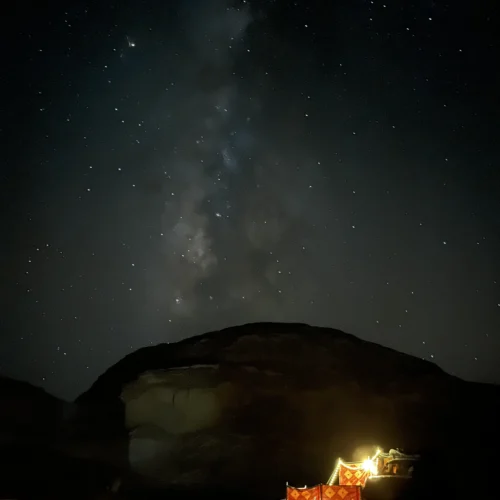
The White Desert rewards patience more than constant movement. Sunrise and sunset create long shadows that clarify the shapes of the formations. At night, distance from major cities can produce dark skies, although moon phase, dust, cloud and camp lighting affect visibility.
For photography:
- protect lenses from sand;
- avoid changing lenses during wind;
- expose for highlights on bright chalk;
- include a person or vehicle carefully for scale;
- use a tripod for night scenes;
- keep artificial light brief and considerate;
- never climb a fragile formation for a photograph.
A bright moon can illuminate the chalk and create dramatic landscape photographs, while a darker moon phase is generally better for seeing faint stars. Choose according to your goal. The detailed guide is here: White Desert Stargazing & Photography.
A realistic two-day itinerary from Cairo
The following outline reflects the published Elzaghandi Travel two-day route. Timing remains subject to pickup location, road, weather, permits and the guide’s decision.
Day one
Morning pickup from Cairo or Giza, usually between 7:00 and 8:00. Drive approximately four to five hours to Bahariya Oasis. Change to a 4×4 and begin the desert circuit.
Visit the Black Desert, followed by lunch near the spring at El Hez. Continue toward Crystal Mountain, Agabat Valley and Moon Cave, then enter the White Desert and see formations around the Valley of Tents. Reach the camp area before sunset. Dinner, tea and overnight camping follow.
Day two
Wake in the desert and have breakfast. Continue through the White Desert to formations including Mushroom Rock and Chicken Rock. Sandboarding may be possible if the route and conditions allow. Return to Bahariya, change vehicles and drive back to Cairo or Giza. The published expected arrival is around 5:00 to 6:00 PM, but travelers should avoid scheduling a tight flight or fixed event immediately afterward.
Review the live 2 Days / 1 Night White Desert Adventure for the current inclusions and request confirmation for your dates.
Plan the White Desert in detail: Check how to get there from Cairo, compare the 2-day itinerary with the 2-day vs 3-day guide, and review the tour cost factors.
Explore the destination itself: See the White Desert destination page for the current tour collection and route options.
Frequently asked questions
Can you visit the White Desert as a day trip from Cairo?
A same-day return would involve excessive driving and would miss sunset, camping and the night sky. The practical classic trip is two days and one night.
Do I need a 4×4?
For the off-road desert route, a suitable 4×4 with an experienced driver is the normal and appropriate arrangement. The Cairo–Bahariya transfer may use a different road vehicle.
Do I need a permit?
Protected-area entry and desert travel can involve permits and tickets. The operator should confirm and arrange the current requirements. Elzaghandi Travel’s published two-day itinerary lists desert permits and national park entrance tickets as included.
Is there mobile signal?
Do not rely on it in remote areas. Download essential information and tell family or colleagues when you expect to reconnect.
Are meals included?
They are included on the published two-day and three-day itineraries, but verify the exact number and dietary arrangements in your personal quote.
Is the camp cold?
It can become cold after sunset, particularly in winter. Appropriate bedding and layered clothing are important.
Can I shower?
Do not assume a conventional shower is available at a mobile desert camp. Ask about washing and toilet arrangements before booking.
Is the White Desert suitable for solo travelers?
Yes, depending on the trip format. A private trip usually costs more per person than traveling with others. Ask about shared departures, group composition and single-traveler sleeping arrangements.
Which is better: the White Desert or Black Desert?
They offer different scenery and are commonly combined on the same route. Most first-time itineraries do not require choosing only one.
Is two days enough?
Two days covers the classic highlights and one camping night. Three days provides a slower pace and access to additional locations.
Plan your trip
A successful White Desert trip begins with a clear conversation about dates, group size and comfort. Before asking for a quote, decide:
- two days or three days;
- private or shared trip;
- number and ages of travelers;
- Cairo or Giza pickup location;
- dietary or medical needs;
- preferred tent and sleeping setup;
- interest in photography, sandboarding or Djara Cave;
- whether you want a night in Bahariya Oasis.
Elzaghandi Travel is based in Bahariya Oasis and operates a personalized, WhatsApp-based quotation system. To receive an itinerary and price matched to your trip, send your dates and group details on WhatsApp.
Sources and last review
This guide was prepared using Elzaghandi Travel’s live White Desert tour pages and the following external sources:
- Experience Egypt: Desert Excursions
- Experience Egypt: Natural Wonders around Bahariya
- UK FCDO: Egypt travel advice
- UK FCDO: Egypt regional risks
Last reviewed: 7 September 2026. Permit rules, access, weather and official travel advice can change at short notice; confirm current conditions, permits and camping access before departure.