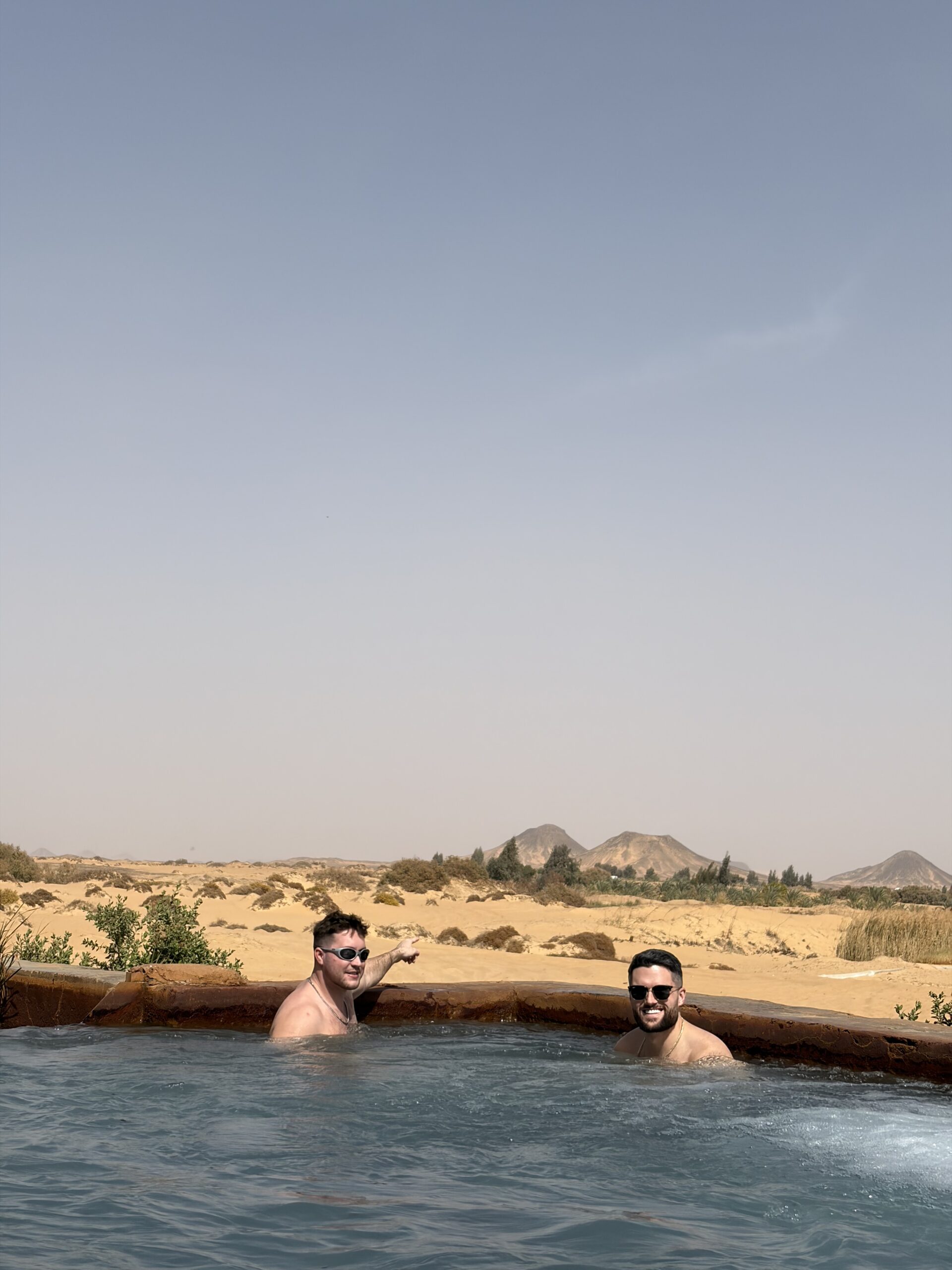
The best time to visit the White Desert in Egypt is generally from October through April, when daytime exploration is more comfortable than in summer. Within that broad season, the best month depends on your priority: winter for cool days and crisp nights, autumn and spring for a balance of warmth and camping comfort, and darker moon phases for stronger Milky Way visibility.
There is no month that guarantees perfect conditions. Wind, visibility and nighttime temperature vary, so check the short-range forecast and confirm the operating plan with the desert team shortly before departure.
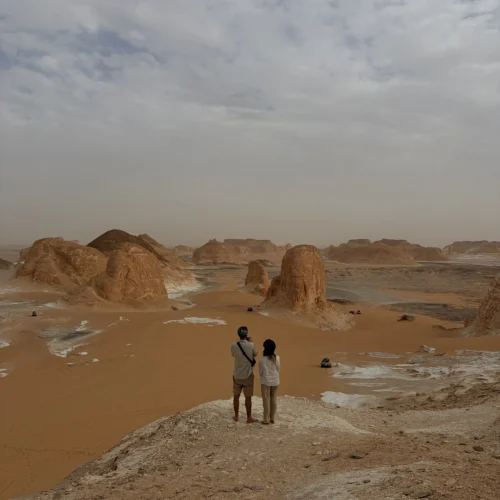
Quick seasonal answer
- Best overall balance: October–November and February–April.
- Best for cool daytime hiking: December–February.
- Best for warmer nights: October, November, March and April.
- Best for Milky Way visibility: a dark-sky date near the new moon, subject to season and cloud or dust.
- Best for moonlit formations: around a brighter moon.
- Most challenging period: the hottest summer months.
- Most important action: check the live forecast, wind and operator advice—not only a monthly climate summary.
Elzaghandi Travel identifies October to April as the preferred operating period in its FAQ. Egypt’s official tourism material describes Egyptian summers as hot and rarely humid, with generally sunny winters and colder desert nights.
Why the desert can feel hot by day and cold at night
Dry air and clear skies allow strong daytime heating and rapid nighttime cooling. NASA explains that desert temperatures can change dramatically between day and night because dry air releases heat quickly after sunset.
This is why a traveler can need sun protection during the afternoon and a warm jacket a few hours later. The temperature shown for Cairo is not a dependable substitute for conditions at an exposed desert camp.
The practical rule is layering:
- breathable base layer;
- light daytime shirt;
- warm mid-layer;
- wind-resistant outer layer;
- warm sleep clothing and socks.
Autumn: October and November
Autumn is one of the strongest choices for first-time visitors. The intense summer heat is easing, while nights are often less intimidating than midwinter.
Advantages
- more comfortable daytime exploration;
- warmer camping than the coldest winter period;
- suitable conditions for two-day and three-day routes;
- good balance for families and first-time campers;
- useful daylight for the classic circuit.
Considerations
Early October can still be hot. A monthly label does not guarantee mild afternoons. Confirm water, shade and actual conditions.
November may feel cooler after sunset than visitors expect. Bring proper layers even if the daytime forecast looks warm.
Best for
- first White Desert trip;
- couples and families;
- travelers combining Cairo and the desert;
- people who want camping without the coldest nights.
Winter: December, January and February
Winter often provides comfortable daytime sightseeing and clear-feeling air, but nighttime cold becomes the main planning issue.
Advantages
- reduced daytime heat;
- comfortable short walks;
- strong conditions for campfire evenings;
- suitable for travelers who prefer cool weather;
- lower heat stress for photography equipment and travelers.
Considerations
Clear, dry and calm nights can become particularly cold. The US National Weather Service explains that clear skies, light wind and dry air favor stronger nighttime cooling.
Ask about:
- sleeping-bag suitability;
- blanket per guest;
- extra blanket availability;
- enclosed tent or wind shelter;
- warm drinks;
- winter sleep clothing.
Do not treat a general statement such as “winter is mild in Egypt” as a camp forecast.
Best for
- daytime exploration;
- travelers comfortable with cold nights;
- photographers who carry warm clothing;
- visitors avoiding heat.
Spring: March and April
Spring can offer a good transition between winter cold and summer heat. It is attractive for travelers wanting warmer evenings without peak summer conditions.
Advantages
- pleasant balance on many dates;
- less severe nighttime cold than midwinter;
- suitable for camping and photography;
- useful for a wider Egypt itinerary.
Considerations
Wind and airborne dust can affect visibility and camp comfort. Spring does not mean every day is windy, but the possibility deserves attention.
Ask the operator about the short-range wind forecast. A strong wind can change:
- camp location;
- tent orientation;
- cooking setup;
- photography;
- sandboarding;
- time at exposed formations.
Best for
- travelers preferring moderate conditions;
- first-time campers;
- couples and small groups;
- visitors planning before summer.
Summer: May to September
Summer is the most demanding period. Heat can affect route timing, hydration, comfort and whether the operator recommends the trip at all.
Risks and limitations
- intense daytime exposure;
- hotter vehicles and stops;
- increased water needs;
- reduced comfort for walking;
- heat-related illness risk;
- less flexibility around midday;
- possible operating adjustments.
A summer trip should never be chosen only because the calendar is available. Ask:
- Is the itinerary operating?
- Are pickup and desert times changed?
- How is shade provided?
- How much water is carried?
- Which activities are reduced?
- Is camping recommended for this group?
- What is the cancellation or rescheduling policy for extreme conditions?
Children, older travelers and people with medical conditions require especially careful discussion.
Month-by-month planning guide
January
Expect cool-season conditions and potentially cold nights. Prioritize bedding and warm sleep layers.
February
Still winter-like, with a gradual transition later in the month. Good for daytime comfort; prepare for nighttime cold.
March
Often attractive for balanced conditions. Monitor wind and dust close to departure.
April
Warmer days and generally easier nights, but increasing heat becomes relevant.
May
The transition toward serious summer heat. Confirm whether the operator recommends the route.
June
Heat management becomes central. Do not rely on a generic year-round availability label.
July
Usually among the most challenging periods for daytime desert travel. Obtain direct operational guidance.
August
Similar heat concerns apply. Travelers should not force a standard winter-style schedule.
September
Conditions may begin transitioning, but early September can remain very hot.
October
A popular return to more comfortable travel. Early dates can still be warm.
November
One of the strongest all-round choices. Nights require layers.
December
Comfortable daytime exploration with winter camping preparation.
This guide avoids invented monthly temperature numbers. Historical averages can help, but the actual trip depends on the forecast and exact camp.
Weather factors beyond temperature
Wind
Wind affects perceived temperature, dust, tent stability and photography. It can make a moderate evening feel colder.
Visibility
Dust or haze can reduce distant views and star visibility. Clear daytime sky does not guarantee a perfectly transparent night.
Cloud
Cloud is uncommon compared with many destinations but remains possible. It can block stars while sometimes moderating nighttime cooling.
Rain
Deserts receive little rain, but rare weather can still alter tracks and access. Follow the local guide.
Moonlight
The moon is not weather, but it strongly changes the night experience. A bright moon illuminates chalk formations; a dark moon reveals fainter stars.
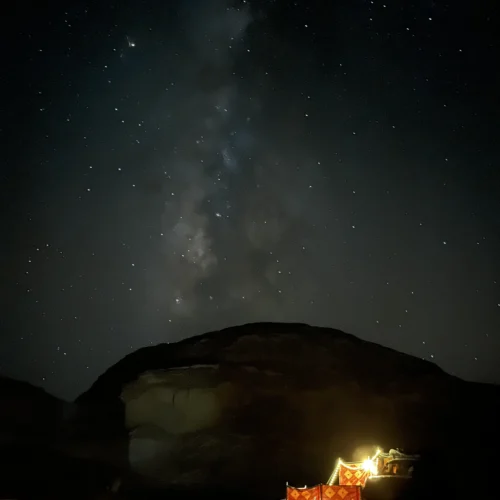
Best time for stargazing
Choose a date near the new moon when faint stars and the Milky Way are the priority. Also consider cloud, dust, humidity and camp lighting.
A full or bright moon reduces contrast for faint stars but creates dramatic illuminated formations and easier night landscape photography.
The best date therefore depends on the image you want. See White Desert Stargazing and Photography.
Best time for families
Autumn and spring often provide the easiest balance between daytime heat and nighttime cold. Winter can work with suitable bedding, while summer requires careful operator confirmation.
Families should consider road time, sleep and toilets as well as temperature. Read White Desert Egypt with Kids.
Best time for a two-day tour
Two days works well in the cooler operating season because the schedule includes several afternoon stops and one night.
If conditions are hot or windy, the compact itinerary has less flexibility. Review the 2-Day White Desert Itinerary.
Best time for three days
A three-day trip benefits from two sunsets and can absorb some variation. It also exposes travelers to two nights of cold, wind or heat.
Use 2-Day vs 3-Day White Desert Tour to match duration to comfort.
What to wear by season
Autumn and spring
Use light daytime clothing, a warm fleece and a wind-resistant jacket. Carry a scarf for dust.
Winter
Add thermal or warm sleep layers, a hat, thick socks and an insulated outer layer. Ask for extra bedding if needed.
Summer
Wear breathable coverage, a wide-brim hat and strong sun protection. Heat precautions must be agreed with the operator.
The detailed checklist is in What to Pack for the White Desert Egypt.
How weather affects camp selection
The camp is not always fixed far in advance. The team considers wind direction, shelter, authorized areas and the next day’s route.
A camp change can improve safety and comfort. It does not necessarily mean the itinerary is reduced. Travelers should judge whether the core experience and paid inclusions remain.
How weather affects the route
Possible adjustments include:
- changing stop order;
- shortening an exposed walk;
- moving lunch;
- choosing another dune for sandboarding;
- reaching camp earlier;
- using a more sheltered site;
- delaying departure briefly;
- replacing an inaccessible track.
The guide’s live decision is more valuable than rigid adherence to a blog schedule.
Heat safety
Heat illness can become serious. Practical precautions include:
- drink regularly;
- use sun protection;
- avoid unnecessary exertion;
- tell the guide about symptoms early;
- keep medication within recommended storage conditions;
- do not drink alcohol as a hydration substitute;
- follow route and rest changes.
No article can determine whether a specific traveler is medically fit. Seek professional medical advice for relevant conditions.
Cold-night safety
Cold can impair sleep and judgment. Change out of damp clothing, add layers before feeling very cold and keep sleep clothes dry.
Do not underestimate wind chill. Confirm the sleeping bag, mattress and blanket rather than assuming the word “camping” defines them.
The White Desert Camping Guide provides the full overnight preparation.
When to check the forecast
At booking
Use seasonal patterns to select a general period.
One week before
Review the forecast trend and ask the operator whether normal operations are expected.
48–72 hours before
Check temperature, wind, visibility and any unusual weather.
Morning of departure
Follow the guide’s final instructions. Pack for the overnight low, not only the Cairo morning.
Do not cancel or alter the trip based solely on one consumer-app icon without discussing local conditions.
Which forecast location should you use?
Cairo weather is not enough. Bahariya can help with the gateway conditions, but the remote camp may differ.
Ask the operator which nearby forecast point is most representative. Use multiple sources when practical and focus on:
- daytime maximum;
- overnight minimum;
- wind speed and gusts;
- cloud cover;
- visibility;
- unusual precipitation.
Best time by traveler priority
How moon phase changes the choice
A common mistake is calling the full moon “bad.” It is bad only for certain faint-sky images. It can be excellent for walking around camp with guidance and photographing luminous chalk.
A new moon creates darker sky but requires careful lighting and navigation. Choose based on the experience, not a universal ranking.
Seasonal booking and cost
Prices should not be invented from season labels. Availability, private/shared format, group size and route determine the quote.
Popular dates may require earlier booking. Request the same written inclusions regardless of season. See White Desert Egypt Tour Cost.
Can you visit year-round?
A website may show general availability, but this does not mean the same itinerary is equally suitable every day.
The responsible answer is: ask the local operator whether the route is operating for your dates and group. Summer, extreme wind or unusual conditions may require changes.
Weather and permits are separate
Good weather does not remove permit requirements. The FCDO states that tourists entering Bahariya, Farafra, the White Desert and Black Desert must apply for permits in advance and use an official guide.
Check official Egypt regional advice and the White Desert safety guide.
Common weather-planning mistakes
Packing for Cairo
The camp can feel much colder and windier.
Trusting a monthly average
Averages do not describe your night.
Ignoring wind
Wind can matter more than a small temperature difference.
Choosing only by moon phase
Cloud and dust can still affect stars.
Assuming winter means no sun risk
UV and reflected light remain important.
Assuming summer nights solve daytime heat
Day-one and day-two exploration still occur in daylight.
Demanding a fixed camp
The team may need a sheltered authorized location.
A practical booking message
Send:
Hello, we are [number] travelers considering a [two/three]-day White Desert trip on 2026. Please confirm whether you recommend these dates, the expected daytime and nighttime conditions, wind concerns, bedding provided, current route and any seasonal schedule adjustments.
This encourages an operational answer rather than a generic “weather is good.”
Ask Elzaghandi Travel about your dates via WhatsApp.
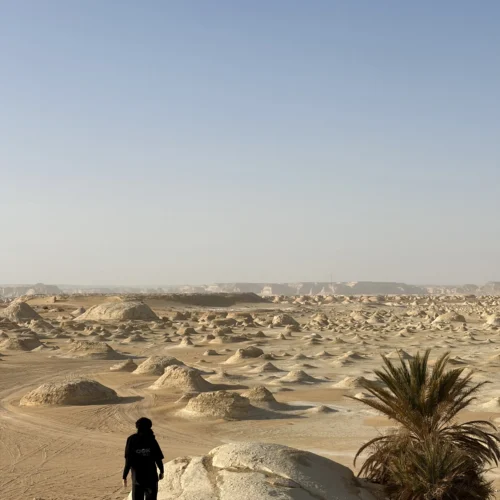
Related seasonal planning guides: Pair this article with the White Desert camping guide, the packing checklist, and the stargazing and photography guide.
Choose dates, then choose the route: Use the White Desert destination to compare the area, then review the 2-day White Desert adventure or 3-day White Desert adventure.
Frequently asked questions
What is the best month?
There is no universal single month. November, February and March often sit within the strongest broad comfort window, but actual conditions matter more.
Is winter too cold?
Daytime can be comfortable, while nights may be cold. Suitable layers and bedding make the difference.
Is summer possible?
It may be operationally possible on some dates, but heat can be severe. Obtain direct operator guidance.
When is the best time for the Milky Way?
Choose a darker moon phase and a season when the Milky Way’s visible core aligns with your photography goal, then check cloud and dust.
Is a full moon bad?
Not for every traveler. It reduces faint-star contrast but beautifully lights the formations.
Does it rain?
Rain is uncommon, but rare weather can affect tracks. Follow the guide.
Is spring windy?
Wind events are possible. Check the short-range forecast rather than assuming every spring day is the same.
What is the best time for kids?
Autumn and spring often provide a useful balance. Child comfort and bedding remain individual.
What forecast should I check?
Use a location relevant to Bahariya and the desert route, not Cairo alone, and ask the operator.
How cold is the camp?
It varies by date, wind and site. Confirm the predicted overnight minimum and equipment shortly before departure.
Does weather change the itinerary?
It can change stop order, camp location or optional activities.
Sources and review date
This seasonal guide uses Elzaghandi Travel’s live FAQ and tour information plus:
- Experience Egypt: Farafra and desert climate brochure
- Experience Egypt: Natural Wonders around Bahariya
- NASA: Desert biome and day-night temperature change
- US National Weather Service: nighttime temperature influences
- UK FCDO: Egypt regional risks
Last reviewed: July 17, 2026. Seasonal patterns are not forecasts. Confirm current weather and operations before departure.
How to choose between two possible dates
When comparing two dates, do not choose from monthly reputation alone. Use this order:
- Confirm both dates are operational.
- Compare the forecast overnight minimum.
- Compare sustained wind and gusts.
- Compare cloud and visibility.
- Check moonrise, moonset and illumination.
- Consider whether the group prefers warmer camping or darker skies.
- Keep the date that allows a Cairo buffer after return.
A date that is two degrees warmer may still feel worse when wind is stronger. A new-moon night may disappoint a casual traveler who expected to see illuminated formations. The correct choice combines comfort and purpose.
Weather contingency plan
Before leaving Cairo, understand the operator’s response to:
Strong wind
The camp may move behind natural shelter, exposed stops may shorten and cooking may occur in a protected setup. Keep loose items secured and avoid changing camera lenses.
Unexpected cold
Use dry layers before sunset, request the supplied blanket and keep sleeping clothes separate from dusty daytime clothing.
Extreme heat
The team may change timing, reduce exposed activity and prioritize water and shade. A traveler showing symptoms should tell the guide immediately.
Dust or poor visibility
Driving and photography may slow. Protect eyes and equipment and follow the driver’s decision.
Rare rain or track issues
The guide may replace a route. Remote tracks should not be forced merely to preserve a published stop list.
Weather questions for the operator
Ask these questions 48–72 hours before departure:
- What daytime maximum and overnight minimum do you expect?
- What wind or gust conditions are forecast?
- Is the normal camp location suitable?
- Is an enclosed tent available?
- Is an extra blanket recommended?
- Will any stop or activity change?
- Is sandboarding likely to operate?
- What clothing do local guides recommend for this exact date?
- Is the Cairo return schedule expected to remain normal?
This short conversation provides more value than copying a historical weather table without context.
Final recommendation
For most first-time visitors, choose a date between October and April, then refine the decision through the live forecast. Choose autumn or spring if you want the easiest balance. Choose winter if you prefer cool daytime exploration and can prepare for cold nights. Avoid committing to a summer-style standard itinerary without direct local confirmation.
Weather is part of the White Desert experience, not a background detail. Good planning does not mean searching for a perfect month; it means selecting a suitable season, checking the exact conditions and carrying the right layers.