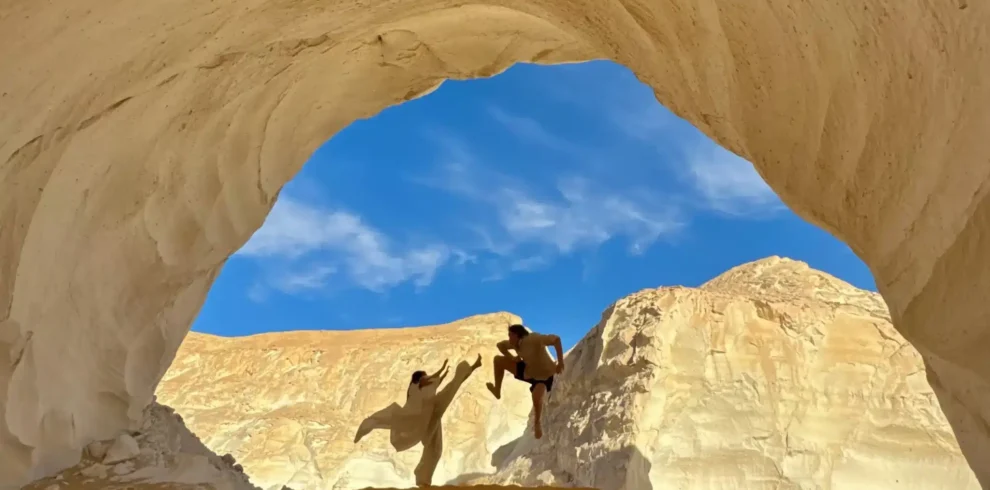
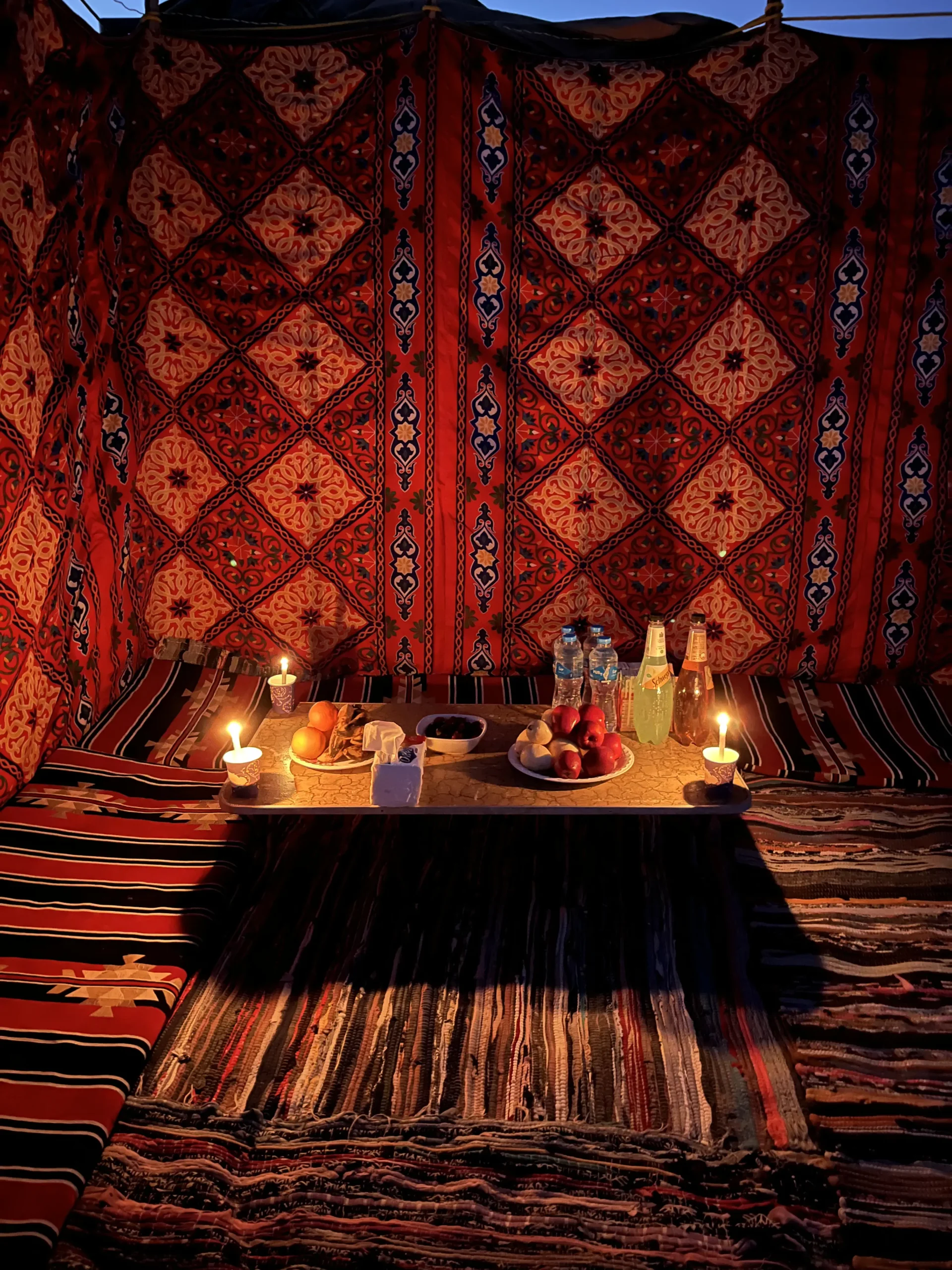
Camping in the White Desert is a mobile overnight experience, not a hotel room placed outdoors. A typical camp includes mattresses, sleeping bags, blankets, dinner, tea and a protected sitting or sleeping area arranged by the desert team. Fixed bathrooms, showers, electricity and reliable phone signal should not be assumed.
The experience is comfortable for many travelers when expectations are clear: prepare for dust, simple hygiene, temperature changes and a night close to the ground.
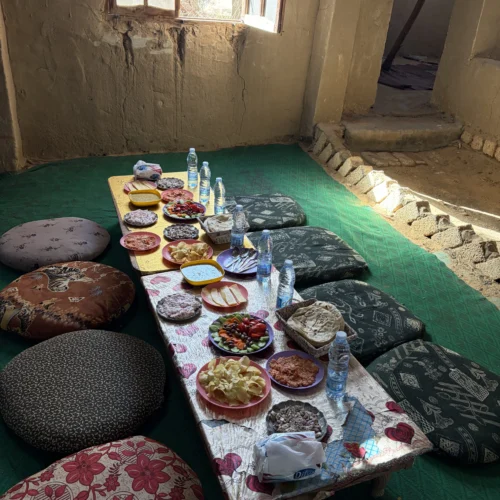
Quick answer: what is White Desert camping like?
- the team chooses and sets up the camp;
- travelers receive individual bedding;
- dinner and breakfast are prepared in the desert;
- toilet and washing arrangements are basic;
- mobile signal may disappear;
- power should not be assumed;
- nights can become cold;
- wind can change the camp location;
- the group leaves no waste behind;
- sunrise begins the second day’s exploration.
What Elzaghandi Travel provides
The live two-day itinerary lists:
- full camping equipment;
- personal mattress;
- pillow;
- sleeping bag;
- blanket;
- dinner and breakfast;
- water, soft drinks and juice;
- guide, 4×4, permits and park tickets.
The FAQ also states that tents and cooking equipment are provided. Confirm whether your specific sleeping arrangement is inside a private tent, shared tent, shelter or open setup.
How the camp location is selected
The exact spot may depend on:
- authorized camping areas;
- wind direction;
- terrain;
- route for the next morning;
- shelter;
- group size;
- guide assessment.
Moving the camp because of wind is responsible planning, not necessarily a reduction in service.
Arrival before sunset
The team normally reaches the camping area before sunset. Travelers should:
- keep warm clothing accessible;
- identify their sleeping equipment;
- locate the toilet arrangement;
- learn where it is safe to walk;
- secure loose objects;
- prepare the headlamp;
- photograph without climbing formations.
Camp setup and sunset occur together, so avoid scattering luggage across the site.
Sleeping arrangement
A personal mattress separates the sleeping bag from the ground and improves insulation. Ask about mattress thickness if comfort is important.
Sleeping can occur:
- inside a tent;
- under a wind shelter;
- in a partially open setup;
- under the sky when suitable.
Personal preference matters. Some travelers want stars overhead; others need an enclosed tent for warmth or privacy. Request it before booking.
Bedding
The published tour includes a pillow, sleeping bag and blanket. Still bring warm sleep clothes and socks.
Ask:
- Is bedding cleaned between guests?
- Is an extra blanket available?
- Is the sleeping bag suitable for the predicted night?
- Can couples or families use a private tent?
- What is provided for children?
Temperature after sunset
Dry desert air can cool quickly. Wind can make the camp feel colder than the forecast minimum.
Use layers:
- clean base layer;
- fleece;
- wind-resistant jacket;
- warm socks;
- hat during winter when needed.
Do not wait until you are very cold to add clothing. The seasonal guide is Best Time to Visit the White Desert Egypt.
Toilets
Do not assume a permanent toilet. Ask the operator to describe the exact setup.
Pack tissues, sanitizer and sealable disposal bags. Follow the guide’s direction about location and privacy. Never leave wipes or sanitary products.
At night, use a headlamp and tell a companion when moving away from the sleeping area. Do not walk among distant formations alone.
Washing and showers
A mobile camp normally does not provide a conventional shower. Limited water may be available for basic washing.
Bring:
- toothbrush;
- small toothpaste;
- unscented wipes;
- compact cloth;
- sanitizer;
- menstrual products;
- small towel.
Use water responsibly. Plan a full shower after returning to Cairo or a Bahariya hotel.
Privacy
Privacy depends on tent style, group composition and toilet arrangement. Ask before paying, especially for:
- couples;
- families;
- solo travelers;
- women traveling alone;
- travelers with medical needs;
- anyone requiring nighttime toilet access.
A private tour does not automatically define a private enclosed tent. Confirm both separately.
Dinner
The live itinerary describes a traditional Bedouin dinner and tea around the fire. Elzaghandi Travel says overnight meals are included and vegetarian arrangements can be made.
Disclose allergies early. The team buys and carries supplies before entering remote areas.
Dinner timing depends on camp setup and cooking. Treat the process as part of the evening rather than a restaurant reservation.
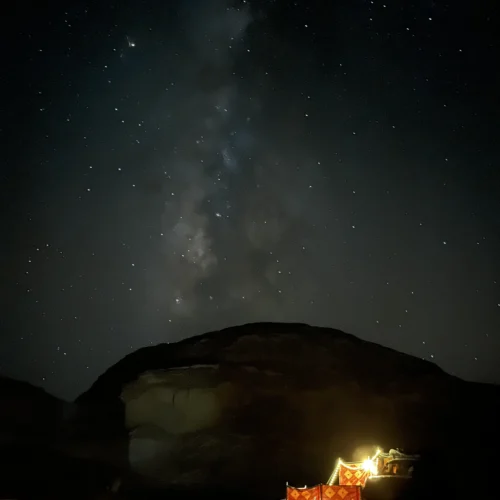
Campfire
A fire may provide warmth, light and a social center, subject to conditions and guide decisions.
Keep clothing and equipment at a safe distance. Do not place batteries, aerosol products or plastic near heat. Follow instructions about wind and extinguishing.
Stargazing
Dark surroundings can reveal many stars, but moon phase, cloud, dust and camp lighting affect visibility.
A bright moon illuminates formations; a darker moon shows fainter stars. Use low light and avoid shining torches into photographers’ frames.
See White Desert Stargazing and Photography.
Electricity and charging
Do not depend on sockets. Charge in Bahariya and carry a power bank.
Use airplane mode when signal disappears. Keep batteries warm during cold nights and protected from sand.
Phone signal
The FCDO notes limited reception in Bahariya, Farafra, the White Desert and Black Desert areas. Tell family when you expect to reconnect and download documents offline.
The lack of signal is pleasant for many travelers but must be planned.
Noise and sleep
The desert can be quiet, but tents, wind, conversation and vehicles still create sound. Bring earplugs if you sleep lightly.
Ask the group to lower voices after bedtime. Avoid music that changes the experience for other visitors and wildlife.
Wildlife and insects
Wildlife exists, but the camp team selects suitable areas. Do not feed animals or leave food open.
Keep shoes closed or shake them before wearing. Follow the guide rather than reacting dramatically to every insect.
Food storage
Store food as instructed. Do not keep open snacks beside bedding. Packaging attracts animals and creates litter.
Bring only a small personal snack if needed; the main meals are supplied.
Waste
Everything brought into camp should leave with the team. Use separate bags for personal hygiene waste.
Never leave:
- tissues;
- wipes;
- cigarette ends;
- plastic;
- food wrappers;
- batteries;
- sanitary products.
Morning routine
Wake-up depends on sunrise and the route. Dress before leaving the sleeping area because morning air may be cold.
The normal sequence is:
- sunrise or quiet photography;
- breakfast;
- pack bedding and personal bag;
- check the ground for waste;
- load the 4×4;
- continue to formations such as Mushroom and Chicken Rock.
One night versus two
One night suits first-time campers and travelers with limited time. Two nights creates deeper immersion but doubles the need for simple hygiene, charging and sleep comfort.
Compare durations in 2-Day vs 3-Day White Desert Tour.
Who will enjoy the camp?
It generally suits travelers who:
- enjoy nature and quiet;
- accept basic facilities;
- can sleep on a mattress;
- want stars and sunrise;
- value experience over hotel amenities.
It may not suit someone who requires:
- fixed bathroom;
- daily shower;
- dependable electricity;
- constant signal;
- elevated bed;
- controlled indoor temperature.
A customized oasis-hotel combination may be better for those needs.
Camping with children
Confirm ages, restraints, bedding, food and toilet needs. Bring warm layers, wipes, familiar snacks, medication and a comfort item.
A child who needs a fixed bathroom or cannot tolerate the road may not enjoy the standard setup. Read White Desert Egypt with Kids.
Older travelers and mobility needs
Discuss:
- 4×4 entry height;
- mattress height;
- assistance getting up;
- nighttime toilet distance;
- walking surface;
- medication;
- temperature sensitivity.
Age alone does not determine suitability, but the ground-level setup can be challenging.
Women’s practical considerations
Bring preferred menstrual products and disposal bags. Ask about toilet privacy and tent arrangements before booking.
Loose layered clothing is practical. Keep a headlamp and phone accessible at night.
Solo travelers
A shared camp can be social, but clarify group size, tent sharing and personal-space expectations. Keep documents and medication in your own bag.
A private solo trip provides itinerary control but not automatically a luxury camp.
Safety
The FCDO says off-road travelers should use a qualified guide and permit. Its regional guidance states that White Desert visitors require advance permits and an official guide and notes limited reception and medical facilities.
Practical camp safety includes:
- remain within instructed boundaries;
- do not climb formations;
- use light at night;
- wear shoes;
- secure food;
- tell the guide about illness;
- keep medication accessible;
- do not drive or wander independently;
- check travel insurance.
Read Is the White Desert Egypt Safe?.
Wind contingency
Strong wind can move the camp, change tent orientation and affect fire or cooking. Secure light objects and keep eyes and camera equipment protected.
A sheltered alternative is preferable to insisting on a famous exposed location.
Cold contingency
Add layers before bedtime, use the supplied blanket and keep clothing dry. Ask for additional bedding early.
Heat contingency
If a hotter-season camp operates, hydration and shade remain important even near sunset. The operator must confirm the plan.
What to pack specifically for camp
- clean sleep clothes;
- warm socks;
- fleece;
- wind jacket;
- headlamp;
- power bank;
- tissues;
- sanitizer;
- earplugs;
- personal medication;
- compact towel;
- waste bags;
- camera protection.
The complete list is What to Pack for the White Desert Egypt.
Questions to ask before booking
- Is the tent private or shared?
- Can I sleep in an enclosed tent?
- What mattress and bedding are supplied?
- Is an extra blanket available?
- What is the toilet setup?
- Is washing water supplied?
- Are dinner and breakfast included?
- Can allergies be accommodated?
- Is charging available?
- How much signal should I expect?
- What happens in strong wind?
- Can children receive suitable bedding?
- How far is the toilet area?
- Are permits included?
- What time does camp pack up?
Common misconceptions
“Luxury desert camp” always means hotel comfort
The term is undefined unless facilities are listed.
There will be Wi-Fi
Do not assume any signal.
Desert nights are always warm
They can become cold.
A tent guarantees privacy
Shared arrangements exist. Confirm.
Camping means carrying your own tent
The live tour supplies equipment.
Toilets are fixed
The setup may be mobile and basic.
You can walk anywhere at night
Stay within guide instructions.
Camp etiquette
- keep voices low;
- use minimal light;
- respect sleeping times;
- avoid photographing people without permission;
- share seating fairly;
- keep personal items organized;
- do not pressure the team for unsafe fire or camp choices;
- leave no trace.
Camp versus Bahariya hotel
Choose camp for sunset, stars, silence and sunrise. Choose a hotel night when fixed facilities and an elevated bed matter more.
Some three-day itineraries combine both. Compare the route carefully.
How the camp fits the two-day itinerary
The camp is not an optional accommodation inserted between sightseeing days. It is the central experience connecting sunset to sunrise.
The detailed schedule is 2-Day White Desert Egypt Itinerary.
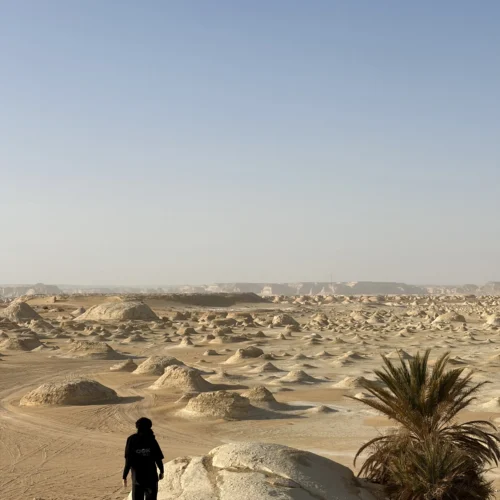
Related camping guides: Pair this guide with the White Desert packing checklist, the best time to visit the White Desert, and the stargazing and photography guide.
Plan the actual overnight: Explore the White Desert destination and compare the live 2 Days / 1 Night White Desert Adventure if you want to experience the camp described in this guide.
Frequently asked questions
Are tents provided?
Elzaghandi Travel says camping equipment and tents are provided. Confirm privacy and style.
Is bedding included?
The live route lists mattress, pillow, sleeping bag and blanket.
Is there a toilet?
Ask for the exact current mobile setup; do not assume a fixed bathroom.
Can I shower?
A conventional shower should not be expected.
Is food included?
Dinner and breakfast are included on the two-day tour.
Is it cold?
It can be, especially in winter or wind. Check the forecast and bring layers.
Is there electricity?
Do not rely on it. Bring a power bank.
Is there phone service?
Reception is limited or absent in remote areas.
Can children camp?
Many can, but assess road time, toilets, temperature and sleep.
Can I request a private tent?
Ask before booking; availability should be confirmed in writing.
Are animals dangerous?
Follow normal desert practice and guide instructions. Keep shoes and food controlled.
Is one night enough?
Yes for the classic experience. Two nights offers deeper immersion.
Sources and review date
This guide uses Elzaghandi Travel’s live tour and FAQ plus:
- Experience Egypt: Bahariya camping and safari logistics
- Experience Egypt: Desert Excursions
- UK FCDO: Egypt safety and off-road travel
- UK FCDO: Egypt regional risks
Last reviewed: July 17, 2026. Confirm the live camp, weather and equipment before departure.
Request camp details and a personalized White Desert quote.
A Realistic Overnight Timeline: From Arrival to Sunrise
A White Desert camp does not usually operate like a hotel with a fixed check-in desk and a printed evening schedule. Timing changes with the route, daylight, weather, photography stops, and the exact place selected by the guide. Still, the following sequence gives first-time visitors a useful picture of what an overnight normally feels like.
Late Afternoon: Reaching the Camping Area
The group normally reaches the broader camping area before dark. The guide and driver assess wind exposure, the ground, vehicle access, and the surrounding formations before choosing the exact spot. This is one reason an operator should never promise one precise camp coordinate far in advance. A beautiful but exposed site may be a poor choice on a windy evening.
While the camp is being prepared, keep essential items with you: a warm layer, water, phone, headlamp, and any medicine. Do not leave medication buried in a suitcase that may be stored in or near the vehicle. This is also the best time to identify the toilet arrangement and ask where you should walk after dark.
Sunset: Photography and the Temperature Change
Sunset is often the visual highlight, but it is also when the desert begins to cool. Put on a layer before you feel cold rather than waiting until the temperature drops further. If you walk away from camp for photographs, tell the guide, remain within an agreed area, and return before visibility becomes poor.
The chalk formations can look similar in low light. A short distance that feels obvious at sunset can become confusing after dark. Independent wandering is unnecessary and can create avoidable risk.
Early Evening: Settling In
After sunset, guests usually organize their sleeping area, sit around the communal camp space, and have tea or another hot drink. This is the moment to check the bedding rather than discovering a problem at bedtime. Confirm that your sleeping bag or blankets are dry, that the tent closes correctly, and that your bag will not be exposed to drifting sand.
If you are cold-sensitive, ask for an extra blanket early. If privacy matters, clarify the tent arrangement before everyone settles. Small practical questions are easier to solve while the team is still actively setting up.
Dinner and Quiet Time
Dinner timing varies, but it is commonly served after the camp is established. Meals are generally straightforward rather than elaborate. Travelers with allergies, vegetarian requirements, diabetes, or other dietary needs should have confirmed them before departure and should remind the guide before food preparation begins.
Later in the evening, artificial light is normally limited, which makes the sky more visible. Allow your eyes time to adapt. Use a red-light mode if your headlamp has one, and avoid repeatedly pointing a bright phone torch toward other guests. For a dedicated night-sky plan, see the upcoming White Desert stargazing guide once its final article URL is published; until then, confirm moon phase and astronomy expectations directly with the operator.
Bedtime and the Night
Before sleeping, place shoes inside the tent or shake them carefully before putting them on again. Keep water, a headlamp, warm clothing, and essential medicine within reach. Secure lightweight packaging so wind cannot carry it away.
The desert may be very quiet, but sleep quality differs from person to person. Wind, unfamiliar bedding, cold, and normal camp sounds can interrupt light sleepers. Earplugs and an eye mask take little space and can improve comfort. If you need the toilet during the night, use your light, follow the agreed direction, and avoid walking beyond the camp boundary.
Before Sunrise and Departure
Wake-up time depends on sunrise, breakfast, and the planned route. Mornings can feel colder than expected, so keep your warm layer accessible rather than packing it at the bottom of your bag. Drink water even if the air feels cool.
Before departure, inspect the sleeping area and collect every personal item. Small objects—charging cables, lens caps, tissues, and socks—are easy to lose in sand. Responsible camps should remove their waste and leave the site without a visible footprint.
Choosing the Right Camping Style
Not every “White Desert camping” product describes the same experience. Before paying, ask which of these arrangements applies:
- Private trip and private camp: the vehicle, guide, and camp are reserved for your party. This normally offers more control over stops and sleeping arrangements, but costs more.
- Shared trip with a shared camp: you travel or camp with other guests. It can reduce the per-person price, but timing and privacy are less flexible.
- Private vehicle with a nearby communal camp: your transport may be private while dinner or the overnight area is shared with other groups.
- Open-air sleeping option: some operators may allow sleeping beneath the sky when conditions are suitable, but a protected tent should still be available as a weather contingency.
Ask whether the quoted price includes the tent, mattress, sleeping bag or blankets, dinner, breakfast, water, permits, guide, off-road vehicle, and pickup. The White Desert tour cost guide explains why a lower headline price may not represent the same level of inclusion.
Health Signals You Should Not Ignore
Remote desert travel rewards early action. Do not try to “push through” symptoms simply to keep the itinerary moving.
Heat exhaustion can include headache, nausea, dizziness, weakness, thirst, heavy sweating, raised body temperature, and reduced urine output. If these appear, tell the guide immediately, stop strenuous activity, move to shade or a cooler place, loosen unnecessary clothing, cool the body, and drink appropriate fluids if the person is conscious and able to drink. Confusion, collapse, seizure, or a major change in mental state is an emergency requiring urgent professional help.
Cold stress can also occur after sunset, especially with wind, inadequate layers, fatigue, or damp clothing. Persistent shivering, clumsiness, confusion, or unusual drowsiness should be treated seriously. Add dry insulation, shelter from wind, and seek the guide’s help promptly.
Official UK travel guidance notes that phone reception and medical facilities can be limited in Egypt’s desert areas. That makes disclosure before the trip important. Tell the operator about heart or respiratory conditions, severe allergies, mobility limitations, pregnancy, diabetes, or medication that must remain within a temperature range. Carry enough prescribed medicine for the whole trip plus a reasonable reserve.
Children require closer supervision. Never leave a child unattended in a parked vehicle, even briefly; vehicle interiors can heat rapidly. Plan regular drinking, shade, suitable clothing, and a simpler walking pace. Read the dedicated White Desert with kids guide when its public article URL becomes available, and request an itinerary adapted to the child’s age rather than assuming the standard adult route will fit.
Sources for these health points include the CDC Yellow Book guidance on heat and cold illness, CDC heat-illness symptoms, and CDC advice for infants and children in heat.
A Five-Minute Suitability Check Before Booking
An overnight is likely to suit you if you are comfortable with basic toilets, limited washing, simple bedding, changing temperatures, and a schedule influenced by conditions. It may require adaptation if you need an accessible bathroom, uninterrupted electricity, refrigerated medication, a highly controlled diet, or hotel-standard sleep.
This does not always mean you must avoid the White Desert. It means the operator needs accurate information to recommend the correct format. A day trip, a private camp, additional bedding, a modified itinerary, or an oasis hotel combined with a daytime desert visit may be more appropriate.
Send these questions before confirming:
- Is the trip private or shared?
- What exact bedding and shelter are supplied?
- What toilet and hand-washing setup is used?
- How much drinking water is included?
- Can you accommodate my dietary or medical requirement?
- Is there a power source, and what charging capacity does it have?
- Who arranges the permits and licensed guide?
- What changes if wind, heat, or another condition makes the planned campsite unsuitable?
- What is the evacuation or communication plan if someone becomes ill?
- Which items must I personally bring?
For the broader preparation list, use the White Desert packing guide. For trip-length decisions, compare the 2-day itinerary with the 2-day versus 3-day guide.
Final Overnight Checklist
Before leaving Bahariya, confirm that you have water, prescribed medicine, sun protection, a warm layer, closed shoes, headlamp, power bank, tissues, hand sanitizer, and a bag for personal waste. At camp, identify the toilet direction, keep essentials beside your sleeping place, follow the guide’s boundaries, and leave nothing behind.
A White Desert overnight is memorable because it is simple and remote—not because it imitates a hotel. Travelers who understand the practical conditions usually enjoy it more: they arrive prepared, ask precise questions, and can focus on the landscape rather than unmet assumptions.
To request current camp details and a personalized White Desert quote, contact Elzaghandi Travel on WhatsApp.