Last reviewed: 18 July 2026
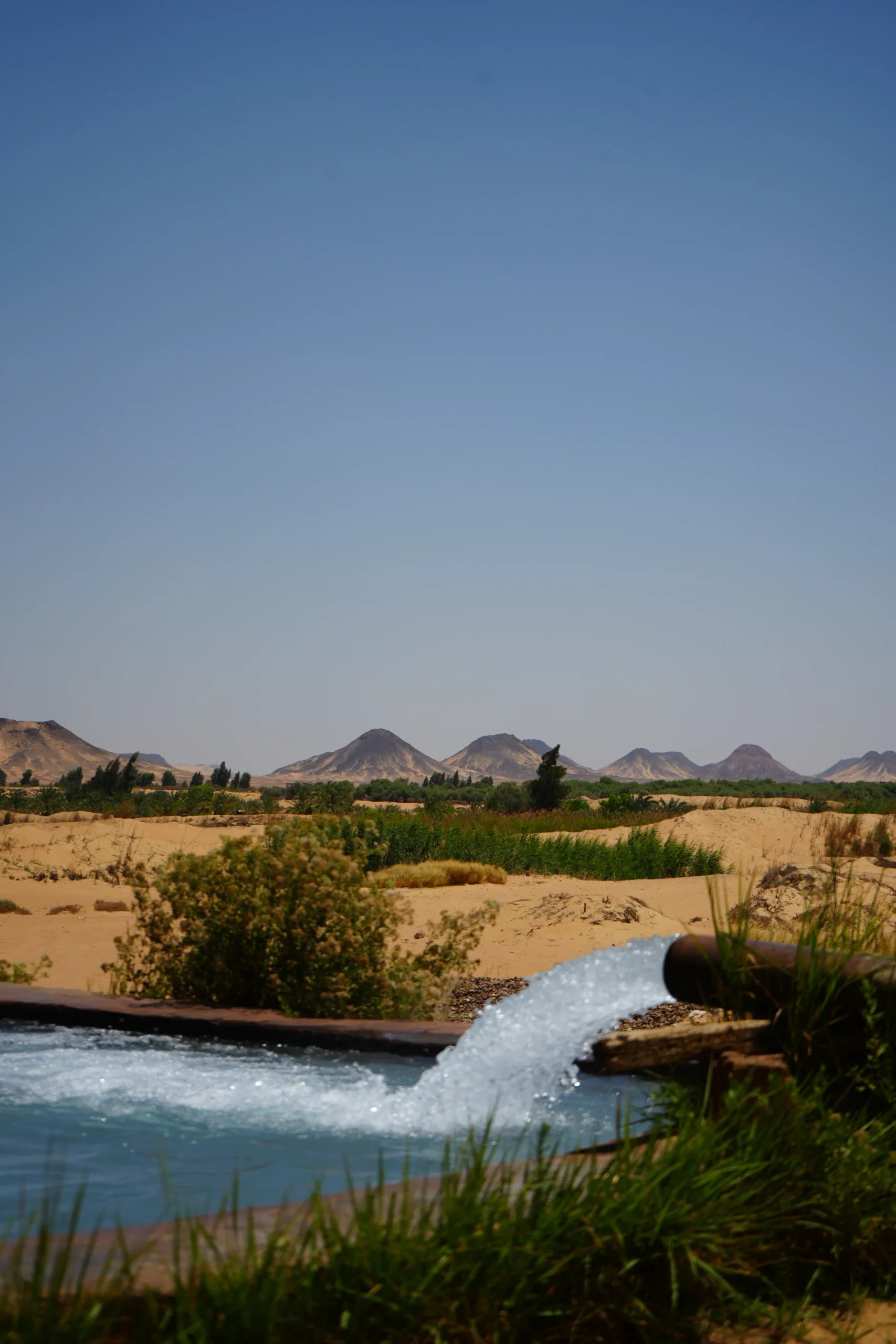
Bahariya Oasis hot springs are natural groundwater outlets and wells around Bawiti, the wider Bahariya depression and the El Hez area to the south. The official Egyptian tourism portal names Ain Gomma, Al-Jaffara, Bir Al-Mattar and Bir Ramla among the better-known hot and cold springs in and around Bahariya. However, these are not four identical commercial spas with fixed opening hours, changing rooms and a temperature displayed at reception.
For most travellers, the best spring is the one a licensed local guide can confirm is accessible, clean enough for the intended visit, comfortable in temperature, suitable for the group and compatible with the day’s route. Elzaghandi Travel’s active three-day Bahariya Oasis and White Desert itinerary includes a natural hot-spring stop on the first oasis day and another spring stop beside lunch in El Hez on the second day. The exact spring, bathing conditions and privacy arrangements should be confirmed before travel and again locally.
Quick answer: Go for the landscape, local water culture and a relaxing break—not for an unverified medical cure. Ask which spring you will visit, whether swimming is allowed, the current water temperature, depth, changing arrangements and how slippery the entry is. Bring a modest swimsuit, quick-dry towel, sandals, dry clothes and a wet bag. Do not swallow untreated water, use soap in the spring or force yourself to remain in water that feels too hot.
Bahariya hot springs at a glance
What are the Bahariya Oasis hot springs?
Bahariya is a natural depression in Egypt’s Western Desert. NASA Earth Observatory explains that the depression is deep enough to reach groundwater, which supports settlements, date palms and olive groves in an otherwise arid landscape. The springs and wells are therefore part of the same water system that makes life and farming possible.
In travel language, the word “spring” is used broadly. One location may be a naturally flowing outlet. Another may be a well whose groundwater feeds an open pool or channel. The bathing area may be simple and functional rather than landscaped for tourists. Local spellings also vary because Arabic place names are transliterated into English in different ways.
This matters when comparing photographs or map pins. An online image labelled “Bahariya hot spring” may show a different source, pool or year from the one available on your trip. Water flow, maintenance, surrounding construction and local use can change. Ask the operator to identify the planned stop instead of booking from an anonymous image.
The official Experience Egypt natural-wonders page describes Bahariya as having many natural hot and cold springs and highlights four names. It does not publish a guaranteed visitor temperature, bathing schedule or medical benefit for each one. A responsible itinerary should preserve that distinction.
Why does Bahariya have warm groundwater?
Groundwater beneath Bahariya occurs within the Nubian Sandstone Aquifer System. Water at different depths travels through different geological layers and can reach the surface at different temperatures and with different dissolved minerals. Deeper groundwater is often warmer, but the temperature a visitor feels also depends on how water is delivered, mixed and cooled before it reaches a pool.
A peer-reviewed 2023 hydrogeochemical study of El-Heiz groundwater reported measured sample temperatures ranging from 26.3°C to 46.4°C. Those figures help demonstrate variation across studied groundwater samples. They are not a promise that a named bathing pool will be within that range on your visit, and they should never replace a local check before anyone enters the water.
Research on the Bahariya groundwater system also emphasizes that this is a hyper-arid environment dependent on a major aquifer. A 2022 Sustainability study discusses pressure on groundwater levels and the importance of management. For visitors, the practical conclusion is simple: spring water is not an unlimited resort amenity. Avoid waste, do not leave taps running, and do not contaminate a source with soap, shampoo or litter.
Which Bahariya springs are the best known?
Ain Gomma
Ain Gomma is one of the four names published by the official Egyptian tourism portal. “Ain” generally means a spring or water source, but English spelling may vary. The official listing confirms the name’s relevance; it does not guarantee unrestricted swimming or specific facilities.
Ask whether the current itinerary uses Ain Gomma, how far the vehicle can approach, whether the bathing area is shared and whether the water feels hot, warm or cool that day. If your priority is photography rather than bathing, say so: the most practical swimming stop and the most photogenic water setting may not be the same.
Al-Jaffara
Al-Jaffara is also named by Experience Egypt. It may appear under another transliteration on local signs, maps or messages. Do not treat a spelling difference as proof of a separate attraction.
Before choosing it, request a current local description. Useful details include pool construction, entry steps, depth, shade, privacy and whether residents use it at the planned time. These details are more useful than a generic claim that one spring is “the best.”
Bir Al-Mattar
Bir Al-Mattar may also appear as Bir el-Matar, Bir al-Mattar or a similar spelling. “Bir” means well, which is a reminder that some attractions described as springs are groundwater wells or pools fed by wells rather than untouched rock basins.
Confirm whether the stop is for viewing, soaking or both. Ask how water enters the pool and whether one area is hotter than another. Never step directly into the inlet zone without checking; water can be warmer close to the source than in the centre or outlet side of a pool.
Bir Ramla
Bir Ramla is the fourth name on the official list. “Ramla” refers to sand, but the name alone tells you nothing about the present access road, facilities or bathing condition. A local guide should choose a safe approach and explain whether the stop is appropriate for the group.
If a traveller has limited mobility, ask about the walking surface from vehicle to water, the height of any pool edge and the availability of a handhold. A flat-looking desert photograph may hide soft sand, mud or a slippery wet margin.
El Hez or El Heiz spring area
El Hez—also written El Heiz—is south of the main Bahariya settlements on the route toward the Black Desert, Crystal Mountain, Agabat and White Desert. Elzaghandi Travel’s published three-day Bahariya Oasis and White Desert adventure uses El Hez as a lunch and rest stop beside a natural sulfur spring, where swimming may be possible. The active two-day White Desert adventure also includes the El Hez spring stop on its desert day.
El Hez is particularly practical when the main purpose of the trip is the Black and White Desert because it fits the overland route. It is not necessarily a substitute for a slower hot-spring stop during a dedicated Bahariya day. The three-day itinerary can include both experiences; the two-day itinerary prioritizes the southbound desert route.
Are all five names separate swimming attractions?
Do not assume so. The official source highlights four better-known hot and cold springs, while the Elzaghandi itinerary describes practical spring stops without promising that every named source will be visited. A particular outlet may be unavailable, unsuitable for bathing, under maintenance, busy or simply inefficient for that day’s route.
Use this shortlist as a conversation with the operator, not a checklist that forces five water stops into one day. A well-planned trip normally selects one suitable oasis spring and, on an extended desert route, may add the El Hez stop.
How to choose the best spring for your trip
Choose by current temperature
“Hot” is subjective. Water that feels pleasantly warm to one traveller may feel uncomfortable to another, especially after sun exposure or dehydration. Ask for a same-day assessment rather than relying on a number copied from a study or an old review.
If possible, test the water gradually with a hand or foot while holding a stable edge. Enter slowly. Move away from the inlet if that area is hotter. Leave immediately if you feel dizzy, nauseated, weak, unusually sleepy, short of breath or uncomfortable.
Choose by route
For a dedicated Bahariya day, choose a spring near the sequence you want: Bawiti, El Beshmo, Salt Lake, dunes, Pyramid Mountain and English Mountain. For a two-day White Desert trip, the El Hez stop makes more geographic sense because the schedule must continue to Crystal Mountain, Agabat and camp before sunset.
Read the Bahariya Oasis travel guide and 12 essential things to do in Bahariya before deciding whether the spring is one short stop or the centre of a full oasis day.
Choose by privacy
Ask whether the pool is public, shared with local residents or available at a quieter time. Travellers who need gender-separated or private changing arrangements should say so before booking. “Private tour” describes the vehicle and guide; it does not guarantee private use of community water.
Choose by entry and depth
A traveller with knee, hip, balance or mobility limitations needs more than “easy access.” Ask for the number and height of steps, pool-edge height, handrails, surface material, depth and distance from the vehicle. If the answers are uncertain, plan a viewing stop instead of a swim.
Choose by facilities
Ask whether there is a changing room, toilet, shower, bench, shade or secure place for belongings. If facilities are basic, change at the hotel, wear swimwear under modest clothing and carry a dry outer layer. Never assume a natural spring operates like a hotel spa.
Choose by group needs
Children need shallow water, close adult supervision and protection from hot surfaces. Older travellers may prefer a short soak or simply sitting beside the water. Photographers may want early or late light. A mixed group can use one location differently without forcing everyone to swim.
Hot, warm and cold springs: what temperature should you expect?
There is no single “Bahariya hot spring temperature.” Published research samples show broad variation, and the visitor experience can differ from the source measurement. Water cools as it moves through channels, mixes with other water or sits in an open pool. Air temperature, wind and the rate of flow also change how it feels.
Use these terms as descriptions, not guarantees:
- Cold or cool: refreshing in warm weather but potentially uncomfortable on a winter morning.
- Warm: often the easiest option for a longer relaxed soak.
- Hot: may be comfortable only for a short period and may require gradual entry.
- Very hot at the inlet: avoid direct contact until the guide confirms a safe area.
A thermometer reading taken at the pool on the day is more useful than a regional groundwater range. Even then, individual health and heat tolerance matter. There is no prize for remaining in uncomfortable water.
What is a Bahariya spring visit actually like?
Expect a simple local experience. The approach may pass farms, palms, sandy lanes or low desert terrain. The pool may be circular or rectangular, open to the sky and fed through a pipe or channel. Surroundings can be functional rather than designed as a scenic spa. Other users may arrive.
A normal stop can include:
- The guide confirms the selected source and current conditions.
- Travellers inspect the water, entry and privacy situation.
- Those who want to swim change before or at the available facility.
- Everyone enters slowly and stays within a comfortable area.
- The group leaves enough time to dry and change before the next drive.
- No soap, shampoo, food packaging or wet wipes are left at the water.
Allow approximately 45 to 90 minutes when swimming is a priority. A quick viewing stop may be shorter. Changing and drying often take longer than expected, especially for a family or during winter.
Can you swim in Bahariya Oasis hot springs?
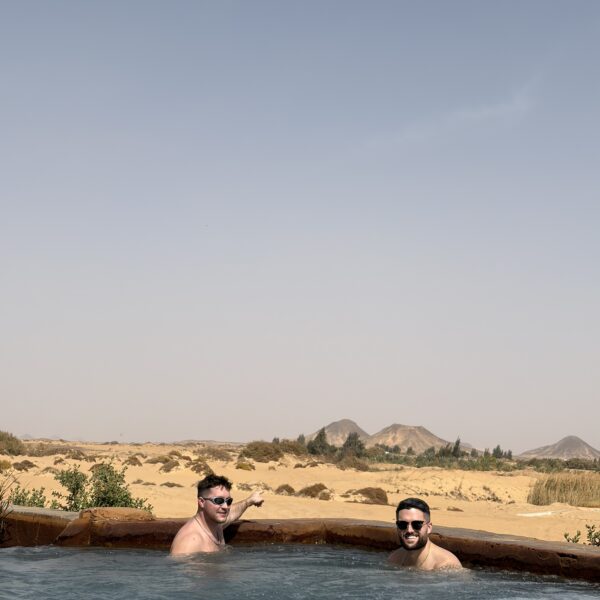
Swimming or soaking is possible at selected locations when the guide confirms current conditions. Do not assume access from a map pin or old review. Water level, maintenance, local rules and cleanliness can change.
Before entering, ask:
- What is the name of this spring or well?
- Is bathing permitted today?
- Is the water treated or untreated?
- How hot is it near the inlet and in the main pool?
- How deep is the water?
- Is the bottom level, rough, muddy or slippery?
- Is there a safe step or handhold?
- Are children permitted?
- Are other users expected?
- Where can we change?
- Where can valuables stay dry?
- How long do we have?
If the guide cannot confirm a safe entry, enjoy the landscape without swimming. A spring visit remains meaningful as part of understanding how Bahariya’s settlements and agriculture depend on groundwater.
Health and water-safety guidance
Natural spring water is not the same as a disinfected swimming pool. Clear water can still contain microorganisms, and mineral content does not sterilize it. The following guidance is precautionary and does not claim that a named Bahariya spring is contaminated.
Keep untreated spring water out of your mouth
Do not drink from the bathing pool or swallow water while swimming. Bring sealed or otherwise reliably treated drinking water. A warm spring may feel refreshing, but it is not a substitute for safe drinking water during a desert trip.
Keep your head above naturally hot water
The US Centers for Disease Control and Prevention publishes general advice for naturally hot or geothermal water because the rare organism Naegleria fowleri can live in warm fresh water. The CDC prevention page recommends keeping the head above water in hot springs and other naturally hot or geothermal water, avoiding water entering the nose and not stirring sediment.
This is global preventive guidance, not evidence that Ain Gomma, Al-Jaffara, Bir Al-Mattar, Bir Ramla or El Hez contains the organism. The infection is rare, but the simplest precaution is to keep your face out of untreated warm water and never dive or force water up the nose.
Avoid natural water when you have diarrhea
The CDC’s healthy natural-water guidance says not to enter recreational water if you have diarrhea. This protects both you and other users.
Protect open wounds
Avoid entering with open cuts, recent surgical wounds or broken skin. If a minor cut can be completely covered with a waterproof dressing, confirm whether entering is still sensible. Desert dust, wet surfaces and untreated water are a poor combination for wound care.
Do not enter suspicious water
Skip the swim if the water is unusually cloudy, discoloured, foul-smelling, visibly polluted or subject to a local warning. Natural mineral odour and pollution are not the same, but a traveller should not diagnose the difference alone. Ask the local guide and err on the cautious side.
Prevent heat stress
Arrive hydrated. Avoid alcohol before soaking. Enter gradually and keep the first session short. Leave if you feel dizzy, faint, nauseated, overheated, confused or short of breath. Sit in shade, cool down and drink safe water. Do not move directly from a very hot pool into strenuous dune climbing.
Consider personal medical factors
Seek individual medical advice before using hot water if you are pregnant or have a heart condition, blood-pressure problem, fainting history, impaired heat sensation, serious skin condition, recent surgery, immune suppression or another relevant condition. This article cannot determine whether a hot spring is safe for an individual traveller.
Carry prescribed medication in the vehicle, tell the operator about relevant limitations and ensure travel insurance covers your itinerary. Bahariya is remote from Cairo, and advanced medical care may take time to reach.
Are Bahariya hot springs therapeutic?
Warm water can feel relaxing after a long drive, but that subjective experience is different from a medical treatment. Minerals identified in groundwater research do not automatically prove that bathing cures arthritis, eczema, digestive illness, respiratory disease or any other condition.
Avoid operators or articles that promise a cure without high-quality clinical evidence for the specific spring, exposure and condition. People with symptoms should seek qualified medical care. Visit Bahariya’s springs for recreation, local context and landscape—not as a replacement for diagnosis or treatment.
Are the springs safe for children?
They can be suitable when the exact pool is shallow enough, the temperature is comfortable and an adult remains within arm’s reach. Natural water does not have the standardized depth markings, lifeguard supervision or anti-slip surfaces expected at a modern pool.
For a family visit:
- Confirm depth before the child enters.
- Keep the child away from the inlet.
- Use water shoes or secure sandals if appropriate.
- Do not rely on inflatable toys as life-saving equipment.
- Prevent diving, jumping and underwater play.
- Keep the child’s face above untreated warm water.
- Limit time in hot water.
- Provide safe drinking water and shade.
- Bring dry clothes for the next vehicle journey.
- Leave if the child becomes flushed, sleepy, dizzy or uncomfortable.
Ask about child restraints for the Cairo and desert drives as part of the same booking. Spring safety is only one part of a family itinerary.
Advice for solo women and travellers who need privacy
Bahariya is a living community, and some water sources are used locally. Choose modest swimwear and bring an opaque cover-up that is easy to put on while damp. Ask for the current privacy arrangement before arriving.
Questions worth sending in advance include:
- Will men and women use the pool at the same time?
- Is the spring public or booked for our group?
- Is there an enclosed changing space?
- Can the visit be scheduled at a quieter time?
- Can I change at the hotel and travel in a cover-up?
- Will a female staff member or guide be available if requested?
An operator may be able to adjust the time or select another location, but privacy should be confirmed rather than assumed. Never photograph residents or other bathers without explicit permission.
Accessibility and mobility
Natural spring access varies. One pool may have a high concrete edge; another may require soft-sand walking or uneven steps. Wet surfaces can be more difficult than the distance suggests.
Ask for a functional description:
- Distance from the vehicle to the water
- Sand, mud, stone or paved surface
- Number and height of steps
- Handrail or stable support
- Pool-edge height
- Water depth
- Seat or bench
- Toilet access
- Changing-space dimensions
- Option to view without entering
- Assistance that the guide can safely provide
Send a short video or photo request if the specific stop is known. If entry is unsuitable, include the spring as a short cultural stop and spend more time at vehicle-accessible attractions such as El Beshmo, Salt Lake or selected viewpoints. The things to do in Bahariya guide gives alternatives for different activity levels.
What to wear
In the water
A modest one-piece swimsuit, swim shirt, board shorts or similar quick-drying clothing works well. Choose secure garments that remain comfortable on steps and in moving water. Avoid heavy cotton because it stays wet and becomes cold in the vehicle.
Around the spring
Wear a loose cover-up, long shirt, light trousers or robe that respects the local setting. Secure sandals or water shoes help on wet surfaces, but they do not make a slippery edge safe.
After swimming
Change into completely dry underwear, socks and clothing before a long drive. In winter, keep a fleece or jacket ready. Desert air and wind can feel cold after warm water even when daytime temperatures are comfortable.
Bahariya hot-spring packing list
- Modest swimsuit or swim clothing
- Opaque cover-up
- Quick-dry towel
- Secure sandals or water shoes
- Full dry change of clothes
- Wet bag or sealable reusable bag
- Safe drinking water
- Sunscreen
- Hat and sunglasses
- Waterproof dressing for minor protected cuts, if medically appropriate
- Personal medication
- Small first-aid kit
- Hand sanitizer for use away from the water
- Tissues and a sealable waste bag
- Phone pouch if you need it near the pool
- Small amount of cash if a local fee is confirmed
Do not bring soap, shampoo, bath oils, glass containers or single-use items that can blow into farms and channels. Use hotel facilities for washing.
For the overnight portion, add the items in the White Desert packing guide, including a headlamp, warm sleep layers, windproof jacket, power bank and essential medication.
Best time to visit Bahariya hot springs
October to April
This is the most comfortable period for combining an oasis swim with the Black and White Desert. Days are generally easier for sightseeing, while winter mornings, evenings and camps can be cold. Warm water is attractive in cool weather, but getting changed outdoors can be uncomfortable. Keep the towel and dry layer immediately accessible.
May to September
High heat makes the Cairo drive, exposed pool edges, dunes and desert route more demanding. A hot soak may be less appealing at midday. Ask for early or late timing, reliable vehicle air conditioning, shade and sufficient safe drinking water.
Time of day
Morning can be quieter and cooler. Late afternoon may offer softer light but can conflict with English Mountain sunset. Midday provides strong sun and easier drying but more heat exposure. The best slot depends on the route, privacy and current water temperature.
Use the best time to visit the White Desert guide to coordinate the spring with camp temperature, wind and daylight.
How to combine the springs with Bahariya attractions
One oasis day
A balanced local day can include:
- Zawya Mosque and old Bawiti
- El Beshmo palm-grove viewpoint
- Salt Lake and tea
- Dunes above the lake
- Pyramid Mountain
- A confirmed natural hot spring
- English Mountain sunset
This schedule works best with a night in Bahariya. Driving from Cairo, completing every stop and returning the same night creates a very long day. Read how to get to Bahariya Oasis from Cairo and where to stay in Bahariya Oasis before attempting it.
Two days and one night
The active two-day White Desert adventure is designed around the remote landscape rather than a full Bawiti tour. After reaching Bahariya and changing to a local four-wheel-drive vehicle, the route continues through the Black Desert, El Hez spring and lunch, Crystal Mountain, Agabat and the White Desert camp.
Choose this option when the Black Desert, Crystal Mountain, Agabat Valley and camp matter more than a dedicated oasis spring circuit.
Three days and two nights
The active three-day Bahariya Oasis and White Desert adventure provides the best balance for spring-focused travellers:
- Day 1: Cairo or Giza transfer, hotel lunch, Bahariya sights, natural hot spring, English Mountain sunset and hotel night.
- Day 2: Black Desert, El Hez lunch and spring, Crystal Mountain, Agabat, White Desert sunset and camp.
- Day 3: Sunrise, iconic formations, return through Bahariya and transfer to Cairo or Giza.
This structure gives time to dry and rest at a hotel after the first spring. It also places El Hez naturally within the desert route. Exact order and access can change because of permits, weather, water conditions and local operations.
Three days with two desert camps
The active three-day White Desert adventure prioritizes deeper desert time and two camping nights. Choose it for landscape and camp experience, not because you expect a full Bahariya sightseeing day. Ask whether a convenient spring stop remains possible within the final route.
Spring visit versus White Desert camp
These experiences serve different purposes. The spring gives a short view of oasis water culture and a physical break. The White Desert provides protected chalk landscapes, sunset, stars and sunrise. Do not shorten the desert approach so aggressively that the group reaches camp after dark merely to add another pool.
A strong itinerary protects three fixed moments:
- Enough daylight to inspect and enter a spring safely
- Enough time to reach key desert stops without rushing
- Arrival at the guide-selected camp area before sunset
If delays occur, ask the guide which stop can be shortened safely. Water, road, permit and sunset conditions should outrank a rigid checklist.
Permits, guides and current travel conditions
At the time of this review, UK government regional advice for Egypt states that tourists travelling to Bahariya, Farafra, the Black Desert or White Desert need permits arranged in advance and must use an official guide. It also notes limited mobile reception and limited medical facilities in these areas.
Travel advice can change and each nationality may receive different guidance. Check your own government’s current advice, use a licensed operator, carry the identification requested for permits and ensure your insurance covers desert travel and planned activities.
The spring inside the inhabited oasis and the remote protected-area route are not the same logistical problem. A local town stop may be simple, while the Black and White Desert section requires four-wheel-drive transport, permits, food, water, camp equipment and a guide who knows current tracks.
Responsible spring visits
Do not use soap or shampoo
Natural water outlets connect to local land, channels and groundwater use. Personal-care products can affect water and downstream users. Wash at the hotel.
Use only the water you need
Bahariya depends on groundwater. Research has raised concerns about pressure on this resource. Do not leave a flow running for photographs or treat water as an unlimited prop.
Do not block local use
A community source is not a private resort. Follow the guide’s instructions, keep the visit reasonably timed and give residents priority where appropriate.
Take every item away
Carry towels, tissues, wipes, dressings, food packaging and wet bags out. Wind moves light litter quickly into farms and desert.
Avoid loud or intrusive behaviour
Keep music low, change discreetly and ask before photographing people. Drone use requires separate legal and local confirmation; do not launch one because the landscape appears empty.
Protect the wider route
Do not collect stones, crystals, fossils or chalk from the Black and White Deserts. Stay on established tracks and follow protected-area instructions. The White Desert camping guide explains low-impact camp behaviour.
How much does a Bahariya hot-spring trip cost?
There is no reliable universal price for “the hot springs” because the water stop is normally part of a broader private itinerary. Cost depends on:
- Cairo or Giza pickup location
- Dates and season
- Nationality and permit requirements
- Number and ages of travellers
- Private or shared format
- Vehicle type
- One-day, two-day or three-day duration
- Bahariya hotel category and room arrangement
- One or two camping nights
- Local four-wheel-drive vehicle
- Guide and driver
- Meals and safe drinking water
- Protected-area entry and permits
- Camping equipment
- Spring or local access fee, if any
- Accessibility or privacy arrangements
- Optional archaeology or photography time
Elzaghandi Travel uses a request-a-price system. Send complete details through WhatsApp and request an itemized written itinerary. A lower quotation is not automatically better if it omits the hotel, park tickets, meals, sleeping equipment or private transport.
Questions to send before booking
Copy this checklist into your WhatsApp message:
- Which Bahariya spring is planned?
- Is it hot, warm or cool under current conditions?
- Is swimming allowed and recommended on our date?
- Is the pool treated or untreated?
- How deep is it?
- How do we enter and exit?
- Are the surfaces slippery?
- Is it suitable for our child, older traveller or mobility needs?
- Is the spring public or private?
- Are changing rooms and toilets available?
- Can privacy be arranged?
- How long is the stop?
- Is El Hez included as a second spring stop?
- Are spring fees included?
- What happens if the planned source is unavailable?
- Which Bahariya attractions are included before sunset?
- Which desert tour and camp are included afterward?
- Are permits, park tickets, meals, water and camping equipment included?
This produces a much clearer quotation than asking only, “How much is a Bahariya hot-spring tour?”
Related Bahariya guides: Combine the springs with the Bahariya Oasis travel guide, the 12 essential things to do, and the Bahariya Salt Lake sunset guide.
Frequently asked questions
What are the best hot springs in Bahariya Oasis?
The official Egyptian tourism portal names Ain Gomma, Al-Jaffara, Bir Al-Mattar and Bir Ramla among the better-known hot and cold springs. The best current bathing stop depends on access, water condition, temperature, privacy and route. El Hez is a practical additional stop on the Black and White Desert route.
Is Ain Gomma hot or cold?
Do not rely on the name or an old review for current temperature. Ask the local guide for a same-day assessment and test the water gradually before entering.
Is Al-Jaffara open to visitors?
The name appears on the official tourism list, but public access and bathing conditions should be confirmed locally for the exact date. An official listing is not a fixed opening-hours guarantee.
Is Bir Al-Mattar the same as Bir el-Matar?
They are likely transliteration variants of the same Arabic place name, but confirm the exact map location with the operator. English spellings in Bahariya are not fully standardized.
What is Bir Ramla?
Bir Ramla is one of the better-known Bahariya water sources named by Experience Egypt. Ask whether the planned visit is for bathing, viewing or both and what facilities currently exist.
What is the El Hez spring?
El Hez or El Heiz is a spring area south of the main Bahariya settlements on the route toward the Black and White Deserts. Elzaghandi’s active two- and three-day itineraries use it as a lunch and rest stop where swimming may be possible.
Is El Hez part of Bahariya Oasis?
El Hez lies in the southern Bahariya area and works as a transition between the inhabited oasis and remote desert route. It is not in central Bawiti.
How many springs can I visit in one day?
One well-chosen spring is normally enough within a full oasis day. Visiting several can displace the Salt Lake, palm groves, dunes and sunset without adding a meaningfully different experience.
Can I swim in every Bahariya spring?
No. Some sources may not be suitable or available for swimming. Always confirm the exact location, access, depth, temperature and current condition.
Are the springs natural?
They are fed by natural groundwater, but the visible outlet or pool may be shaped, channelled or supplied by a well. “Natural” does not necessarily mean an untouched rock pool.
How hot are Bahariya’s springs?
There is no single temperature. A 2023 study measured different El-Heiz groundwater samples between 26.3°C and 46.4°C, but those research measurements do not guarantee the temperature of a visitor pool on a particular day.
Will the water be too hot for children?
It might be, depending on the source and inlet. Choose a comfortably warm or cool pool, check the temperature and depth, keep children away from the inlet and supervise them within arm’s reach.
Are Bahariya springs sulfur springs?
The Elzaghandi itinerary describes the El Hez stop as a natural sulfur spring. Do not assume every named Bahariya source has identical chemistry or odour.
Does sulfur water cure skin problems?
This guide makes no treatment claim. Mineral content alone does not prove that bathing will cure a skin or medical condition. Ask a clinician about symptoms and avoid untreated water with open or irritated skin.
Can I drink spring water?
Do not drink from a bathing pool or untreated outlet. Bring safe drinking water provided by a reliable source.
Can I put my head underwater?
The CDC recommends keeping the head above naturally hot or geothermal water and preventing water from entering the nose. This is general global precautionary guidance, not evidence of contamination in a specific Bahariya spring.
Is Naegleria known in Bahariya’s springs?
This article cites no evidence that a named Bahariya spring contains it. The CDC advice is included because it applies generally to naturally hot fresh water and offers a simple risk-reduction measure.
Can I swim with a cut?
Avoid entering untreated natural water with open wounds or recent surgical sites. Seek medical advice for your situation and use a fully waterproof dressing only when appropriate.
Can I swim if I have diarrhea?
No. CDC guidance says not to enter recreational water when you have diarrhea.
Can pregnant travellers use a hot spring?
Pregnancy and heat exposure require individual medical advice. Ask your clinician before travel and choose a viewing stop if safe limits cannot be confirmed.
Can people with heart or blood-pressure conditions enter?
They should seek individual medical advice before using hot water. Heat can affect circulation, and Bahariya is remote from advanced medical care.
Are there lifeguards?
Do not expect a lifeguard. A local guide provides route and site knowledge but is not a substitute for formal aquatic supervision. Stay within your ability and supervise children directly.
Are changing rooms available?
Facilities vary and may be basic or absent. Ask about the exact location, and be ready to change at the hotel or under a modest cover-up.
What swimsuit should I wear?
Choose modest, secure, quick-drying swimwear and carry an opaque cover-up. Respect local users and avoid changing in open view.
Do I need water shoes?
Secure sandals or water shoes can help on rough or wet surfaces, but they do not eliminate slip risk. Inspect the entry and use a stable handhold.
Can I use soap or shampoo?
No. Use hotel washing facilities and avoid introducing personal-care products into a natural water source.
Can I visit a spring without a guide?
Central oasis travel may appear straightforward, but a local guide is valuable for identifying the correct source, current access, privacy and water condition. Remote Black and White Desert travel requires official arrangements and four-wheel-drive expertise.
How far are the springs from Cairo?
Bahariya is roughly a five-hour road journey from Cairo under normal conditions, but timing varies with pickup, traffic, rest stops and checkpoints. The spring itself may require additional local driving.
Can I visit as a day trip from Cairo?
Technically possible but tiring. A return journey plus oasis sightseeing can create ten or more hours of road time. An overnight in Bahariya makes the spring and sunset experience more realistic.
Is the hot spring included in the two-day White Desert trip?
The active two-day route includes a spring stop at El Hez beside lunch. It does not provide the same full Bahariya oasis circuit as the three-day hotel-and-camp itinerary.
Is the hot spring included in the three-day trip?
The active three-day Bahariya Oasis and White Desert itinerary includes a natural hot spring on Day 1 and the El Hez spring stop on Day 2, subject to current conditions and final confirmation.
Which trip is best for spring lovers?
Choose the three-day Bahariya Oasis and White Desert adventure because it allows a dedicated oasis spring stop, a hotel night and the El Hez stop within the desert route.
When is the best season?
October through April is generally most comfortable for combining springs with desert sightseeing. Winter changing can feel cold, while summer midday heat can make hot water less appealing.
What is the best time of day?
Morning can be quieter, midday is easier for drying but hotter, and late afternoon has softer light but may conflict with sunset. Let route and privacy determine the slot.
Are the springs crowded?
They can be shared with residents or other visitors. Ask for a quieter time, but do not assume exclusivity at a public or community source.
Can I take photos?
Photograph the landscape and your own group when appropriate. Ask before photographing residents, other bathers, farms or private property.
Can I use a drone?
Do not fly a drone without confirming Egyptian legal requirements, permits and local permission. A remote-looking site is still subject to national rules and community privacy.
Is there mobile signal?
Coverage may exist around Bawiti but becomes limited on remote desert routes. Share plans before departure and do not rely on continuous data service.
What should I bring?
Bring modest swimwear, a quick-dry towel, sandals, full dry clothes, a wet bag, safe drinking water, sun protection and personal medication. Add warm layers and a headlamp for an overnight desert trip.
How do I get a price?
Send dates, nationality, group size, pickup, trip length, preferred spring experience, privacy needs and medical or mobility considerations to Elzaghandi Travel on WhatsApp. Request the full inclusions in writing.
What if the planned spring is closed or unsuitable?
Ask the guide to choose a safe alternative, convert the stop to a viewing visit or spend more time at another Bahariya attraction. Do not pressure the group to enter unsuitable water to preserve a checklist.
Choose the right itinerary
- Choose the 3 Days / 2 Nights Bahariya Oasis & White Desert Adventure for a dedicated Bahariya hot-spring stop, an oasis hotel night, El Hez, the Black Desert and one White Desert camp.
- Choose the 2 Days / 1 Night White Desert Adventure when time is limited and one El Hez spring stop is enough.
- Choose the 3 Days / 2 Nights White Desert Adventure when two desert camping nights matter more than a full oasis day.
- Use the custom trip page to request a quieter spring time, mobility adaptation, private changing plan, archaeology or photography time.
Sources and further reading
- Egyptian Tourism Authority, Natural Wonders of Al-Bahariyya. Official naming of Ain Gomma, Al-Jaffara, Bir Al-Mattar and Bir Ramla among Bahariya’s better-known hot and cold springs.
- Elzaghandi Travel, 3 Days / 2 Nights Bahariya Oasis & White Desert Adventure. First-party active itinerary for a Day 1 natural hot spring and Day 2 El Hez spring stop.
- Elzaghandi Travel, 2 Days / 1 Night White Desert Adventure. First-party active itinerary connecting El Hez with the Black Desert, Crystal Mountain, Agabat and White Desert camp.
- NASA Earth Observatory, Bahariya Oasis. Geographic explanation of the depression, groundwater and cultivated oasis landscape.
- Egyptian Journal of Desert Research, Using Hydrogeochemical Approach in Groundwater Assessment of El-Heiz Area. Peer-reviewed context for varied groundwater temperatures and chemistry in the El-Heiz area.
- Sustainability, Multivariate Statistical Analysis and Structural Sovereignty for Groundwater Management in Bahariya Oasis. Research context for the Nubian Sandstone Aquifer and groundwater-management pressure.
- US Centers for Disease Control and Prevention, Preventing Brain Infection When Swimming. General preventive guidance for warm fresh water and natural hot springs; not evidence about contamination in a specific Bahariya source.
- US Centers for Disease Control and Prevention, How to Safely Visit Oceans, Lakes and Rivers. General untreated natural-water precautions for wounds, diarrhea, swallowing water and visible water quality.
- UK Foreign, Commonwealth & Development Office, Egypt regional risks. Current guidance on permits, official guides, limited mobile reception and medical facilities for Bahariya and the Black and White Deserts.
Include Bahariya hot springs in your itinerary
Message Elzaghandi Travel on WhatsApp with your dates, nationality, number of adults and children, Cairo or Giza pickup, preferred two-day or three-day trip, swimming ability, privacy needs and any mobility or health considerations relevant to planning.
Ask the team to confirm the spring name, current temperature, bathing permission, depth, entry, changing facilities, expected privacy, El Hez stop, hotel, camp, permits, meals, water, equipment and final price. For the most complete spring-and-desert combination, request the 3 Days / 2 Nights Bahariya Oasis & White Desert Adventure with one Bahariya hotel night and one White Desert camping night.