Valley of the Golden Mummies in Bahariya Oasis: Visitor Guide
Last reviewed: 8 September 2026
The Valley of the Golden Mummies is a Roman-period cemetery in Egypt's Bahariya Oasis, known for burials with gilded masks, painted cartonnage, linen wrappings and other funerary objects. It is one of the oasis's most important archaeological discoveries—but it is also one of its most misunderstood visitor attractions. The excavation area, an individual tomb, the wider Bahariya archaeological zone and a museum display are not interchangeable. Access to one does not automatically mean access to all the others.
The practical answer for travelers is therefore simple: treat the Valley of the Golden Mummies as a request-to-confirm cultural visit, not as a guaranteed walk-in stop. Egypt's Ministry of Tourism and Antiquities currently lists the wider Bahariya Oasis Archaeological Area as open from 8:00 a.m. to 4:00 p.m., with last admission one hour before closing. However, the ministry page does not state that every Golden Mummies excavation chamber is routinely open. Ask your operator to confirm the exact place you will enter, what is currently on view, the ticket arrangement and photography rules shortly before your trip.
This guide explains what archaeologists found, why the mummies are called “golden,” what the widely repeated figure of 10,000 actually means, and how to fit an archaeology visit into a realistic Bahariya and White Desert itinerary.
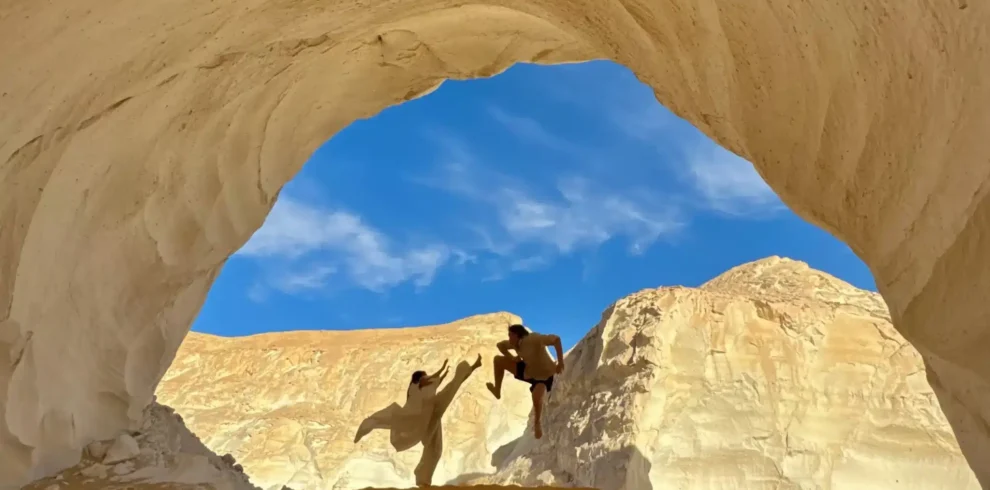
Bahariya is a living oasis as well as an archaeological landscape. This Elzaghandi Travel image shows the wider destination context; it is not presented as a photograph of a Golden Mummies burial chamber.
Valley of the Golden Mummies at a glance
| Planning point | Current practical answer |
|---|---|
| Location | Bahariya Oasis, near Bawiti in Giza Governorate |
| Period | Greco-Roman / Roman-period cemetery with Egyptian funerary traditions |
| What “golden” means | Some burials have gilded masks or chest decoration; the mummies are not made of solid gold |
| Are 10,000 mummies on display? | No. 10,000 is an old estimate for the wider cemetery, not a verified excavated or displayed count |
| Official wider-area hours | 8:00 AM–4:00 PM; Ramadan 9:00 AM–4:00 PM; last entry one hour before closing |
| Exact tomb access | Must be reconfirmed for the travel date; the official area listing does not guarantee daily entry to Tomb 54 or every excavation chamber |
| Ticket change | New Bahariya archaeological-site prices are scheduled from 1 October 2026 |
| Best trip length | Three days if the first oasis day is redesigned; four days is more comfortable for archaeology plus White Desert |
What is the Valley of the Golden Mummies?
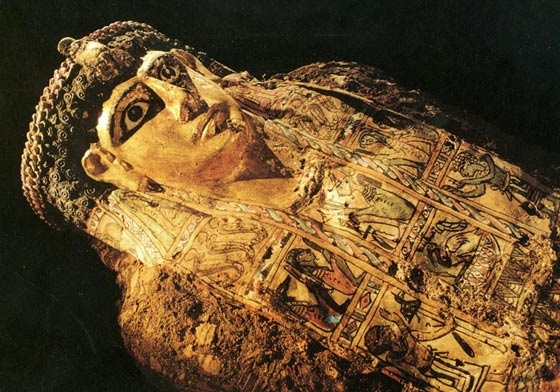
The Valley of the Golden Mummies is a burial ground in Bahariya Oasis rather than a single royal tomb or a conventional museum. Archaeologists found underground, multi-room tombs containing rows of mummies. Some individuals wore gilded masks or decorative chest pieces; others were covered with painted cartonnage, placed in simpler cases or wrapped in linen. Burials included adults and children, and some chambers held family groups.
This makes the discovery very different from the Valley of the Kings near Luxor. The Valley of the Kings is best known for New Kingdom royal tombs cut into rock. The Bahariya cemetery is later, provincial and associated with a community living in the oasis during the Greco-Roman period. Its value is not only the visual impact of gold-colored masks. The tomb groups, pottery, jewelry, amulets, painted religious scenes and different levels of funerary treatment help researchers study family, belief, identity, craft and social difference in an oasis community about two millennia ago.
The name “valley” is also potentially misleading to a first-time visitor. Do not expect a developed pedestrian valley lined with open tomb entrances. The archaeological zone is a protected excavation and conservation environment. What a visitor can enter or see may change according to conservation work, staffing, official decisions and the condition of a particular chamber.
Where is the Valley of the Golden Mummies?
The cemetery is in Bahariya Oasis in Giza Governorate, near Bawiti, the oasis's main town. The Egyptian Ministry of Tourism and Antiquities locates the wider Bahariya archaeological area in Bawiti village and describes it as about 335 km west of Giza. NASA describes the oasis as around 380 km southwest of Cairo. Those figures use different starting references and should be read as orientation, not as a promise of a particular driving distance.
For travelers, the useful fact is that Bahariya is reached overland from Cairo. A normal journey generally occupies much of a morning or afternoon once city traffic, a road stop and local transfer are included. It is not a sensible attraction to add to a conventional Cairo sightseeing day and return from before dinner.
Read the practical route in How to Get to Bahariya Oasis from Cairo and the destination overview in the Bahariya Oasis Egypt Travel Guide.
The discovery: what is known and what became legend
The discovery is usually dated to 1996, although excavation, publication and public announcement unfolded over time. In Zahi Hawass's first-hand book about the site, the cemetery was found by accident after a donkey stumbled into the opening of an underground tomb. That vivid detail is the source of the famous “donkey discovered the valley” story.
The careful way to repeat it is: the excavation leader's published account says a donkey accident exposed or drew attention to a tomb opening. It does not mean an animal surveyed or excavated the necropolis, and it should not overshadow the subsequent work of Egyptian archaeologists, inspectors, conservators, workers and researchers.
The first chambers revealed mummies arranged in multi-room tombs. The preservation and variety of funerary decoration attracted international attention. Gilded faces were especially memorable, but the excavations also documented less elaborate treatments. This range is archaeologically important because it suggests a cemetery used by people with different resources and burial choices, rather than a uniform store of gold-covered elites.
A short discovery timeline
- Mid-1990s: the necropolis came to archaeological attention during work near Bahariya; the discovery is commonly dated to 1996.
- Late 1990s: Egyptian teams excavated multi-room tombs with gilded, painted and linen-wrapped burials.
- 2000: Zahi Hawass published a first-hand book on the site and popularized the estimate that the full cemetery might contain as many as 10,000 burials.
- 2021: a publicized event highlighted Tomb 54 and reported 23 mummies in that specific tomb; this historical event does not prove permanent daily access today.
- 2026: the wider Bahariya Oasis Archaeological Area is officially listed as open, but access to a specific Golden Mummies tomb or display still needs date-specific confirmation.
How many mummies were actually found?
This is the most important numerical correction in any responsible guide.
The short answer
Ten thousand mummies have not been excavated. The number was an estimate of how many burials the full cemetery might contain if its apparent scale continued beneath the ground. Hawass's 2000 book description says that as many as 10,000 might ultimately be uncovered. NASA repeats the figure cautiously, using the word “purportedly.” Neither source presents 10,000 as a counted visitor display.
Early excavation accounts and later summaries use smaller figures such as 105 or approximately 250. Those numbers may refer to different seasons, tomb groups or stages of documentation. A 2021 report about Tomb 54 gave a separate figure of 23 mummies for that specific tomb. These figures should not be added together casually, because sources may overlap.
If a tour description says you will “see 10,000 golden mummies,” it is inaccurate. Ask what exact tomb or display is included and how many objects are currently accessible. A serious operator should answer with current arrangements, not the largest number in an old headline.
Why are they called the Golden Mummies?
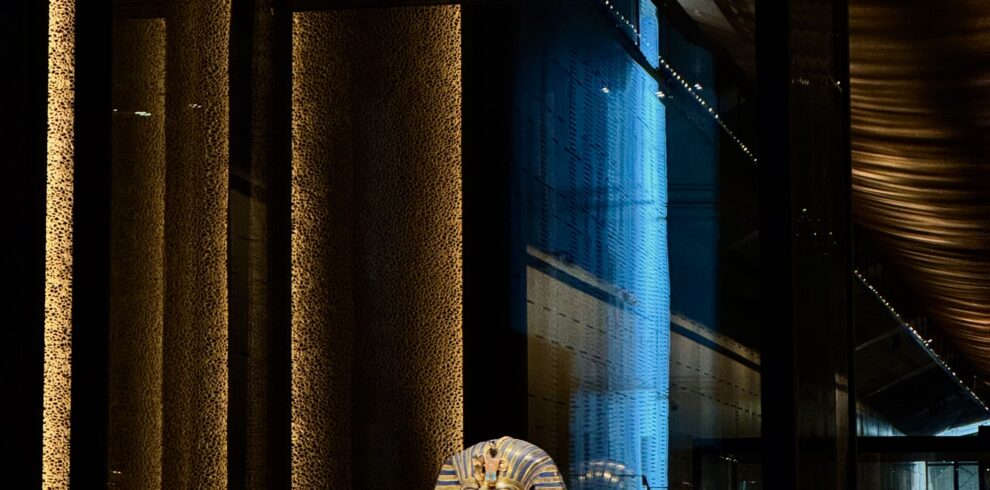
“Golden” refers mainly to gilded funerary elements on some burials—particularly face masks and chest coverings. Gilding means a thin application of gold or gold-colored material over another surface. It does not mean that a mummy, sarcophagus or coffin was cast from solid gold.
Gold had religious and symbolic associations in ancient Egyptian funerary thought, including ideas of divine flesh, solar radiance, endurance and transformation. In a Roman-period oasis burial, gilding could also communicate status and the family's ability to commission expensive funerary work. However, it is too simple to label every gilded individual a “Roman aristocrat.” Archaeologists interpret status from the whole burial context: tomb architecture, decoration, objects, inscriptions, body treatment and comparison with other burials.
Not every mummy was gilded. The cemetery's modern name highlights its most visually striking group, while the archaeological evidence includes several treatments.
The four broad mummy styles described by the excavators
The excavation literature commonly organizes the Bahariya mummies into four broad presentation styles. These are useful for visitors, but they are descriptive groups rather than a perfect social ranking.
1. Gilded masks and chest coverings
Some mummies had gilded faces and decorated upper-body elements. Religious images could appear across the chest. These are the burials that inspired the popular name of the valley.
2. Painted cartonnage
Other bodies carried painted cartonnage components around the face or body. Cartonnage was built from layers of linen or papyrus combined with plaster-like material, producing a firm surface for modeled and painted decoration. It was not cardboard in the modern packaging sense.
3. Anthropoid or human-shaped cases
Some burials used simpler human-shaped coverings or cases, including pottery or ceramic forms reported in excavation descriptions. Decoration and materials varied.
4. Linen-wrapped mummies
Others were wrapped in linen without elaborate gilded fittings. Simpler presentation does not make these burials unimportant. They help researchers understand the full cemetery population and prevent the gold-rich examples from distorting the social picture.
The categories can overlap in details, and conservation may reveal information not visible at first excavation. A visitor should therefore use them as a reading aid, not as a rigid catalogue of everything found.
What the burials reveal about Bahariya's community
The mummies matter because they reconnect famous funerary imagery with a real oasis population. Hawass's book describes family groups, jewelry, pottery, amulets and other artifacts within the tombs. These objects can help researchers ask practical questions: Who was buried together? Which protective deities were shown? What materials did workshops use? How did families express identity under Roman rule? How much did treatment differ between burials?
The art shows continuity in Egyptian religious language even in a world governed first through Ptolemaic and then Roman systems. Deities and funerary ideas did not disappear when political rule changed. At the same time, facial treatment, body presentation and material choices could reflect the mixed cultural environment of Greco-Roman Egypt.
The site should not be reduced to a claim that Egyptian and Greek styles “merged” in exactly the same way on every mummy. Cultural identity is rarely that uniform. Some objects emphasize long-standing Egyptian forms; others belong to a later artistic and economic setting. The tomb group, date and individual object all matter.
Why Bahariya supported a substantial cemetery
Today Bahariya can look remote on a map, but remoteness does not mean historical isolation. The depression reaches groundwater, allowing agriculture in the Western Desert. NASA's overview identifies date and olive groves and notes the oasis's long connection with the Nile Valley. Hawass's book also treats the Roman settlement of El Haiz and a wine-production context, showing that the cemetery belongs to a wider inhabited and productive landscape.
Agriculture, local administration, desert routes and links with the Nile Valley could sustain communities with enough resources to build tombs and commission funerary equipment. Still, the scale and prosperity of the oasis changed over centuries, and a cemetery accumulated over time. It should not be imagined as the product of one wealthy generation.
For a broader list of landscapes, springs and cultural stops, see Things to Do in Bahariya Oasis.
Archaeological site, open tomb and museum display: the essential distinction
Many online guides use four labels as though they identify one attraction:
- Valley of the Golden Mummies: the large necropolis and excavation landscape.
- A Golden Mummies tomb: a particular chamber or numbered tomb, such as Tomb 54.
- Bahariya Archaeological Area: the official umbrella area covering multiple heritage sites around Bawiti and Al-Qasr.
- A museum or display hall: a controlled building where selected mummies or objects may be stored or exhibited.
They are not the same. A general archaeological ticket may cover a group of sites but not an active excavation chamber. A tomb opened at an official ceremony may later close for conservation. A display can change when artifacts are studied, conserved, loaned or relocated. A museum count written years ago is not a reliable promise of what is on view now.
This is why this guide does not promise that you will enter the excavation trenches, descend into Tomb 54, or see a fixed number such as six, eleven, twenty-three, 105 or 250 mummies. The correct current answer must come from the antiquities authority and the operator arranging your date.
Can you visit the Valley of the Golden Mummies in 2026?
What is officially confirmed
The Egyptian Ministry of Tourism and Antiquities' Bahariya page lists the Bahariya Oasis Archaeological Area among sites open for visiting. It gives a Bawiti location, normal hours of 8:00 a.m.–4:00 p.m., Ramadan hours of 9:00 a.m.–4:00 p.m., and last entry one hour before closing. It directs visitors to hotline 19654 for more information.
What is not officially confirmed on that page
The page does not say:
- which Golden Mummies tomb is open on a given date;
- whether visitors enter an excavation chamber or only a managed display;
- how many mummies are on view;
- whether photography is allowed inside;
- whether the Golden Mummies component uses a separate ticket;
- whether conservation work may close an area without notice.
Best booking procedure
At least several days before travel, ask for written answers to these four questions:
- “Is a specific Golden Mummies tomb or display open on my date?”
- “What is the exact name or tomb number of the place included?”
- “Does the quoted tour price include its current ticket and guide?”
- “Are interior photography and phone cameras allowed?”
Then ask the operator to reconfirm locally on the morning of the visit. If entry is unavailable, a sensible cultural alternative may include other currently open Bahariya sites—but the replacement should also be confirmed, not improvised from an old blog post.
Opening hours and last admission
The ministry's published hours for the wider Bahariya Archaeological Area are:
| Period | Opening hours | Last admission |
|---|---|---|
| Normal schedule | 8:00 AM–4:00 PM | 3:00 PM |
| Ramadan | 9:00 AM–4:00 PM | 3:00 PM |
These hours do not override a same-day closure, restoration restriction or special arrangement at a particular tomb. Arrive earlier than the last-admission boundary. Aiming for the final hour leaves no margin for ticketing, local driving, staff coordination or a delayed transfer from Cairo.
Tickets and the announced October 2026 increase
Ticket information is time-sensitive. On 10 July 2026, Ahram Online reported that the Supreme Council of Antiquities had approved new prices for Bahariya Oasis archaeological sites from 1 October 2026:
| Visitor category | Through 30 Sep 2026 | From 1 Oct 2026 |
|---|---|---|
| Foreign adult | EGP 100 | EGP 400 |
| Foreign student | EGP 50 | EGP 200 |
| Egyptian adult | EGP 10 | EGP 40 |
| Egyptian student | EGP 5 | EGP 20 |
This is a report about archaeological sites in Bahariya generally. It is not proof that a single ticket automatically grants entry to a Golden Mummies tomb or that no supplementary arrangement applies. Prices can also change after publication. Verify the current ticket category and inclusion immediately before payment, especially for travel after 1 October 2026.
Students should carry the original valid identification required by the ticket office; an international card may not be accepted for every category. Do not build an itinerary around a discount until the authority confirms eligibility.
What might you see during a confirmed visit?
The answer depends on the exact component opened. A properly confirmed visit might involve one of the following:
- an exterior explanation of the necropolis and excavation landscape;
- entry to a designated tomb with controlled visitor access;
- selected mummies or funerary objects in a local display;
- a combined archaeological ticket covering other Bahariya monuments;
- a guide-led circuit where the Golden Mummies story is explained but the active excavation remains closed.
If a tomb is accessible, expect an archaeological environment rather than a polished urban museum. Underground spaces may be warm, confined, uneven or reached by steps. Light levels can be low to protect material and because of the architecture. Visible objects may be behind barriers or cases. Follow the staff route; do not step into closed chambers for a better photograph.
If only a display is accessible, it may offer clearer lighting and labels but represent a very small selection from the necropolis. That is not a lesser experience when interpretation is good. Conservation and study take priority over displaying the largest possible number of human remains.
How long should you allow?
Allow approximately 60–90 minutes for a confirmed, guided archaeological stop, plus local travel and any ticket coordination. The precise duration can be shorter if only an exterior or small display is accessible, and longer if the ticket includes nearby tombs or temples.
Avoid advertising or expecting a fixed duration before access is confirmed. If the visit must fit before a desert departure, protect at least an additional hour as a buffer. Archaeology should not force dangerous rushing on desert roads or a late arrival at a White Desert campsite.
Do you need a guide?
A knowledgeable guide is strongly recommended. Without interpretation, a visitor may see decorative fragments without understanding which are original, what period they belong to or why the different burial styles matter. A guide can also explain the difference between the necropolis, Tomb 54 and a local display—precisely the distinction that many commercial pages miss.
Ask whether the guide is licensed for cultural sites and whether the quoted language is guaranteed. A desert driver and an Egyptologist perform different roles. One person may be qualified for both, but do not assume that every 4×4 driver can provide a detailed archaeological explanation.
Useful questions for a guide include:
- Which chamber or display are we seeing today?
- Which objects come from this exact tomb?
- Is the dating based on coins, inscriptions, pottery, style or another context?
- Which elements are Egyptian religious traditions and which reflect the Roman-period setting?
- What conservation work limits access?
Photography, phones and respectful behavior
Photography rules can differ between the exterior, a tomb and a museum display. Ask before taking out a camera. A general site ticket does not necessarily include professional equipment, tripods, video production or commercial photography. Flash may be prohibited around pigments and fragile material.
Even when phone photography is allowed, remember that these are human remains. Avoid comic poses, touching, leaning over barriers or using remains as a backdrop for insensitive selfies. Keep voices low when staff or researchers are working. Never collect pottery, stone or any object from the ground; removing even an apparently plain fragment destroys archaeological context and may be illegal.
Accessibility and physical conditions
Accessibility depends entirely on what is open. An exterior viewpoint or ground-level display may be manageable for many travelers. An underground tomb may involve narrow passages, low ceilings, steps, sand, uneven surfaces and limited turning space. It may not be wheelchair accessible.
Before booking, state specific needs instead of asking only whether the site is “easy.” Useful details include:
- wheelchair width and whether it folds;
- ability to manage steps with a handrail;
- walking tolerance on uneven ground;
- sensitivity to heat or dust;
- claustrophobia;
- need for a nearby toilet or seated rest;
- visual or hearing assistance.
The operator should describe the actual open route, not give a generic assurance about Bahariya. If the tomb route is unsuitable, request a museum-style display or an alternative heritage stop where available.
Is the visit suitable for children?
It can be valuable for children who are interested in archaeology and can follow site rules. Prepare them in advance: the visit may include visible human remains, and the correct tone is curiosity with respect. Younger children may find a dark, confined tomb unsettling.
Parents should ask about steps, heat, barriers and toilets. Do not allow children to touch walls or decorated surfaces. A shorter guided explanation focused on excavation methods, masks and family burials may be more engaging than a long chronology.
Best time of year to visit
October through April usually gives more comfortable conditions for combining the archaeology with outdoor oasis and desert stops. Winter mornings can be cool, and nights in the White Desert can feel cold. Summer travel is possible, but midday heat increases fatigue and makes a dense schedule less sensible.
For seasonal trade-offs, read Best Time to Visit the White Desert in Egypt. The same planning principle applies: temperature affects not just comfort but how much concentration and walking a traveler can sustain.
An early archaeological visit is usually preferable to a last-minute arrival near closing. It also leaves time to adjust if the exact tomb is unavailable and the group needs an approved alternative.
What to wear and carry
Choose practical, modest clothing suitable for a provincial town and an archaeological site:
- closed shoes with grip;
- light, breathable layers;
- a warm layer from late autumn through early spring;
- sun hat and sunglasses for exterior areas;
- water in a reusable bottle;
- personal medication;
- tissues and hand sanitizer;
- a small dust mask if you are sensitive to dust;
- passport or ID and valid student identification if relevant;
- cash in Egyptian pounds for small local expenses, unless your operator confirms tickets are prepaid.
Large backpacks, food and drinks may not be permitted inside a tomb or display. Keep water closed and follow staff instructions. For the camping portion of a combined route, use the fuller White Desert packing list.
A cultural visit can be combined with the Black Desert on a multi-day route. This Elzaghandi Travel image illustrates the landscape component, not the interior of the mummy site.
Combining the Golden Mummies with the Black and White Deserts
Bahariya is the gateway to the Black Desert, Crystal Mountain, Agabat Valley and the White Desert. Combining cultural heritage with those landscapes is logical, but only when the schedule respects distance, daylight and official opening times.
The Black Desert Egypt travel guide, Crystal Mountain guide and Agabat Valley guide explain what each landscape contributes. The archaeology should be a deliberate block of time, not a hurried photo stop squeezed between them.
A two-day trip: usually too compressed
A standard two-day White Desert itinerary already has a long transfer from Cairo, multiple desert stops, camp setup, sunrise and a return journey. Adding the Golden Mummies normally means removing a meaningful landscape stop or rushing the archaeological visit. It may work for a private group with one clear priority, but only after the exact access and replacement choices are agreed in writing.
A three-day trip: possible with a redesigned first day
Elzaghandi Travel's published three-day Bahariya Oasis and White Desert adventure uses its first day for a rich local circuit: Zawya Mosque, El Beshmo, the salt lake with tea, dunes, Pyramid Mountain, a natural hot spring, English Mountain at sunset and a hotel night. The Golden Mummies are not listed as a default inclusion.
To add archaeology responsibly, part of that first-day circuit must usually be shortened or replaced. For example, a confirmed archaeological visit could take the place of one or more of the salt-lake, dune, spring or sunset stops. The right choice depends on arrival time and the traveler's priorities. It should never be sold as a “free extra” that leaves the rest of the day unchanged.
Day two can then follow the landscape route through the Black Desert, El Hez, Crystal Mountain and Agabat before the White Desert camp. Day three covers sunrise, formations and the return. This version gives the archaeology a real place in the itinerary while preserving the central desert experience.
A four-day trip: the best balance
Four days provide the cleanest cultural-and-landscape plan:
- Day 1: Cairo to Bahariya, hotel check-in and a relaxed local oasis circuit.
- Day 2: confirmed Golden Mummies-related visit plus one or two additional archaeological or oasis stops, with time for proper interpretation rather than rushing.
- Day 3: Black Desert, El Hez, Crystal Mountain, Agabat and White Desert sunset and camp.
- Day 4: sunrise, White Desert formations, return through Bahariya and onward to Cairo.
This structure also helps travelers who want a slower archaeological explanation, older guests who need rest, and photographers who do not want every stop at harsh midday light.
Other archaeological sites to consider in Bahariya
The ministry's overview highlights archaeology across Al-Qasr, Bawiti and Ain El-Muftella. It mentions a temple from the reign of Wahibre of the Twenty-sixth Dynasty in Al-Qasr, a tomb of an oasis governor named Amenhotep in Bawiti, and chapels at Ain El-Muftella associated with Amasis II and the Theban triad of Amun, Mut and Khonsu.
Travel literature also commonly refers to Qarat Qasr Salim and the Temple of Alexander. However, historical existence is not the same as current opening. Ask which sites are officially accessible on your date, whether a combined ticket applies and whether your guide has the keys or permissions required for any controlled entrance.
A strong cultural day is not necessarily the day with the highest number of ruins. Two well-explained, open sites are better than five locked gates and rushed exterior photographs.
The Bahariya salt lake and hot springs
The oasis's living landscape helps put the cemetery in context. Groundwater made settlement and agriculture possible, while today's springs and cultivated areas show why a community could flourish within the Western Desert. A Bahariya hot-springs visit can provide a relaxed end to a cultural day, provided the chosen spring is clean, suitable and locally approved.
The Bahariya Oasis salt-lake guide covers access and sunset planning. If archaeology runs late, do not speed to preserve both a full salt-lake stop and English Mountain sunset. Choose one well-timed finish.
Where to stay
An overnight in Bawiti or elsewhere in the inhabited oasis is the practical base for a Golden Mummies visit. It separates the cultural day from the long Cairo transfer and makes an early official opening time achievable. Hotel standards vary, so confirm private bathroom, hot water, heating or cooling, meal arrangement and exact room type.
See Where to Stay in Bahariya Oasis for the differences between an oasis hotel, eco-style lodge and desert camp. A White Desert camp is a different experience and should not be treated as the only overnight if you need an early archaeology appointment in town.
Safety and realistic expectations
The principal planning risks are not dramatic movie-style dangers. They are ordinary but important: a long road transfer, heat, dehydration, uneven surfaces, a rushed schedule, changing access, and unclear inclusions. Use an organized route, carry water, follow the antiquities authority and make sure your desert segment has an appropriate vehicle and local team.
Read Is the White Desert in Egypt Safe? for the separate considerations of the camping and off-road portion. The archaeology visit and the desert safari have different operational needs; confirmation for one does not replace preparation for the other.
Common myths and corrections
| Common claim | More accurate wording |
|---|---|
| There are 10,000 Golden Mummies on display | No. 10,000 is an estimate for the possible scale of the wider cemetery, not a verified display count. |
| Every mummy is covered in gold | No. Some burials have gilded elements; others use painted cartonnage, cases or linen wrapping. |
| Tomb 54 is always open | Do not assume this. A 2021 opening event does not prove permanent daily access in 2026. |
| The archaeological area, a Golden Mummies tomb and a museum display are the same thing | They are different visitor components and may have different access arrangements. |
| A Bahariya archaeological ticket automatically includes every Golden Mummies chamber | Not confirmed. Verify the exact tomb or display and ticket inclusion for the travel date. |
Planning checklist before you pay
- Confirm the exact date and number of travelers.
- Ask whether the visit is an archaeological tomb, exterior area or museum/display.
- Request the tomb number or official attraction name.
- Confirm current opening with the local antiquities office.
- Confirm the ticket price and whether it is included.
- Ask whether an archaeology-qualified guide is included and in which language.
- Check photography rules for phones and cameras.
- Describe mobility, heat or claustrophobia concerns.
- Agree which Day 1 stops will be removed if archaeology is added.
- Keep a confirmed alternative for unexpected closure.
- Obtain the full revised itinerary in writing.
- Do not accept a promise to see “10,000 mummies.”
Questions to send on WhatsApp
You can copy this concise request:
I would like to add a cultural visit related to the Valley of the Golden Mummies to a Bahariya and White Desert trip. Please confirm the exact tomb, archaeological area or display that is currently open on my date; the entrance ticket; guide language; photography rules; physical access; and which standard itinerary stops would be replaced. I understand that the excavation area and a museum display are different.
Send the request to Elzaghandi Travel on WhatsApp or use the custom trip form. The response should specify the current visitor component instead of repeating only the destination name.
A longer itinerary can combine Bahariya archaeology with a White Desert camp without compressing both experiences. This is a site-owned landscape image, not a photograph of the mummy necropolis.
Related Bahariya guides: Plan the wider oasis visit with the Bahariya Oasis travel guide, compare the best things to do in Bahariya Oasis, and check how to get to Bahariya Oasis from Cairo before adding a White Desert extension.
Frequently asked questions
1. What is the Valley of the Golden Mummies?
It is a large Greco-Roman cemetery in Bahariya Oasis with multi-room tombs and mummified burials. Some have gilded masks or chest decoration, while others use painted cartonnage, cases or linen wrapping.
2. Is it in Luxor?
No. It is in Bahariya Oasis near Bawiti in Egypt’s Western Desert.
3. Are there really 10,000 mummies?
No verified display or excavation count reaches 10,000. That figure is an estimate for the possible scale of the wider cemetery.
4. Why are they called golden mummies?
Some burials have gilded funerary decoration, especially masks or chest pieces. The bodies and coffins are not made of solid gold.
5. Is every mummy gilded?
No. Excavators documented several different funerary styles.
6. Can tourists visit now?
The wider Bahariya Oasis Archaeological Area is officially listed as open, but access to a specific Golden Mummies tomb, excavation chamber or display must be reconfirmed for the travel date.
7. What are the official hours?
The wider archaeological area is listed as open 8:00 AM–4:00 PM, and 9:00 AM–4:00 PM during Ramadan, with last admission one hour before closing.
8. Is Tomb 54 always open?
No permanent daily-access guarantee was found. A 2021 opening event should not be treated as proof of current routine access.
9. How much are tickets?
Reported Bahariya archaeological-site prices remain EGP 100 for foreign adults and EGP 50 for foreign students through 30 September 2026, then EGP 400 and EGP 200 from 1 October 2026. Egyptian adult/student prices are reported as EGP 10/5, rising to EGP 40/20 from 1 October. Confirm the exact ticket and inclusion before travel.
10. Can I see a fixed number of mummies?
No fixed display count should be promised. What is visible depends on the exact tomb or display open at the time.
11. Is photography allowed?
Rules can differ between exterior areas, tombs and displays. Ask staff before using a phone, camera, flash, tripod or video equipment.
12. How long should I allow?
About 60–90 minutes for a confirmed guided archaeological stop, plus local transfer and ticket coordination.
13. Is it suitable for children or mobility-limited travelers?
Possibly, but the exact open route may include steps, narrow passages, uneven ground or confined spaces. Ask for a route-specific description before booking.
14. Can I combine it with the White Desert?
Yes. Three days can work if the first oasis day is redesigned, while four days is the more comfortable option for archaeology plus the Black and White Desert route.
15. How should I verify access?
Ask the operator for same-week confirmation of the exact tomb or display and use the Ministry of Tourism and Antiquities hotline 19654 for official information about the wider archaeological area.
Final planning advice
The Valley of the Golden Mummies deserves attention because it reveals a later chapter of Egyptian life beyond royal monuments: families in an oasis community used Egyptian funerary traditions, Roman-period materials and different levels of decoration to care for their dead. Its archaeological value is greater than the headline about gold.
Visit with equally careful expectations. Ten thousand is an estimate, not a display. “Golden” describes some decoration, not every burial. The necropolis, Tomb 54, the wider archaeological area and a local display are different. Official area hours are useful, but they do not guarantee entry to every chamber.
For a balanced trip, use three days only if the first-day oasis circuit is deliberately revised; choose four days if archaeology is a major reason for traveling. Request the exact open component, guide, ticket, photography policy and replacement plan in writing. That produces a better visit than a crowded itinerary built around an unverified promise.
Plan a cultural and desert trip to Bahariya with Elzaghandi Travel, or submit the details through the customize-trip page.
Sources and further reading
- Egyptian Ministry of Tourism and Antiquities: Bahariya Oasis Archaeological Area — official location, area hours, last admission and hotline.
- Zahi Hawass, The Valley of the Golden Mummies — first-hand excavation book, American University in Cairo Press, 2000.
- NASA Earth Observatory: Bahariya Oasis — geography, groundwater landscape, agriculture and cautious context for the 10,000 estimate.
- Ahram Online: Bahariya archaeological ticket changes from October 2026 — dated report on prices approved by the Supreme Council of Antiquities.
- Youm7: opening of Tomb 54 in November 2021 — contemporary report for the specific 2021 event, distance from Bawiti and Tomb 54 count; not used as proof of current daily access.
Editorial note: opening, tickets, displayed objects and photography rules can change. This guide separates official current information from historical excavation reports and clearly labels inferences.

Things to Do in Cairo Egypt: 15 Best Attractions & Experiences

Cairo Egypt Travel Guide: Itinerary, Attractions & Practical Tips
Dahshur Pyramids Guide: Bent Pyramid, Red Pyramid & Visiting Tips
Recent Posts

Things to Do in Cairo Egypt: 15 Best Attractions & Experiences
Cairo Egypt Travel Guide: Itinerary, Attractions & Practical Tips
Dahshur Pyramids Guide: Bent Pyramid, Red Pyramid & Visiting Tips