Things to Do in Bahariya Oasis: 12 Essential Stops
Last reviewed: 8 September 2026
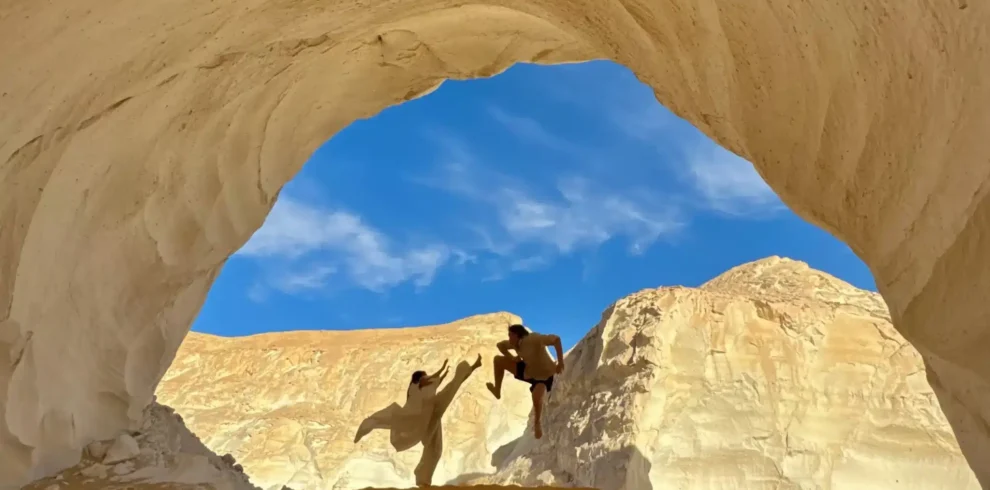
The best things to do in Bahariya Oasis combine an inhabited oasis day with the desert route south toward Farafra. Inside and around Bawiti, the most useful stops are Zawya Mosque, El Beshmo palm-grove viewpoint, the Salt Lake, nearby dunes, Pyramid Mountain, a natural hot spring and sunset at English Mountain. The extended route adds the Black Desert, El Hez spring, Crystal Mountain, Agabat Valley and an overnight White Desert camp.
You need three days and two nights to experience all 12 stops at a reasonable pace. A two-day White Desert trip normally skips most of the Bahariya town and oasis attractions because the first afternoon is needed for the Black Desert–White Desert route. If you only have one day, stay within Bahariya and choose four to six local stops instead of trying to reach the White Desert and return.
Opening, access and water conditions can change. A named spring, lake edge, archaeological site or desert track should only be treated as included when it appears in your written itinerary. For the remote attractions, use a licensed guide, local four-wheel drive and permits arranged before departure.
Quick answer: For a first visit, choose the active three-day Bahariya Oasis and White Desert route: one hotel night for the oasis stops, followed by the Black Desert, El Hez, Crystal Mountain, Agabat and one White Desert camp. This is more balanced than using Bahariya only as a vehicle-change point.
12 best things to do in Bahariya Oasis
- Zawya Mosque and old Bawiti
- El Beshmo palm-grove viewpoint
- Bahariya Salt Lake
- Dunes overlooking the lake
- Pyramid Mountain
- A natural hot spring
- English Mountain at sunset
- Black Desert viewpoints
- El Hez village and spring
- Crystal Mountain
- Agabat Valley
- White Desert sunset, camp and sunrise
Stops 1–7 are inside or close to the inhabited oasis. Stops 8–12 belong to the longer guided desert route south from Bahariya and require the appropriate vehicle, guide and current permits.
How this list was selected
These are not twelve attractions copied from generic destination pages. They follow the currently published 3-day, 2-night Bahariya Oasis and White Desert itinerary, which is available for quotation through Elzaghandi Travel.
The route divides naturally:
- Day 1: Bawiti and the inhabited oasis.
- Day 2: Black Desert, El Hez, Crystal Mountain, Agabat and White Desert camp.
- Day 3: White Desert sunrise, iconic formations and return through Bahariya.
This distinction matters. Many “things to do in Bahariya” lists present every Western Desert landmark as if it were beside the town. In reality, several highlights require hours of travel, a local 4×4, permits, food, water and a camp.
The official Egyptian tourism portal also treats the Black and White Deserts as excursions outside Al-Bahariyya and advises using experienced, licensed guides with four-wheel-drive vehicles.
Things to do inside Bahariya versus outside the oasis
Inside or close to the inhabited oasis
The first seven stops can be organised around Bawiti and surrounding farms, hills and water features. They work with a hotel night and do not require a full White Desert camp.
On the desert route
The Black Desert, El Hez, Crystal Mountain, Agabat and White Desert form an overland sequence south from Bahariya. They should be planned as one expedition rather than separate taxi rides.
Optional archaeological additions
Qarat Qasr Salim, Ain El-Muftella and displays connected with the Golden Mummies are important, but access, opening hours and ticket arrangements can change. They are covered later as optional additions rather than promised among the twelve active-route stops.
For a complete destination overview, including accommodation and transport, read the Bahariya Oasis Egypt travel guide.
1. Begin with Zawya Mosque and old Bawiti
The active three-day route begins its oasis sightseeing with Zawya Mosque, described in the itinerary as the oldest mosque in Bahariya and more than 150 years old. The purpose of this stop is not monumental architecture on the scale of Cairo. It is an introduction to the living town and its local religious history.
A guide can explain how the settlement developed, how the mosque fits into Bawiti and what respectful behaviour is expected. The exact English spelling may vary between itinerary, map and local pronunciation.
What to do
- View the exterior and surrounding neighbourhood.
- Enter only when the guide confirms that visitors are welcome.
- Ask about the mosque's local history.
- Observe the construction and restoration details.
- Use the stop to understand Bawiti as a community, not only a safari base.
Practical etiquette
Dress modestly. Shoulders and knees should be covered. Remove shoes when instructed. Avoid prayer times unless the visit has been arranged. Never photograph worshippers without permission.
How long to allow
A short guided stop is usually sufficient. Twenty to forty minutes can provide context without turning a functioning religious site into a staged attraction.
Important accuracy note
The age stated on the active itinerary is part of the company's local description. If a precise construction date matters for research, request supporting local documentation rather than treating a marketing line as an archaeological inscription.
2. See the palm groves from El Beshmo
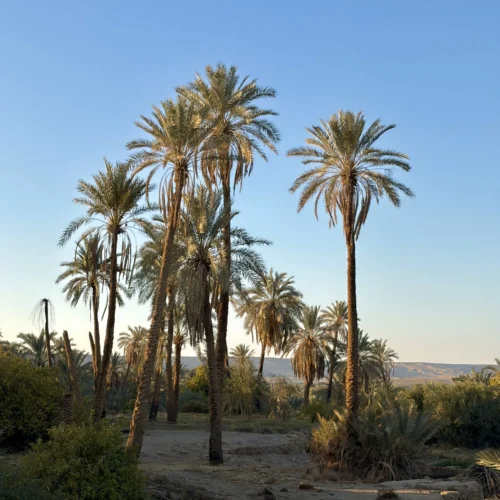
El Beshmo—or El Bishmo in some spellings—is an elevated area overlooking palm groves and old agricultural land. It provides one of the clearest visual explanations of an oasis: a cultivated green zone exists inside a vast dry depression because groundwater supports settlement and farming.
NASA Earth Observatory images show Bahariya's date and olive groves as dark patches against the surrounding Western Desert. At ground level, El Beshmo allows visitors to see the same contrast through farms, irrigation, palms, low hills and the edge of Bawiti.
What to do
- Stop at the viewpoint with a local guide.
- Photograph the green-and-desert contrast.
- Walk only on agreed paths.
- Ask how date and olive farming changes by season.
- Learn how water reaches cultivated land.
- Buy local produce when available and genuinely local.
What not to do
Do not enter a farm, climb a palm or pick fruit without permission. Irrigation channels and soft soil can be easy to damage. Avoid photographing farm workers at close range without asking.
Best time
Morning gives clearer light across the farms. Late afternoon gives warmer colour but may compete with English Mountain sunset.
Who will enjoy it
Photographers, families, travellers interested in agriculture and anyone who wants to understand the oasis rather than simply pass through it.
3. Visit the Salt Lake
The Salt Lake stop creates a striking combination of water, palms, low hills and dry desert. On Elzaghandi Travel's published route, visitors stop beside the water and have Bedouin tea.
“Salt Lake” can refer to saline ponds or low basins influenced by groundwater, irrigation, drainage and evaporation. Water level, colour and shoreline conditions change. It should not be described as a guaranteed swimming lake.
What to do
- Photograph reflections and the surrounding hills.
- Sit for tea in a designated area.
- Walk along the safe edge with the guide.
- Look for salt patterns without removing them.
- Observe birds from a distance if present.
- Compare the water landscape with nearby cultivated land.
Can you swim?
Only if the guide confirms that the specific location is safe, clean and open for swimming. Some edges are muddy, slippery or unstable. Salinity can irritate cuts and eyes.
Do not promise a “Dead Sea floating experience.” The water depth and salinity are not standardised tourist facilities.
Best light
Sunrise and late afternoon create the best reflections. Midday produces stronger blue water but harsher contrast.
How long to allow
Thirty to sixty minutes is enough for tea, photographs and a short walk.
4. Climb the dunes overlooking the Salt Lake
The dunes near the lake provide a broader panorama than the shoreline. A short climb reveals water, palms, town and desert within one view.
This is a separate experience from deep-desert sandboarding. The goal is the viewpoint, not a high-speed descent.
What to expect
- Soft sand
- A short but tiring climb
- No shade
- Wind on the ridge
- Sand entering shoes and camera bags
- Changing visibility during dusty conditions
What to bring
Use closed shoes or secure sandals suitable for sand, sunglasses, a hat and water. Protect cameras from windblown grit.
Accessibility
A dune can be difficult for people with knee, hip, heart or balance limitations. Ask whether the viewpoint can be seen from the vehicle or a lower ridge. Do not let the word “short” substitute for an honest description of soft uphill walking.
Children
Children often enjoy the sand, but they need supervision near steep slopes and vehicles. Confirm whether sandboarding is offered elsewhere rather than using an improvised board.
5. Stop at Pyramid Mountain
Pyramid Mountain is a local landmark named for its distinctive triangular or pyramid-like profile. It gives the oasis itinerary another geological viewpoint before sunset.
Names can vary between guides and maps. Ask the guide which formation the itinerary identifies as Pyramid Mountain rather than trying to match every conical hill to an online photograph.
What to do
- View the mountain from the best current angle.
- Take landscape photographs.
- Ask about the surrounding geological layers.
- Walk to a safe viewpoint if the route allows.
- Compare its shape with the mesas and dark-capped hills elsewhere in Bahariya.
How long to allow
A short stop is appropriate unless the itinerary includes a defined hike.
Avoid overclaiming
The name does not mean the mountain is a human-made pyramid. Do not present it as an undiscovered monument or archaeological mystery. It is a natural landscape feature whose silhouette inspired the local tourism name.
Combine with
The Salt Lake and dunes form a logical half-day sequence with Pyramid Mountain before moving to a spring or sunset viewpoint.
6. Relax at a natural hot spring
Natural hot and cold springs are central to Bahariya's identity. The official Experience Egypt page names Ain Gomma, Al-Jaffara, Bir Al-Mattar and Bir Ramla among the better-known springs in and around the oasis.
The active itinerary includes a natural hot-spring visit but does not promise that every named spring will be used. The operator should select a location based on access, privacy, temperature, condition and timing.
What to ask before entering
- Which spring are we visiting?
- Is bathing currently allowed?
- What is the temperature today?
- Is the pool public or private?
- Are changing facilities available?
- Is the bottom slippery?
- Are children allowed?
- Is the water deep?
- How long will the stop last?
- Are there separate privacy arrangements?
Health claims
Warm water may feel relaxing after the Cairo drive, but do not treat a spring as a medical treatment. Claims about curing skin, joint or other conditions require clinical evidence. People with heart disease, pregnancy, open wounds, heat sensitivity or other relevant conditions should seek appropriate medical advice.
What to pack
Bring a modest swimsuit, quick-dry towel, sandals for the pool edge, change of clothes and a bag for wet items. Do not use soap or shampoo in a natural spring unless the facility explicitly permits it.
Use the dedicated Bahariya Oasis hot springs guide to compare water temperature, privacy and packing questions.
7. Watch sunset from English Mountain
English Mountain is the main sunset viewpoint on the active Bahariya day. It overlooks much of the oasis and helps visitors understand the scale of Bawiti, groves, lakes, dunes and surrounding escarpments.
The itinerary describes it as the highest peak in Bahariya. Rather than depending on an unverified elevation record, treat it as a prominent local viewpoint.
The English name is associated in local travel history with early twentieth-century military presence. Exact stories may differ between guides, so ask what physical evidence remains and separate documented history from oral tradition.
What the active itinerary includes
- Arrival before sunset
- Panoramic oasis views
- A small fire when conditions allow
- Bedouin tea
- Return to the hotel after dark
Safety
Use closed shoes. The ground can be loose, uneven and darker than expected during descent. Carry a headlamp or phone light but follow the guide's route. Do not stand on unstable edges for photographs.
Photography
Arrive early enough for daylight compositions, sunset colour and blue-hour views. A small tripod may help if the ground is stable and the guide approves.
Weather
Wind can make the viewpoint colder than Bawiti. Keep a jacket accessible even if the afternoon is warm.
8. Hike in the Black Desert
The Black Desert is the first major landscape on the southbound desert day. Dark stones and weathered iron-rich material cover pale hills, producing black, brown, rust and ochre tones.
Tour pages often describe “volcanic mountains.” A more careful description is volcanic-looking or black-capped hills. The region's geological history is more complex than a field of active volcanoes.
What to do
- Drive between dark hills in a local 4×4.
- Walk to a viewpoint selected by the guide.
- Climb only the hill approved for the group.
- Compare black surface material with paler rock beneath.
- Photograph the transition from the green oasis.
- Look for texture and colour rather than collecting stones.
Fitness
A short hill can be steep and loose. The view may be accessible from lower ground if you do not want to climb.
Best time
Morning or late afternoon gives stronger relief. On a three-day route, the Black Desert is commonly visited after breakfast on Day 2.
How long to allow
One to two hours across several viewpoints can be satisfying. The Black Desert is a broad region, not one fenced attraction.
Read the full Black Desert Egypt travel guide before the journey for access, viewpoints, geology and practical planning.
9. Stop for lunch at El Hez Village and spring
El Hez—also written El Heiz or El Hayz—provides the practical break between the Black Desert and the route toward Crystal Mountain. Elzaghandi Travel's active two-day and three-day programmes include lunch beside a natural sulfur spring and state that swimming is possible.
Treat “possible” correctly. Water condition, privacy, temperature and timing can affect whether guests enter.
Why the stop matters
- It breaks a long vehicle day.
- Food can be served before the more remote section.
- Travellers can use available facilities.
- The spring explains how settlement exists along the route.
- The driver can check supplies and passengers.
What to do
Eat a simple lunch, refill your personal bottle from the supplied safe drinking water, use the bathroom when available and reorganise sun protection or warm layers.
Swimming checklist
Ask the guide whether swimming is recommended that day. Use modest clothing, avoid jumping, and keep soap out of the water. Do not drink untreated spring water.
Timing
A rushed lunch may preserve more sightseeing, but a very long stop risks reaching Agabat or the White Desert late. The guide should manage the balance.
10. Walk around Crystal Mountain
Crystal Mountain is a small, fragile geological outcrop with a recognisable arch and reflective crystals. Experience Egypt describes it as an underground cave pushed to the surface.
The word “mountain” is misleading. This is not a high-altitude climb or a place for technical hiking. The stop is typically a short interpretive walk.
What to do
- Walk around the approved perimeter.
- Observe crystal surfaces in changing light.
- Photograph the arch without climbing on it.
- Ask how the structure became exposed.
- Compare it with the surrounding sedimentary landscape.
What not to do
- Do not remove crystals.
- Do not strike the rock.
- Do not climb the arch.
- Do not scratch names.
- Do not buy a “souvenir” presented as collected from the protected route.
- Do not place tripods or bags on fragile surfaces.
How long to allow
Twenty to forty minutes is normally enough. The value comes from interpretation and conservation, not from extending a small stop.
The Crystal Mountain Egypt travel guide covers geology, photography and realistic expectations.
11. Explore Agabat Valley and Moon Cave
Agabat—also written Aqabat or Al-Aqabat—is one of the route's strongest landscape transitions. Golden sand runs between pale cliffs and sculpted forms.
Experience Egypt describes Agabat as an ancient riverbed landscape known for soft golden sand, dunes and white cliffs. Occasional shells may be visible, but they should remain in place.
Elzaghandi Travel's active route also includes Moon Cave inside Agabat Valley. “Moon Cave” is an itinerary-specific local name and should not be confused with Djara Cave, which is a separate, much longer expedition.
What to do
- Stop at a high panoramic viewpoint.
- Drive the approved off-road track.
- Walk on firm sand with the guide.
- Photograph cliff layers and shadow.
- Visit Moon Cave only when the route is open and safe.
- Look for geological evidence without collecting it.
Access caution
A cave or rock shelter may involve low ceilings, loose stone and uneven ground. Ask about footwear, lighting and walking distance. Do not touch formations, engravings or archaeological material.
Photography
Late afternoon gives strong contrast, but the group must still reach the White Desert camp safely. Do not pressure the driver to delay sunset departure for one photograph.
Conservation
Vehicle tracks can scar sand and vegetation. Stay on the route chosen by the local guide. Leave shells, fossils and stones where they are.
For the wider route context, compare the White Desert Egypt travel guide and the active three-day itinerary before departure.
12. Camp among the White Desert formations
The final essential experience is not one rock. It is the full sequence of White Desert sunset, camp, stars, sunrise and guided formations.
The active three-day route includes the Valley of Tents before sunset, a camp dinner and Bedouin tea, then Mushroom Rock and Chicken Rock on Day 3. Sandboarding may be added when conditions and dunes are suitable.
The Egyptian Environmental Affairs Agency identifies the White Desert as a protected area declared under Egyptian law. Its management plan emphasises conservation, visitor management and local-community participation.
Valley of Tents
This area is named for formations resembling tents. Shapes are subjective: wind and sand have sculpted pale rock, and visitors interpret familiar objects in it.
Sunset
The guide selects a camp area based on permissions, wind, other groups and route. A specific Instagram location cannot always be guaranteed.
Camp
A normal camp may include:
- Tent
- Personal mattress
- Sleeping bag
- Blanket
- Pillow
- Dinner
- Water and soft drinks
- Tea
- Guide and driver support
- Basic toilet arrangement
Confirm the exact setup before booking. “Full camping equipment” should be translated into a written list.
Stars
Dark skies can be excellent, but moon phase, cloud, dust and camp lights affect visibility. Avoid promising the Milky Way on every date.
Sunrise
Wake before sunrise, dress warmly and remain near camp. Morning light reveals textures that disappear at midday.
Mushroom and Chicken rocks
These famous formations are normally seen during the final White Desert exploration. Do not climb or touch fragile chalk surfaces.
Sandboarding
The active itinerary lists sandboarding as optional. Availability depends on a suitable dune, board, timing and group ability. It should not reduce protected-area care.
Read the ultimate White Desert guide and White Desert camping guide before choosing a camp.
Optional archaeological sites
Bahariya has deeper archaeological value than a standard nature itinerary can include. If history is a priority, add one hotel night or replace selected oasis viewpoints.
Qarat Qasr Salim tombs
The site in Bawiti is associated with decorated Late Period tombs, including those commonly identified with Zed-Amun-ef-ankh and Bannentiu. Access may involve stairs, shafts and confined spaces.
Confirm opening, ticket, photography rules and physical difficulty on the day. Painted walls are fragile; do not touch or use flash unless permitted.
Ain El-Muftella chapels
Ain El-Muftella is a small chapel complex associated with the 26th Dynasty and the religious landscape of ancient Bahariya. It is more meaningful with a guide who can explain the reliefs and local administration.
Do not compare its scale with Karnak or Luxor Temple. Its value is the oasis context and surviving decoration.
Valley of the Golden Mummies and displays
The discoveries represent an extensive Greco-Roman necropolis. Media estimates of thousands of possible burials do not mean a visitor sees thousands of mummies.
Ask whether the relevant museum, display or archaeological zone is open. Public access, excavation and conservation areas are different.
Before placing the Golden Mummies at the centre of an itinerary, confirm the currently open visitor area, ticket arrangements and whether the relevant display or archaeological zone is accessible on your date.
Qasr Al-Agouz and Christian archaeology
The Egyptian Ministry of Tourism and Antiquities has reported discoveries at Qasr Al-Agouz involving basalt and mud-brick buildings, churches, rock-cut rooms and Greek inscriptions. Archaeological importance does not automatically mean normal public access. Treat it as research context unless the operator confirms an authorised visit.
Other activities worth considering
Sandboarding
Available on selected dunes when equipment, sand condition and timing permit. Confirm whether it is included or optional.
Stargazing
Best with low moonlight, clear air and controlled camp lighting. Bring a red-light headlamp and realistic expectations.
Local food
A Bahariya hotel or family-style meal can add more cultural value than another rushed viewpoint. Communicate dietary needs before the desert vehicle is loaded.
Date and olive products
Buy from a reliable local producer when in season. Ask what was grown or processed in the oasis.
Photography
The strongest subjects are:
- Palm groves from El Beshmo
- Salt Lake reflections
- Dunes and mountain silhouettes
- English Mountain sunset
- Black Desert textures
- Crystal Mountain detail
- Agabat cliffs
- White Desert blue hour
- Night camp
- Sunrise formations
Quiet time
A good trip includes time without an activity label. Tea beside the lake, a slow sunrise or a short palm-grove walk can be more memorable than racing through a checklist.
How many days do you need?
One day in Bahariya
Choose four to six local stops:
- Bawiti and Zawya Mosque
- El Beshmo
- Salt Lake
- Dunes
- Hot spring
- English Mountain sunset
This requires a night in Bahariya or very long Cairo driving. It does not include the White Desert.
Two days and one night
Prioritise the desert:
- Cairo to Bahariya
- 4×4 change
- Black Desert
- El Hez
- Crystal Mountain
- Agabat
- White Desert camp
- Sunrise and formations
- Return to Cairo
Use the 2-day White Desert itinerary and active 2-day, 1-night White Desert adventure for the compact route.
Three days and two nights
Best balance:
- Full Bahariya oasis day
- Hotel night
- Full desert route
- White Desert camp
- Sunrise and return
The 3-day Bahariya Oasis and White Desert adventure is built for this combination.
Four days or longer
Add archaeology, another camp, deeper White Desert exploration or a wider oasis circuit. Longer does not automatically mean more stops; it can mean better pacing.
Suggested three-day itinerary
Day 1: Living oasis
- Cairo or Giza pickup
- Arrival and hotel lunch
- Zawya Mosque
- El Beshmo viewpoint
- Salt Lake and tea
- Dunes
- Pyramid Mountain
- Natural hot spring
- English Mountain sunset
- Hotel dinner and overnight
Day 2: Dark hills to white cliffs
- Hotel breakfast
- Black Desert
- El Hez lunch and spring
- Crystal Mountain
- Agabat Valley
- Moon Cave if accessible
- Valley of Tents
- White Desert sunset
- Camp dinner and overnight
Day 3: White Desert icons
- Sunrise
- Breakfast
- Mushroom Rock
- Chicken Rock
- Optional sandboarding
- Return through Bahariya
- Vehicle change
- Cairo or Giza drop-off
This itinerary follows the active published programme, but the order can change for permits, weather, water condition and conservation.
Best time for these activities
October through April is the main practical season for many travellers.
October and November
Warm days and cooler evenings. Good for lake, dunes and camp.
December to February
Comfortable daytime walking but potentially cold camps and viewpoints. Bring serious warm layers.
March and April
Warmer days with possible wind or dust. Protect eyes and cameras.
May to September
Heat makes dunes, hills and off-road days more demanding. Confirm vehicle air conditioning, water, shade and departure timing.
The best time to visit the White Desert guide explains seasonal trade-offs.
Which activities suit children?
Good family options include:
- El Beshmo viewpoint
- Salt Lake tea
- Short dune play
- Hot spring with supervision
- Simple Black Desert viewpoints
- Crystal Mountain perimeter
- Camp dinner
- Sunrise
More difficult activities include steep dune climbs, loose Black Desert hills, low cave areas and long 4×4 days.
Confirm child restraints, private vehicle, food, toilet, warm bedding and medical distance. A three-day trip is usually easier than a compressed two-day schedule.
Which activities suit older or mobility-limited travellers?
The best low-walking options are viewpoints reached close to the vehicle, lake tea, palm-grove panoramas, springs with safe entry and selected White Desert formations.
Ask for exact details:
- Vehicle step height
- Walking distance
- Sand depth
- Hill slope
- Toilet location
- Tomb stairs
- Cave ceiling
- Mattress height
- Option to remain with the vehicle
Do not rely on “easy.” Describe what the traveller can do.
What should you pack?
For the oasis day
- Closed walking shoes
- Sun hat
- Sunglasses
- Sunscreen
- Water
- Modest town clothing
- Warm sunset layer
- Camera protection
- Swimsuit and towel if a spring is confirmed
For the desert day and camp
- Small soft bag
- Headlamp
- Thermal sleepwear
- Fleece
- Windproof jacket
- Warm hat in winter
- Dry socks
- Medication
- Power bank
- Toiletries
- Wet wipes
- Toilet paper
- Sleeping-bag liner
- Sealable waste bags
Use the White Desert packing list for a full seasonal checklist.
Costs and what to confirm
Do not compare tours only by the number of attractions. A quotation should define:
- Cairo transfer
- Private or shared format
- Bahariya hotel
- 4×4
- Guide and driver
- Permits
- National park tickets
- Meals and water
- Tent
- Mattress
- Sleeping bag
- Blanket
- Pillow
- Spring or archaeology fees
- Optional sandboarding
- Pickup and return zones
- Single-room or private-tent supplement
Elzaghandi Travel uses a request-a-quote model. Send dates, nationality, group size, pickup, duration and priorities through WhatsApp.
Safety and permits
The official Experience Egypt portal recommends experienced licensed guides and 4×4 vehicles for excursions outside the oasis. Current UK travel guidance says tourists entering Bahariya, Farafra, the Black Desert and White Desert must arrange permits in advance and use an official guide. It also notes limited mobile reception and poor medical facilities.
Practical rules:
- Do not enter remote tracks independently.
- Carry the requested identification.
- Follow checkpoint instructions.
- Keep medication and water accessible.
- Do not photograph security sites.
- Do not separate from the vehicle.
- Check your own government's current advice.
- Use travel insurance that covers the planned activities.
- Tell the operator about medical or mobility needs.
- Keep a Cairo buffer night after the return.
Read is the White Desert safe for a fuller decision framework.
Responsible tourism
Leave rocks and crystals
Do not collect black stones, crystals, shells, fossils or chalk.
Protect water
Do not use soap in springs or leave waste beside lakes.
Stay on tracks
Uncontrolled 4×4 driving damages fragile desert surfaces.
Respect people
Ask before photographing residents, farms or worshippers.
Carry waste out
Wipes, tissues and food packaging do not disappear in desert conditions.
Do not feed wildlife
Food scraps change animal behaviour and attract wildlife to camp.
Use local expertise
Local guides, drivers, cooks and accommodations keep tourism value within Bahariya.
Plan your Bahariya trip: Use the Bahariya Oasis travel guide for the full overview, check how to get to Bahariya from Cairo, and dive deeper into the Black Desert, Crystal Mountain, and Agabat Valley.
Frequently asked questions
What are the best things to do in Bahariya Oasis?
For a first visit, combine Bawiti and oasis stops such as El Beshmo, the Salt Lake, dunes, a hot spring and English Mountain with the Black Desert, Crystal Mountain, Agabat and a White Desert camp.
How many days do I need in Bahariya Oasis?
Three days and two nights give the best balance for the full 12-stop route. Two days suits the desert circuit, while one day is better for local oasis sightseeing only.
Can I visit Bahariya Oasis in one day from Cairo?
It is possible but inefficient because the road journey is long. An overnight in Bahariya usually gives a much better experience.
Is the White Desert in Bahariya Oasis?
No. Bahariya is the main northern gateway and logistics base for many tours, while the White Desert lies farther south toward Farafra.
What can I do in Bawiti?
Explore local heritage, palm-grove viewpoints, the Salt Lake, dunes, springs and English Mountain, with archaeology added when current access allows.
Can I swim in Bahariya’s Salt Lake?
Only if the guide confirms that the specific shoreline and water conditions are safe on your date. Do not assume every saline pond is suitable for swimming.
Can I swim in Bahariya hot springs?
Often yes, but temperature, privacy, access and water condition vary by spring. Confirm the exact stop before entering.
What is the Black Desert?
It is a broad landscape south of Bahariya with dark-capped hills, iron-rich rocks and black gravel spread over paler ground.
Is Crystal Mountain a real mountain?
It is a compact crystal-rich geological outcrop and arch, not a high mountain or technical hiking destination.
What is Agabat Valley?
Agabat is a dramatic Western Desert landscape of pale cliffs, golden sand and broad off-road corridors on the route toward the White Desert.
Can I camp anywhere in the White Desert?
No. Camping depends on current protected-area rules, permits and the authorized route selected by the operator.
Do I need a 4×4?
Not for central Bawiti, but the remote Black Desert–White Desert route requires a suitable locally operated 4×4 with an experienced guide.
Do I need permits?
Yes for the regulated remote desert route. Current guidance requires permits arranged in advance and an official guide for Bahariya, Farafra, the Black Desert and White Desert areas.
What is the best time to visit Bahariya Oasis?
October through April is generally the most comfortable period for sightseeing and camping, although winter nights can be cold and spring can be windy.
What should I send when requesting a quote?
Send your dates, nationality, group size, Cairo or Giza pickup location, preferred duration, private or shared preference, dietary needs and the attractions that matter most.
Choose the right Bahariya trip
- Choose the 3-day Bahariya Oasis and White Desert adventure for all twelve stops and a balanced hotel-and-camp structure.
- Choose the 2-day White Desert adventure when time is limited and the Black/White Desert is the priority.
- Choose the 3-day White Desert adventure for deeper desert exploration and two camping nights.
- Use the custom trip page to add archaeology, accessibility adjustments, a private vehicle or photography time.
Sources and further reading
- Elzaghandi Travel, 3 Days / 2 Nights Bahariya Oasis & White Desert Adventure. Active first-party route for Zawya Mosque, El Beshmo, Salt Lake, dunes, Pyramid Mountain, hot spring, English Mountain, Black Desert, El Hez, Crystal Mountain, Agabat, Moon Cave and White Desert camp.
- Egyptian Tourism Authority, Natural Wonders of Al-Bahariyya. Official information on Black and White Desert excursions, named springs and licensed-guide requirements.
- Egyptian Tourism Authority, Desert Excursions. Official descriptions of Black Desert, Crystal Mountain, Agabat and White Desert landscapes.
- NASA Earth Observatory, Bahariya Oasis. Geographic context for the depression, groundwater, Bawiti, date groves and olive groves.
- Egyptian Environmental Affairs Agency, White Desert Protected Area Management Plan. Protected-area status, natural features, visitor management and community participation.
- Ministry of Tourism and Antiquities, Discoveries at Qasr Al-Agouz in Bahariya Oasis. Official archaeological context for early Christian structures in Bahariya.
- UK Foreign, Commonwealth & Development Office, Egypt regional risks. Current permit, official-guide, mobile-reception and medical-facility guidance.
Add Bahariya Oasis to your desert trip
Message Elzaghandi Travel on WhatsApp with your dates, nationality, group size, Cairo or Giza pickup, preferred two-day or three-day format and the stops that matter most. Ask the team to confirm the current spring, lake, Moon Cave and archaeology access, plus the hotel, camp, permits and final price.
For the complete balanced route, request the 3 Days / 2 Nights Bahariya Oasis & White Desert Adventure with one Bahariya hotel night and one White Desert camping night.

Things to Do in Cairo Egypt: 15 Best Attractions & Experiences

Cairo Egypt Travel Guide: Itinerary, Attractions & Practical Tips
Dahshur Pyramids Guide: Bent Pyramid, Red Pyramid & Visiting Tips
Recent Posts

Things to Do in Cairo Egypt: 15 Best Attractions & Experiences
Cairo Egypt Travel Guide: Itinerary, Attractions & Practical Tips
Dahshur Pyramids Guide: Bent Pyramid, Red Pyramid & Visiting Tips