Is Djara Cave Worth Visiting? Distance, Time & Difficulty
Last reviewed: 8 September 2026
Yes, Djara Cave is worth visiting for travellers who value remote desert landscapes, geology, prehistoric rock art and expedition-style travel—and who can give the experience three days from Cairo. It is usually not worth the detour for someone with a short first trip to Egypt, a strong dislike of long off-road drives, or a need for hotel-level comfort every night.
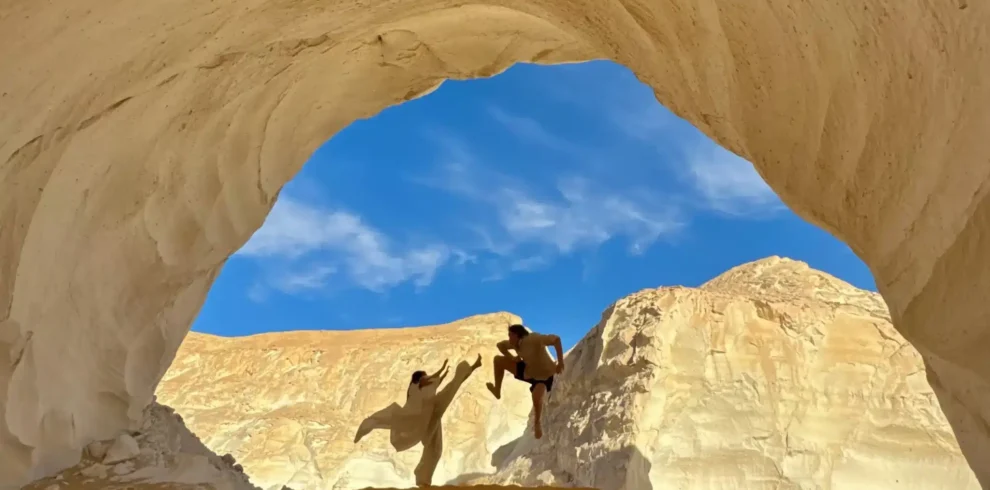
The cave itself is only one part of the value. Djara combines a narrow desert-cave entrance, limestone formations, a documented corpus of prehistoric engravings and a surrounding landscape that records wetter periods in the Western Desert. Reaching it also creates the main drawback: the site is far from populated places and approached over unpaved terrain. A 2021 geoheritage assessment describes Bahariya Oasis as about 200 kilometres north of Djara, before the remaining unpaved approach.
The honest decision is therefore not “Is the cave beautiful?” It is “Is this rare place worth the time, vehicle travel, camping and planning required for my particular Egypt trip?” This guide helps you answer that question without exaggerating the attraction or hiding the logistical cost.
Fast verdict: Choose Djara if it is one of your main reasons for visiting the Western Desert. Choose the standard two-day White Desert route if you mainly want chalk formations, dunes, the Black Desert and one camping night.
Djara Cave worth-it scorecard
The scores below show the main trade-offs for a reasonably fit traveller who understands that this is a remote guided expedition, not a developed show cave.
| Factor | Rating | What it means |
|---|---|---|
| Archaeology and rock art | Excellent | Prehistoric engravings and archaeological context are the strongest reasons to go. |
| Geology | Excellent | Limestone cave formations and palaeoclimate evidence add real scientific interest. |
| Landscape and remoteness | Excellent | The plateau and approach feel far removed from Egypt’s main tourism circuit. |
| Photography | Very good | Strong desert landscapes, but cave photography is technically difficult and must respect conservation rules. |
| Convenience | Low | Expect long road and off-road driving, basic facilities and two camping nights. |
| Best trip length from Cairo | 3 days / 2 nights | This is the practical minimum for the active combined route. |
| Best for | Special-interest travellers | Especially archaeology, geology, remote-desert and repeat Egypt visitors. |
Djara rates very highly for rarity and context, but poorly for convenience. That trade-off is the key to deciding whether it is worth adding to your trip.
What makes Djara Cave genuinely special?
Djara should not be sold as simply another photogenic hole in the desert. Its value comes from several evidence-based features appearing in one location.
A true cave-art setting
Much Saharan rock art appears on exposed rock or in shallow shelters. Djara's engravings occupy a cave where some areas extend beyond full daylight. Archaeologists can therefore study not only the images but also their placement in relation to light, surfaces and activity areas.
The principal complete publication documented 133 figures. Subjects include scimitar-horned oryx, addax, ostriches, gazelles, human figures and animals that could not be identified more precisely. Abstract marks and unusual flambeau-shaped motifs also appear.
These are not hieroglyphs. They are prehistoric incised and pecked figures, and no single exact date has been established for every image. The uncertainty is part of responsible interpretation, not a weakness to hide.
For the wider destination context, use the active 3 Days / 2 Nights White Desert & Djara Cave Adventure and the published White Desert guides on this site.
Geological formations with a climate record
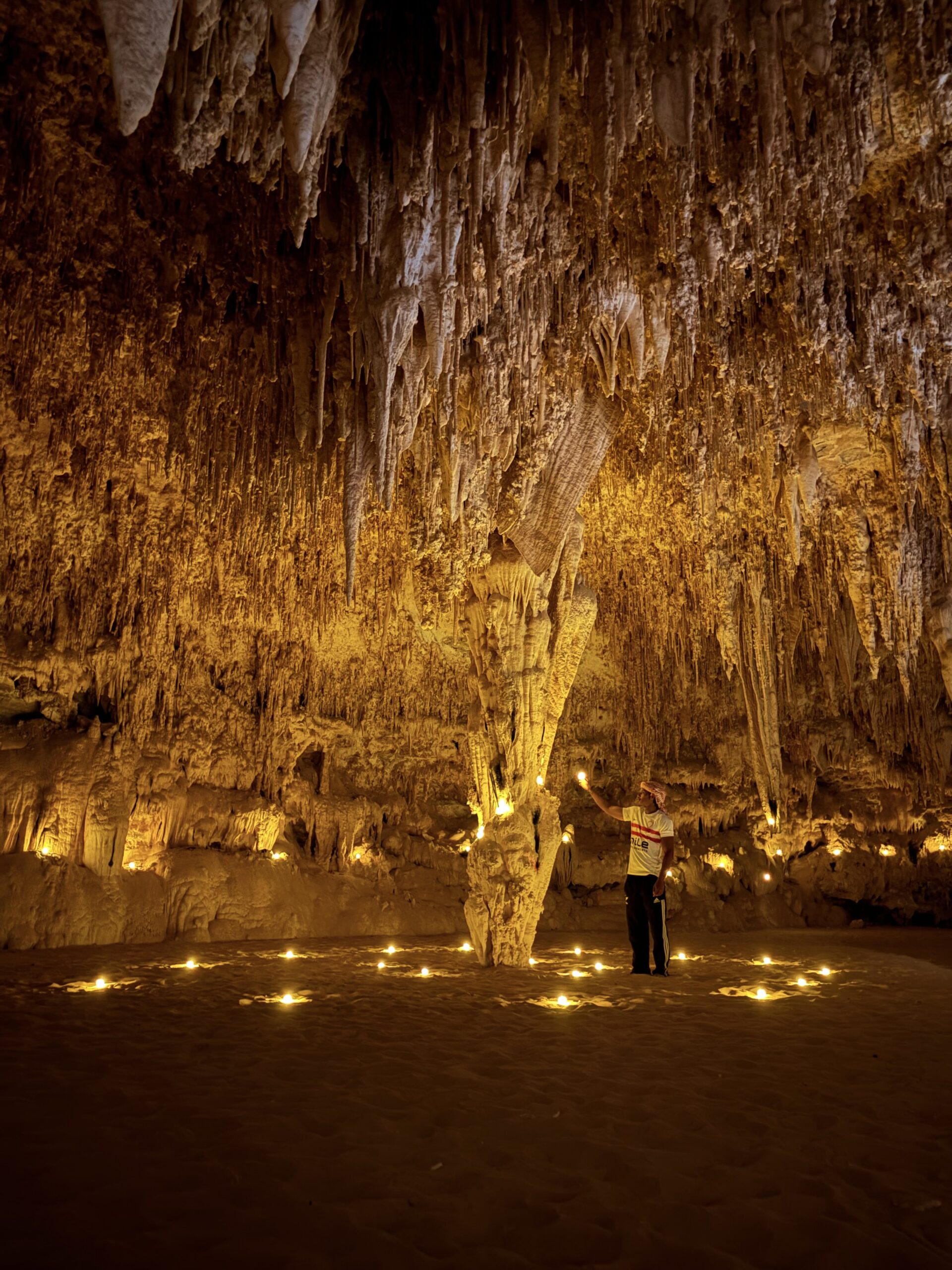
Djara formed through karst processes in Eocene limestone. Stalactites, stalagmites and other speleothems preserve evidence of earlier wet phases. The surrounding depression contains dry drainage channels, playa deposits, hamada surfaces and other features connected with changing palaeoenvironments.
A peer-reviewed geoheritage assessment proposed the cave and its vicinity as a geosite of national rank. That conclusion is more meaningful than a generic claim that the cave is “beautiful.” It recognizes scientific, educational and tourism value while also warning about vulnerability.
Archaeology beyond the images
Researchers recovered charcoal, ash, stone artefacts, animal bones and botanical remains in the cave, while numerous prehistoric sites occur across the surrounding Djara depression. The combined record shows repeated human use when the plateau was more habitable than it is today.
The engravings do not provide a written story, but the wider evidence helps reconstruct mobility, animal use and adaptation as the Eastern Sahara became drier.
A strong sense of remoteness
For some travellers, the approach is part of the attraction. The plateau feels very different from Cairo, the Nile Valley and the compact White Desert formation circuit. Long stretches without buildings or conventional facilities create a rare sense of scale.
For other travellers, the same drive feels repetitive and exhausting. Neither reaction is wrong. Your tolerance for remote vehicle travel is the most important predictor of whether Djara will feel rewarding.
What Djara Cave is not
Clear expectations prevent disappointment.
Djara is not:
- A brightly illuminated show cave with railings and a visitor centre.
- A quick stop inside the normal White Desert loop.
- A technical adventure sold around climbing or deep-cave exploration.
- A Pharaonic tomb or hieroglyphic temple.
- A destination with restaurants, toilets, shops or mobile coverage.
- A place where every engraving is obvious without guided interpretation.
- A guaranteed wildlife-viewing experience.
- Suitable for independent self-driving.
- A site where visitors may touch formations or collect artefacts.
- A fixed-minute excursion unaffected by permits, weather or route conditions.
If you want a comfortable cave attraction with built infrastructure, Djara is probably the wrong choice. If you want a remote archaeological and geological place reached through a multi-day desert expedition, that lack of development may be precisely the appeal.
The real cost is time, not only money
The website uses a request-price model, so the financial quote depends on dates, group size, pickup, vehicle arrangements and current access. But even before you request a price, calculate the time cost.
A practical combined trip from Cairo requires three days and two nights. Day 1 reaches Bahariya and covers major Western Desert stops. Day 2 is dedicated mainly to the Djara approach, cave visit and return toward the White Desert. Day 3 visits additional formations and returns to Cairo.
This means Djara uses one more full day than the classic two-day White Desert itinerary. It also adds a second camping night and the most remote off-road segment.
Ask yourself what that extra day replaces:
- Another day in Cairo?
- A day trip to Saqqara and Dahshur?
- More time in Luxor?
- A recovery day before an international flight?
- A Red Sea day?
- A slower White Desert photography schedule?
Djara is worth the opportunity cost when the cave and plateau are a priority. It is less compelling when the extra day removes a destination you value more.
Distance and travel time: what to expect
Djara lies in the central Western Desert on the Egyptian Limestone Plateau, approximately halfway between Asyut and Farafra in broad geographical terms. The tourist approach is normally organized through Bahariya and the White Desert route, not as a direct public-road transfer from Asyut.
Egypt's official tourism website places the Cairo–Bahariya drive at approximately five hours. Cairo traffic, pickup location, rest stops and checkpoints can extend it. After Bahariya, travellers change to a suitable four-wheel-drive operation.
The 2021 Djara geoheritage paper describes Bahariya Oasis as roughly 200 kilometres north of the cave and states that the remaining route uses unpaved roads. Desert kilometres do not convert into time like motorway kilometres. Surface, sand, navigation, tyre pressure, permission checks and daylight all matter.
A useful way to understand the trip is:
| Stage | Planning expectation |
|---|---|
| Cairo / Giza to Bahariya Oasis | About 4–5 hours by road in normal conditions, before longer stops or delays |
| Bahariya to the desert circuit | Change to a locally operated 4×4 and continue through the Black Desert / White Desert route |
| Djara sector | Remote off-road travel; exact duration depends on campsite, authorized track, surface conditions and operating plan |
| Total practical format from Cairo | 3 days / 2 nights for the current combined White Desert + Djara expedition |
Exact times should come from the operator for your date. Anyone offering a precise arrival minute before considering permits and conditions is giving a timetable, not an expedition assessment.
For a published route framework, review the 3 Days / 2 Nights White Desert & Djara Cave Adventure. For the standard Cairo approach and Bahariya vehicle change, use the White Desert from Cairo route guide.
How physically difficult is Djara Cave?
Djara is usually more logistically demanding than physically demanding. That distinction is important.
Walking difficulty: low to moderate
The normal visit does not require a long trek, but the ground is not level. Expect sand, loose rock, a narrow entrance area, a descending slope and uneven cave surfaces. You may need to watch head clearance and balance in low light.
A reasonably active traveller who can walk on rough ground and enter a basic camp should generally find the physical component manageable. The operator must still evaluate individual circumstances.
Driving difficulty: high
The long off-road day is the main challenge. Repeated vibration, vehicle motion and long seated periods can affect travellers with back problems, recent surgery, pregnancy, severe motion sickness or joint pain.
The vehicle is not a sightseeing bus with an aisle and bathroom. Seating space depends on group size and equipment. A private trip can improve comfort because stops and seating can be adjusted, but it does not shorten the landscape.
Camping difficulty: moderate
Two nights of desert camping mean no conventional bedroom, shower or permanent bathroom. Night temperature can change sharply. Wind, sand and unfamiliar sounds may affect sleep.
A good mattress, warm bedding, private tent and toilet tent make a significant difference. Confirm them before booking rather than assuming “camping equipment” means the same setup to every operator.
Mental and sensory difficulty
Remote travel can be emotionally refreshing or uncomfortable. Some people enjoy the absence of signal and buildings. Others feel anxious when they cannot see a road or contact family.
Inside the cave, darkness and a narrow entrance may concern travellers with claustrophobia. Discuss this honestly. You should never feel pressured to enter because the group has travelled far. The wider expedition still offers value if you decide to remain outside with a crew member, but that supervision arrangement must be agreed safely.
Who will probably love Djara?
Archaeology travellers
Djara rewards people who appreciate context more than spectacle. The rock art, hearth evidence, artefacts and regional occupation history create a serious archaeological story. A guide who can explain evidence and uncertainty adds more value than a guide who repeats sensational ages.
Geology and cave enthusiasts
The cave, speleothems, limestone plateau, palaeodrainage and surrounding landforms form a coherent geoheritage experience. Travellers interested in karst, climate records and desert geomorphology have several layers to examine.
Repeat visitors to Egypt
Someone who has already seen Cairo, Luxor, Aswan and the main temples may value a journey far outside the standard cultural circuit. Djara shows that Egypt's heritage is not limited to Pharaonic monuments.
Desert photographers
The route offers variety: dark hills, golden sand, pale cliffs, white chalk, plateau horizons, cave formations and archaeological details. The three-day structure also creates two sunrise and sunset opportunities.
Photography inside the cave is more difficult. Low light, fragile surfaces and limited space require patience. Do not expect a brightly exposed social-media image from every panel.
Travellers who enjoy the journey
If you enjoy long road trips, changing landscapes, camp routines and route stories, Djara becomes more than a destination. The drive is part of the value rather than a penalty endured to reach the cave.
Who may regret choosing Djara?
First-time visitors with fewer than seven days
If you have only five or six days in Egypt, three days in the desert can dominate the trip. Cairo, Giza, Saqqara, Luxor or Aswan may offer more value for a first visit unless Djara is a special interest.
Travellers who want only the White Desert photographs
If the mushroom-shaped formations and one desert camp are your main goals, choose the two-day route. Adding Djara creates much more driving without improving the classic White Desert portion.
Compare the 2-day White Desert Egypt itinerary before paying for the longer expedition.
People who strongly dislike camping
Two nights without a shower or permanent bathroom can overshadow the experience. A customized route with a Bahariya hotel may reduce camping, but it changes the timing and cannot turn Djara into a conventional day tour.
Travellers with an immediate flight
The final Cairo return can shift. Do not plan Djara if you must catch an international flight on the same evening. Keep a Cairo night after the tour.
People seeking guaranteed comfort or fixed schedules
Desert operations require flexibility. A permit instruction, wind, vehicle issue or slower group can alter the plan. If any deviation feels like failure, choose a more developed destination.
Travellers primarily interested in wildlife
Djara's engraved animals and environmental history are fascinating, but modern wildlife sightings are not guaranteed. This is not a safari designed around spotting large mammals.
Djara versus the White Desert
Djara and the White Desert are often sold together, but they offer different experiences.
The White Desert is easier to recommend broadly. Djara is easier to recommend strongly to the right person.
Use the complete White Desert guide if you have not yet decided which landscape is the actual priority.
Is the rock art visible enough to justify the drive?
Some travellers imagine a continuous gallery of large, high-contrast animals. Reality is subtler. Many figures are incised or pecked into limestone and can be difficult to see under flat light. Dust, surface texture and viewing angle affect visibility.
The published corpus is scientifically important even when an untrained visitor cannot instantly identify every figure. A competent guide should help you understand panel location, technique and subject without touching the surface.
If your only measure of value is an easy photograph, the rock art may feel understated. If you enjoy seeing original material in context and learning how archaeologists interpret it, the experience can be exceptional.
This is why the quality of interpretation matters. Ask whether the guide can explain:
- Why the figures are called rock art rather than hieroglyphs
- Which animals are documented
- Why giraffes should not be claimed for the published Djara corpus
- The difference between direct dating and contextual dating
- How engraving and pecking were used
- What the hearths and wider settlement evidence show
- Why touching and tracing cause damage
A truthful “we do not know” is often a sign of better guiding than a dramatic invented story.
Is Djara safe to visit?
No remote desert trip is risk-free. Safety depends on current permissions, a licensed operator, experienced drivers, suitable vehicles, water, fuel, communication, recovery planning and the judgement to change the route.
Egypt's official tourism site recommends licensed guides with four-wheel-drive vehicles for excursions outside Bahariya and advises travellers to confirm permits and logistics. The current U.S. travel advisory says Western Desert travel should only be undertaken with a professionally licensed tour company and tells travellers to avoid border areas. It also notes that advanced emergency care can be unavailable in remote regions.
This article cannot confirm that Djara is open or appropriate on your date. Access can change. The operator must check current instructions after receiving your nationality and passport details.
Before booking, confirm:
- Current Djara permission for every traveller
- Licensed company and local desert crew
- Vehicle condition and passenger capacity
- Water, fuel and food reserves
- Tyre and recovery equipment
- Communication plan
- First-aid supplies
- Camp locations and bedding
- What happens if access is refused
- Cancellation or rescheduling terms
- Realistic Cairo return window
- Medical evacuation insurance expectations
Read is the White Desert in Egypt safe? for a fuller risk framework and check the advisory issued by your own government.
Is Djara worth the price?
Without your group size and date, a numerical value judgement would be misleading. Private desert cost is driven by vehicles, drivers, guide time, fuel, food, camp equipment and permissions. Djara adds distance and another operational day.
Use value per experience rather than price alone.
Djara offers better value when:
- Two, three or four travellers can share a private vehicle cost.
- You already want two nights of camping.
- Archaeology or geology is a major interest.
- The three-day route replaces another activity you value less.
- The quote clearly includes permits, meals, equipment and transport.
- The operator has a reasonable policy if access changes.
It offers poorer value when:
- You are a solo traveller paying a large private supplement.
- You only want a few White Desert photographs.
- You will skip the cave because of claustrophobia or mobility limits.
- The quote hides exclusions or cannot explain permissions.
- The trip forces you to lose a non-refundable flight or hotel.
- You expect luxury comfort that requires major upgrades.
Request the complete written price for the active 3-day, 2-night White Desert and Djara Cave adventure before comparing it with shorter tours.
A decision matrix for different Egypt trips
Five- to six-day first trip
Usually skip Djara. Focus on Cairo and one other major region. If a desert night is essential, consider a shorter White Desert trip only if the schedule remains safe.
Seven- to nine-day first trip
Choose carefully. Djara can work if desert exploration is a top-three priority, but the three days will replace substantial Nile Valley time.
Ten- to fourteen-day first trip
Often worth considering. The route can sit between Cairo and a domestic flight or train segment, provided you keep recovery time after returning.
Repeat visit
Strong recommendation for the right traveller. Djara adds a geological and prehistoric dimension that differs from temple-focused itineraries.
Dedicated photography trip
Worth it with customization. Three days are workable, but four days provide better light flexibility and less pressure. Ask for smaller group size and realistic photography stops.
Family trip
Possible, not automatic. The children's tolerance for long drives, basic toilets, cold nights and uneven ground matters more than a simple minimum age.
Older or mobility-limited traveller
Individual assessment required. The cave walking may be shorter than expected, but vehicle vibration, entry slope and lack of facilities can be limiting. Share specific mobility details before receiving a recommendation.
How much comfort can be improved?
You cannot remove the remoteness, but you can improve the camp and group format.
Ask for:
- Private vehicle with fewer passengers
- Private tent
- Thicker mattress
- Warm sleeping bag and blankets
- Toilet tent
- Dietary planning
- Additional water
- Accessible seat allocation
- Extra rest stops
- Bahariya hotel before or after the expedition
- Four-day slower route
- Cairo hotel after the return
Comfort upgrades can increase cost and may change the route. They are useful only when confirmed in writing.
Use the published White Desert packing checklist and White Desert camping guide to judge whether the basic expedition setup fits you.
Best season for Djara
Cooler months are normally more suitable for the long off-road day and cave visit. October through April is the broad practical window, but each period has trade-offs.
- October and November: Warmer days, increasingly comfortable nights.
- December to February: Pleasant daytime activity but potentially very cold camps.
- March and April: Warmer conditions with possible wind and dust.
- Late spring and summer: Heat can make the long remote sector much more demanding.
Do not rely on Cairo's forecast. Bahariya, the plateau and the camp can feel different. Wind can make a moderate temperature uncomfortable, while a vehicle parked in direct sun becomes much hotter.
For seasonal detail, read the best time to visit the White Desert.
Photography value and limitations
Djara offers three photographic subjects:
- The remote plateau and approach.
- The cave entrance and limestone formations.
- Prehistoric engraved panels.
The first is easiest. Wide horizons, vehicle scale and changing surfaces create strong landscape images. The second requires exposure control and a respect for fragile formations. The third is the most difficult because shallow engravings may need angled light.
Never ask a guide to wet, chalk or touch an engraving for contrast. Do not place a light or tripod against a decorated surface. Avoid flash if instructions prohibit it. A technically imperfect photograph is better than damage.
If images are your primary goal, request a small private group and explain the type of photography before booking. The standard three-day route cannot provide unlimited setup time because the Day 2 return requires a safe schedule.
Conservation affects whether the trip remains worth visiting
The same geoheritage study that praised Djara's national significance warned that it is vulnerable to damage, artefact collection and waste. Remote does not mean protected from impact.
Follow strict behaviour:
- Do not touch engravings.
- Do not climb on speleothems.
- Do not remove stone tools, pottery, bones, shells or rocks.
- Do not scratch any surface.
- Keep backpacks away from decorated panels.
- Carry out all waste.
- Use only the route directed by the guide.
- Avoid posting sensitive location details that encourage unmanaged visits.
- Correct misinformation without inventing a replacement story.
- Choose an operator that treats the cave as heritage, not a playground.
A visit is only “worth it” if it does not reduce the value for the next visitor or researcher.
Questions to ask yourself before booking
Answer yes or no:
- Can I give this route three full days and two nights?
- Is Djara itself a priority, not only an attractive name?
- Am I comfortable with a very long off-road day?
- Can I sleep in a basic desert camp for two nights?
- Can I walk on uneven sand and rock?
- Will I accept changes caused by permissions or conditions?
- Do geology, archaeology or remote landscapes interest me?
- Can I keep a Cairo night after the expected return?
- Am I willing to travel with a licensed operator and follow conservation rules?
- Have I compared the price and experience with a two-day White Desert trip?
If you answer yes to eight or more, Djara is likely a good fit. Five to seven means you should discuss concerns and consider a private or four-day version. Four or fewer suggests the standard White Desert route will probably deliver better value.
Questions to ask the operator
Before paying, send these questions through WhatsApp:
- Is Djara access currently being approved for my nationality and date?
- When do you need passport copies?
- Is the trip private or shared?
- How many passengers travel in each four-wheel drive?
- Are there two nights of camping?
- Which tents, mattresses, sleeping bags and toilet arrangements are included?
- What is the expected length of the Day 2 driving period?
- What happens if Djara access is refused after booking?
- Which meals and drinks are included?
- Can you accommodate my medical, mobility or dietary needs?
- Is Cairo pickup from my exact hotel included?
- What is the realistic return window?
- Are all fees and permits included in the quote?
- What communication and recovery equipment is carried?
- Can the trip be extended to four days if I want a slower pace?
The quality of the answers matters as much as the total price.
Alternatives if Djara is not right for you
Two-day White Desert trip
This is the best alternative for most first-time visitors. It retains Bahariya, the Black Desert, Crystal Mountain, Agabat, chalk formations and one camp with less driving.
Three days without Djara
A slower White Desert and Bahariya route can use the extra day for oasis sites, photography, walking and a relaxed camp. This may suit families and travellers who dislike long remote drives.
Bahariya hotel plus one desert night
This format improves washing and sleep comfort while preserving a camping experience. It does not solve Djara's distance, so it is an alternative rather than a direct substitute.
Four-day Djara expedition
If Djara matters but the standard pace is the problem, add a day. More time can improve camp timing, rest, photography and contingency margin.
Use the custom trip planner to request the version that matches your comfort and interests.
Frequently asked questions
Is Djara Cave worth visiting from Cairo?
Yes, if you can allocate three days and want a remote cave, prehistoric rock art and Western Desert landscapes. It is not a sensible same-day excursion from Cairo.
How many days do I need?
Three days and two nights are the practical minimum for the current combined route from Cairo. Four days are better for a slower pace or specialist photography.
Is Djara better than the White Desert?
Neither is universally better. The White Desert is easier and more immediately scenic; Djara offers stronger archaeology, cave geology and expedition value.
Is Djara Cave near Bahariya?
No in ordinary tourism terms. Bahariya is the operating gateway, after which the journey continues by 4×4 through remote desert terrain.
Do I need a 4×4?
Yes. The Djara sector is remote off-road travel and should be operated by an experienced desert team using a suitable vehicle.
Do I need a guide and permits?
Yes. Use a licensed operator and official guide, and have the company confirm the permits and authorization for the exact route before departure.
Can I self-drive to Djara?
No. Vehicle capability alone is not enough; route authorization, navigation, recovery, fuel, water and guide requirements all matter.
How difficult is the cave visit?
The walking is generally less demanding than the logistics. Expect uneven ground, low light and a narrow entrance area, while the long off-road drive is the bigger challenge for most travellers.
Is Djara suitable for claustrophobic travellers?
It may not be. Ask for current entrance details and never enter under pressure. A safe waiting arrangement should be agreed with the operator if needed.
Are the rock engravings easy to see?
Some are subtle and depend on angle and lighting. They are incised and pecked figures rather than brightly painted scenes.
How old is the rock art?
The figures do not all have one directly proven date. Archaeologists interpret them within the wider prehistoric occupation and environmental history of the Djara region.
Can children visit Djara Cave?
Possibly, if they tolerate long drives, two camping nights, basic facilities and uneven ground. A private itinerary is usually easier for families.
Can older travellers visit?
Sometimes. Suitability depends more on mobility, back or knee issues, vehicle vibration and camping tolerance than age alone.
Is there phone signal or a bathroom?
Do not rely on mobile coverage in remote sectors. There are no permanent visitor bathrooms at Djara; camp toilet arrangements are basic and should be confirmed before booking.
What happens if Djara access changes?
The operator should explain the substitute route, rescheduling or cancellation terms before payment. Never use an unauthorized alternative.
Related Djara guides: For the full destination overview, read the Djara Cave travel guide. For logistics, use how to visit Djara Cave from Cairo; for archaeology, see Djara Cave history and rock art; and for preparation, use the Djara Cave packing list.
Final verdict
Djara Cave is worth visiting when rarity matters more than convenience. The cave's geological formations, prehistoric engravings and surrounding plateau form a nationally significant geoheritage setting. The approach also makes it one of the more demanding additions to a normal Cairo itinerary.
Choose it because you want the cave and its context—not because you want to add one more attraction name. Accept the long off-road day, two camps, basic facilities and flexible timing. In return, you get an experience far removed from the developed monument circuit and a serious connection between geology, climate history and prehistoric human activity.
Skip it without regret if your schedule is short, comfort is essential or the classic White Desert scenery is your real goal. A well-paced two-day safari is better than a rushed three-day expedition chosen for fear of missing out.
Sources and further reading
- Abdel Maksoud, K. M., Baghdadi, M. I. and Ruban, D. A. (2021), “Caves as geoheritage resource in remote desert areas: a preliminary evaluation of Djara Cave in the Western Desert of Egypt”. Site significance, access, distance and conservation risks.
- Claßen, E., Kindermann, K. and Pastoors, A. (2009), “Djara – Cave Art in Egypt's Western Desert”. Principal documentation of the cave's rock art and archaeological context.
- Kindermann, K. et al. (2006), “Palaeoenvironment and Holocene land use of Djara, Western Desert of Egypt”. Environmental and occupation history.
- Egyptian Tourism Authority, Natural Wonders of Bahariya. Official guidance on licensed guides, four-wheel-drive travel, camping and permits.
- Egyptian Tourism Authority, Desert Excursions. Official context for the White Desert circuit.
- U.S. Department of State, Egypt Travel Advisory. Current Western Desert and remote-care guidance; also check your own government's advisory.
Ask whether Djara fits your trip
Message Elzaghandi Travel on WhatsApp with your dates, group size, nationalities, Cairo pickup point and the parts of the trip that concern you. The team can confirm current access, explain the camping setup and provide the complete price for the active three-day route.

Things to Do in Cairo Egypt: 15 Best Attractions & Experiences

Cairo Egypt Travel Guide: Itinerary, Attractions & Practical Tips
Dahshur Pyramids Guide: Bent Pyramid, Red Pyramid & Visiting Tips
Recent Posts

Things to Do in Cairo Egypt: 15 Best Attractions & Experiences

Cairo Egypt Travel Guide: Itinerary, Attractions & Practical Tips
Dahshur Pyramids Guide: Bent Pyramid, Red Pyramid & Visiting Tips