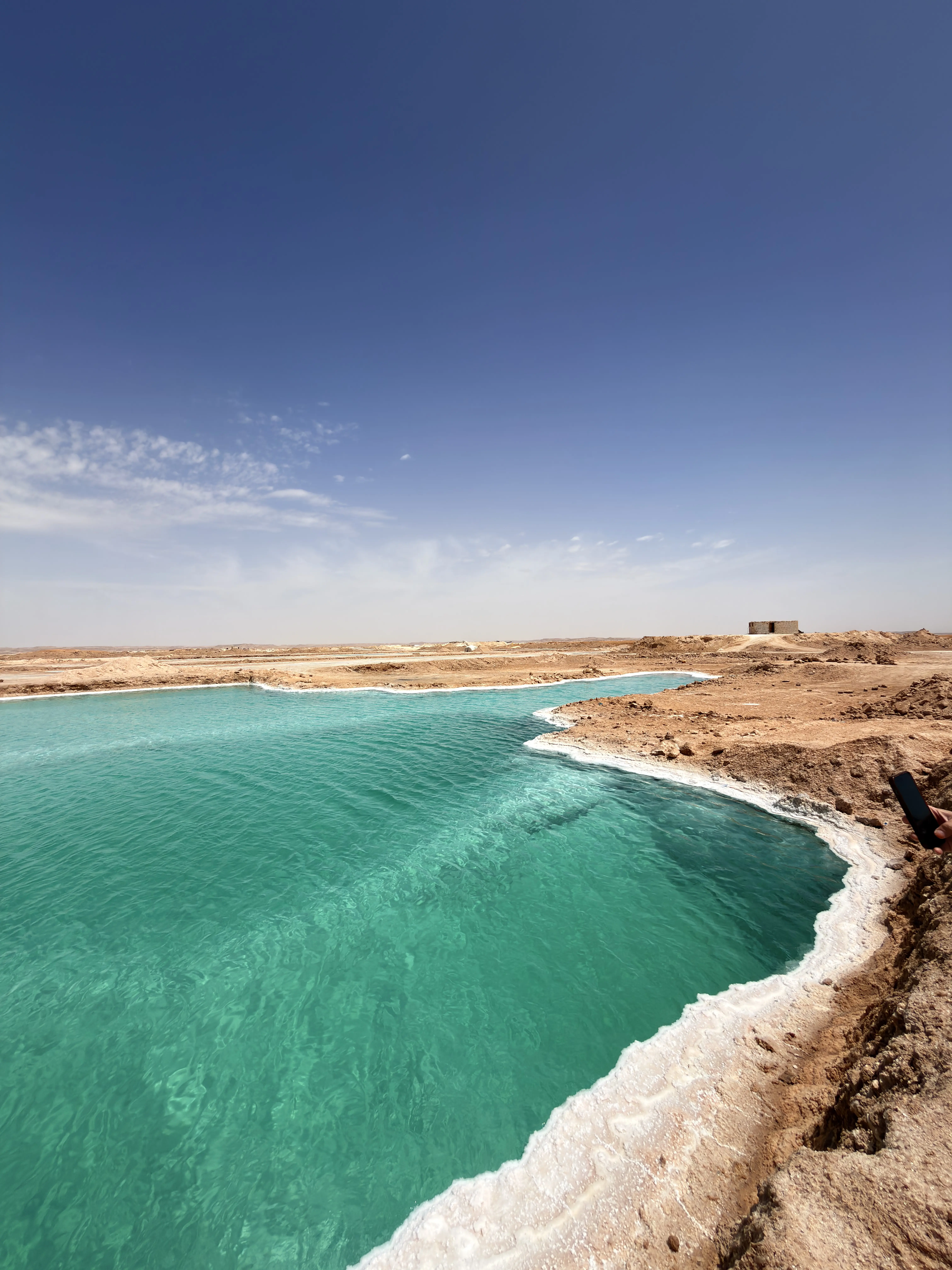
Djara Cave Egypt Travel Guide: History, Rock Art & Visiting Tips
Last reviewed: 8 September 2026
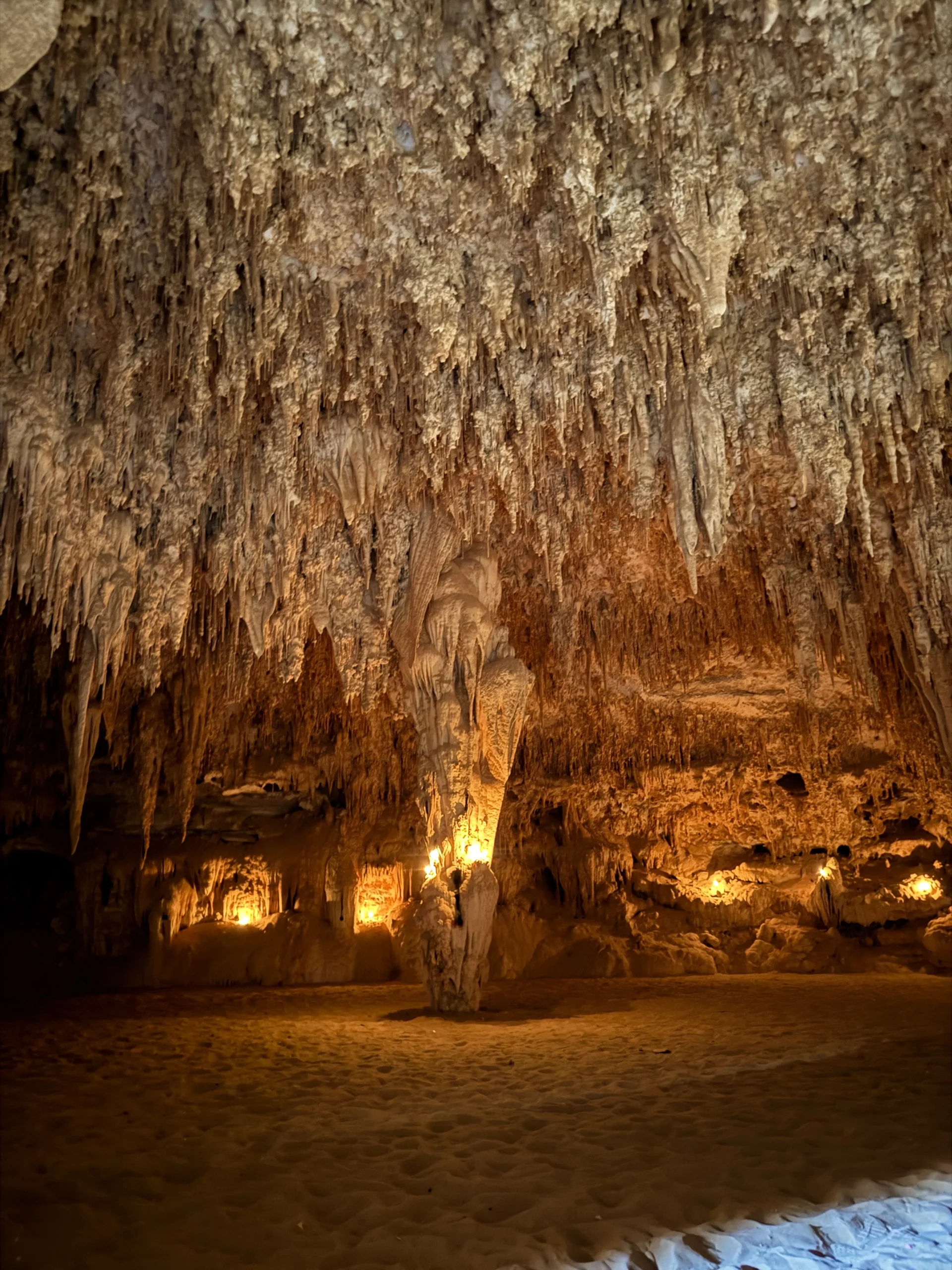
Djara Cave is a limestone dripstone cave and archaeological site on Egypt’s Limestone Plateau in the Western Desert. Its interest comes from three connected stories: the cave itself, which preserves evidence of wetter Pleistocene conditions; prehistoric occupation in the surrounding Djara Depression; and incised or pecked rock art showing animals and human figures.
This is not a quick roadside stop from Cairo. Djara is reached as part of a guided 4×4 expedition through a remote desert area, normally combined with the White Desert over three days or longer. Current access, permits, route authorization and conditions must be confirmed before departure.
The responsible reason to visit is not only to photograph stalactite-like and stalagmite-like formations. It is to understand how water, climate and people left records in a landscape that is now hyper-arid—and to leave those records unchanged.
Djara Cave at a glance
- What it is: a limestone cave with speleothems, archaeological material and prehistoric engravings.
- Where it is: in the Djara Depression on the Egyptian Limestone Plateau, between the Nile Valley near Asyut and Farafra Oasis.
- How it is visited: by authorized desert route with an experienced licensed company, local guide and suitable 4×4.
- Typical trip length from Cairo: three days and two nights when combined with Bahariya and the White Desert.
- Why it matters: caves are relatively rare in Egypt, and cave rock art is especially uncommon compared with open-air shelters.
- Main conditions: long driving, off-road travel, basic camping, limited phone reception, dust and changing temperatures.
- What not to do: touch, trace, wet, chalk, carve, climb on or collect any formation, engraving or archaeological object.
- Best suited to: travelers who value archaeology, geology and remote expedition travel—not someone seeking a brief cave attraction with visitor-center infrastructure.
Djara, Jara, Gara and El-Gara: are they the same cave?
English spellings vary because the Arabic name is transliterated in different ways. Searches may return Djara Cave, Jara Cave, Gara Cave or El-Gara Cave. Tour pages and academic publications most commonly use Djara in English.
Do not confuse it with other Egyptian caves that have rock art, including sites much farther southwest in the Gilf Kebir region. Djara is a separate site on the Limestone Plateau and has its own geological and archaeological context.
When booking, use the full phrase “Djara Cave in the Western Desert” and confirm the route. A similar spelling on a map or social post is not enough.
Where is Djara Cave?
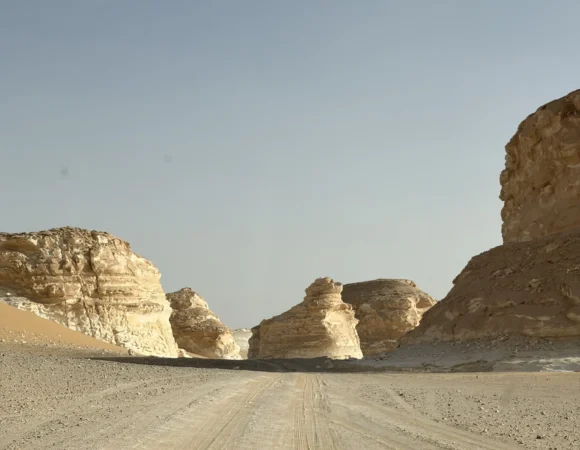
Academic descriptions place the Djara Depression roughly halfway between Asyut in the Nile Valley and Farafra Oasis. The landscape includes flat depressions, limestone surfaces, dunes, dry drainage channels and evidence of former wetter conditions.
Tour itineraries commonly approach from the Bahariya–White Desert side because that lets travelers combine several destinations in one expedition. The cave is not located in Bahariya town and should not be presented as a short oasis transfer.
Elzaghandi Travel’s live 3 Days / 2 Nights White Desert & Djara Cave Adventure currently schedules Djara on the second day, after the first night in the desert. The page describes the Djara journey as an off-road return excursion from the White Desert area, followed by a second night of camping.
Timing depends on the authorized route, campsite, surface conditions and stops. Treat the published time as an itinerary estimate, not a fixed drive time or permission to navigate independently.
How to visit Djara Cave from Cairo
A realistic trip has several transport layers.
Cairo or Giza to Bahariya Oasis
The current tour begins with morning pickup from Cairo or Giza and a road transfer of around four to five hours to Bahariya Oasis. Traffic, stops and pickup location can change the total.
Bahariya to the desert route
At Bahariya, travelers transfer to a local 4×4. The active itinerary then includes the Black Desert, El Hez, Crystal Mountain and the wider Agabat/White Desert route before the first camp.
White Desert area to Djara
The second day is dedicated to the Djara excursion. This is remote off-road travel, not a normal taxi journey. Navigation, fuel, water, vehicle recovery and permits belong to the operating team.
Return through the White Desert
After the cave, the published itinerary returns toward the White Desert for another overnight. The final day covers major chalk formations before returning to Bahariya and then Cairo.
For the current bookable route, use the 3 Days / 2 Nights White Desert & Djara Cave Adventure. For broader regional planning, also review the Cairo to Bahariya Oasis transport guide and the White Desert Egypt travel guide.
Can you visit Djara Cave independently?
Do not plan it as an independent self-drive cave visit. The reasons are practical and regulatory:
- the route is remote;
- off-road tracks are not equivalent to mapped public roads;
- navigation mistakes can become serious;
- mobile reception can be weak or absent;
- fuel and water planning matter;
- desert permits and checkpoints may apply;
- access rules can change;
- recovery requires suitable equipment and local communication;
- a cave and rock-art site needs responsible supervision.
UK guidance says off-road travel in Egypt should use a qualified guide and a Ministry of Interior permit. Its Western Desert guidance also requires advance permits and an official guide for the named Bahariya, Farafra, White Desert and Black Desert areas. Djara is not a reason to extrapolate an exception across every part of the Western Desert. Ask the licensed operator to verify the exact route and authorization.
US guidance is more conservative and advises against Western Desert travel unless it is with a professionally licensed tour company. Every traveler should check the advisory issued for their nationality and whether insurance covers the itinerary.
What kind of cave is Djara?
Djara is a limestone cave formed by karst processes. In simple terms, water moving through limestone can dissolve pathways and openings. Mineral-bearing water can later deposit calcium carbonate, gradually building speleothems.
Common public terms include:
- stalactites: formations hanging from a ceiling;
- stalagmites: formations growing upward from a floor;
- columns: features created when formations join;
- flowstone: sheet-like mineral deposits over a surface.
Do not use each name casually for every shape. A guide or geologist may identify a particular feature more precisely.
The 2021 geoheritage study describes the local bedrock as Eocene marine limestone. The cave reflects karst development during past wet phases, while modern hyper-arid conditions do not support the same active water-driven cave development.
That is the central geological surprise: the surrounding landscape is now extremely dry, yet the cave preserves mineral evidence that water once moved through the rock.
Why are there cave formations in today’s desert?
The present climate is not a complete guide to the past. The Western Desert experienced wetter phases during the Quaternary. Rainwater and groundwater interacted with limestone, helping create the cave and its deposits.
Speleothems can preserve chemical and isotopic information useful for reconstructing old environments. Research summarized in the geoheritage assessment treats Djara’s deposits as archives of Pleistocene climate. The same paper says the studied speleothems are not modern Holocene growth; they record much older wet periods.
This does not mean the cave formed in one event. Cave passages and deposits can develop over long, separate phases. Visitors see the combined result, not a single frozen moment.
Djara is not a volcanic cave
The White and Black Desert itinerary can cause geological labels to blur. Djara is associated with limestone and karst, not a lava tube. The Black Desert’s dark-capped hills, the White Desert’s chalk formations, Crystal Mountain and Djara Cave represent different geological features along a wider expedition.
A useful trip should explain those differences rather than describing every unusual stone as “volcanic” or “crystal.”
Why Djara matters to archaeology
Djara is unusual because the archaeological evidence is inside and around a cave in a region where most rock-art sites are open shelters. The 2009 Archéo-Nil study notes that true cave art is relatively rare in Africa compared with art in shallow rock shelters.
Researchers documented incised and pecked figures in the cave and studied not only what was drawn but where figures were placed within the space. The bedrock surface, available light and movement through the cave may all have affected prehistoric choices.
The broader depression also contains lithic tools, pottery and archaeological sites linked to human use of the region during a wetter Holocene phase. The 2021 study summarizes occupation evidence especially between about 6400 and 5300 calibrated BC.
That occupation range should not be turned into a precise date for every engraving. Dating rock art is difficult, and a nearby artifact does not automatically prove the age of a figure. The accurate statement is that Djara’s rock art and archaeological landscape belong to the study of prehistoric occupation during changing Holocene conditions; individual images may not all have one securely demonstrated date.
What do the Djara engravings show?
The peer-reviewed studies describe more than 100 engraved and/or pecked figures. Identifications include human figures and several kinds of animals, with interpretations such as gazelles, antelopes, oryx and ostriches. Some cloven-hoofed animals cannot be identified confidently.
This matters because online summaries often expand the list or attach a dramatic age without a source. A responsible visitor guide should separate documentation from speculation.
What the images can support is a broader conclusion: the people who used this landscape observed animals and expressed aspects of their environment and social world through marks inside the cave. They do not give us a simple illustrated census, and a modern viewer should not assume every outline is obvious.
For a broader archaeology context, compare the cave with Elzaghandi Travel’s published Black Desert guide and Crystal Mountain guide, which explain how different Western Desert landforms should not be grouped under one geological label.
Were the engravings made by ancient Egyptians?
“Ancient Egyptian” can be misleading if it makes readers picture pharaohs, hieroglyphs or a dynastic tomb. The Djara art is prehistoric and belongs to a much earlier Western Desert context.
There are no pharaonic wall scenes, painted royal texts or temple reliefs inside the cave. The engravings are evidence of people living in and moving through a landscape whose climate and ecology differed from today.
Use “prehistoric rock art in Egypt,” not “hieroglyphs,” unless a specialist source identifies a specific inscription.
What the engravings reveal about past climate
Animal images alone do not produce a full climate record, but they can contribute to environmental interpretation when considered with cave deposits, dry drainage networks, playa sediments, tools, pottery and other archaeological evidence.
The combined record points to wetter past phases that could support human activity and animal life in areas now hyper-arid. This is why Djara is best understood as both natural and cultural heritage.
A formation reflects water and mineral processes. An engraving reflects human action. The surrounding artifacts and landforms connect those records to changing occupation and climate.
Is Djara Cave worth visiting?
Djara is worth the detour for travelers who:
- value archaeology and geology;
- enjoy remote 4×4 travel;
- want a slower, deeper Western Desert itinerary;
- accept two nights of camping;
- understand that the cave is a fragile research site;
- prefer context over amusement-style infrastructure;
- can tolerate long road and off-road hours.
It may not be the right addition for travelers who:
- have only two days from Cairo;
- dislike prolonged vehicle time;
- expect large illuminated caverns with walkways;
- need immediate medical access;
- cannot manage basic camping;
- are strongly claustrophobic;
- want a casual self-guided stop;
- are interested only in the standard White Desert formations.
If you are deciding whether the extra day is worthwhile, compare the current 3-day Djara Cave route with the shorter 2-day White Desert adventure.
What to expect on the live three-day tour
The active Elzaghandi Travel product gives a useful framework, but travelers should reconfirm every detail because routes and access can change.
Day 1: Cairo, Bahariya and first camp
The published program includes Cairo/Giza pickup, a four-to-five-hour drive to Bahariya, transfer to a 4×4, the Black Desert, lunch near a spring at El Hez, Crystal Mountain, rock features in the Agabat area and a desert camp.
Day 2: Djara Cave and second camp
After breakfast, the group travels toward Djara, explores the cave and returns toward the White Desert for a second night. The current page lists lunch in the cave. The exact meal point should always follow the guide’s updated conservation and safety practice; food waste, smoke and spills must never remain inside.
Day 3: White Desert formations and Cairo return
The itinerary continues through well-known formations before returning to Bahariya, changing vehicles and driving to Cairo or Giza.
Published inclusions currently list Cairo/Giza transport, 4×4, two camping nights, meals, water and soft drinks, park tickets, desert permits and camping equipment. Confirm inclusions at booking because website information can change.
What is the entrance like?
The 2021 scientific description places a narrow entrance on a gentle slope, with the cave in the center of the depression. This is not the same as a large commercial entrance with stairs, railings and permanent illumination.
Conditions may include loose sand, uneven limestone, low light and a temperature difference from outside. Ask the operator for current photos and practical details if you have limited mobility, knee or back issues, balance problems or claustrophobia.
Do not assume that “cave visit” means technical caving with ropes, but also do not assume a fully accessible tourist path. The actual route inside should be determined by the guide and current site condition.
How physically difficult is the trip?
The cave walk itself may be limited compared with a long hiking expedition, but the complete tour is demanding because of:
- the Cairo–Bahariya road transfer;
- extended off-road travel;
- stepping into and out of a 4×4;
- uneven surfaces;
- heat or cold;
- two nights of camping;
- basic toilets;
- limited sleep;
- bending or careful movement near the entrance.
Ask for walking distance, slope, head clearance, vehicle entry height and rest time. A traveler who can walk easily in Cairo may still find two days of off-road driving tiring.
Claustrophobia and low-light concerns
Tell the guide before entering if enclosed or dark spaces cause anxiety. Do not allow social pressure to push you deeper than is comfortable. A useful plan is to:
- view the entrance first;
- remain near the group;
- carry an independent headlamp;
- avoid blocking the exit;
- agree on a signal to turn back;
- keep movement slow;
- never enter alone.
A traveler who decides not to enter needs a safe waiting arrangement with the team. Confirm this before the excursion, not after arriving.
Safety in a remote cave-and-desert itinerary
Djara adds remoteness to the standard White Desert trip. Planning should include:
- a licensed company and experienced desert guide;
- the exact permits and route authorization;
- a maintained 4×4;
- sufficient fuel and drinking water;
- recovery and tire equipment;
- first-aid supplies;
- a communication and delayed-return plan;
- accessible personal medicine;
- travel insurance covering remote off-road travel and camping;
- a weather contingency;
- a trusted contact who has the itinerary.
Phone reception should not be assumed. Read Is the White Desert Egypt safe? for the current advisory comparison, permit logic and insurance questions.
What to wear
Choose practical layers:
- breathable daytime clothing;
- warm layer for evening and early morning;
- wind-resistant outer layer;
- closed shoes with reliable grip;
- hat and sun protection;
- scarf or buff for dust;
- long trousers that allow easy movement;
- spare socks.
Inside the cave, a helmet may be sensible depending on head clearance and the operator’s safety assessment. Ask whether one is supplied or recommended; do not assume ordinary sun hats provide impact protection.
Keep the cave headlamp separate from the phone. A phone light is an emergency backup, not ideal primary illumination.
What to pack
For packing, use the published White Desert packing checklist as the base, then add the cave-specific items below:
Essential personal items
- passport details as requested for permits;
- insurance information;
- prescribed medicine;
- water bottle;
- sunscreen and sunglasses;
- closed footwear;
- warm layers;
- personal hygiene supplies;
- power bank;
- headlamp and spare batteries.
Cave-specific items
- reliable headlamp;
- backup light;
- small dust-resistant day bag;
- lens cloth;
- gloves only if required for personal warmth—not for touching formations;
- helmet if the operator confirms it is needed and not supplied.
Camping items
The live tour says mattress, pillow, sleeping bag, blanket and full camping equipment are included. Still, confirm bedding, tent privacy, toilet setup, charging and dietary requirements.
Use the White Desert camping guide and White Desert packing checklist for the overnight component.
Heat, cold and hydration
The journey crosses exposed desert where shade may be limited. Drink regularly and notify the guide about headache, nausea, dizziness, weakness or unusual fatigue. Do not leave water in the vehicle while walking to the cave.
After sunset, temperatures can fall quickly. Add layers before becoming very cold and keep sleep clothing dry. The cave may feel cooler than the outside day, but it is not a guaranteed refuge from all heat risk.
Summer travel brings a much higher heat burden. Ask the operator whether the route is appropriate for the forecast and your health. A trip offered for sale is not automatically suitable for every traveler on every date.
Food and hygiene
The published tour includes meals and water. Travelers with allergies, diabetes, celiac disease or a strict diet should send requirements in writing.
If a meal is served in or near the cave:
- keep food on a controlled surface;
- remove every crumb and package;
- prevent liquids from touching rock art or formations;
- do not light an unnecessary fire;
- do not feed wildlife;
- wash or sanitize hands;
- follow the guide’s current conservation instructions.
From a heritage perspective, eating outside a fragile chamber may be preferable when conditions permit. The operator should prioritize site protection over a dramatic photograph of lunch.
Photography inside Djara Cave
Low light and pale mineral surfaces can confuse exposure. Bring a headlamp for movement and a separate photographic light only if permitted.
Practical camera approach:
- use a wide lens;
- raise ISO before using excessive light;
- stabilize the camera without placing legs on fragile features;
- use a timer;
- expose for highlights on pale formations;
- make a second frame for darker space if needed;
- avoid repeated flash toward other visitors;
- never attach a tripod or light to rock;
- ask before photographing engravings closely;
- do not rub, wet or outline a figure to make it visible.
A raking light from the side can reveal shallow incisions better than direct frontal light. This technique should use a cool, low-impact LED held without touching the wall. The guide controls where lighting is appropriate.
Why touching formations is harmful
Speleothems grow through mineral deposition and can preserve surface evidence. Skin oils, dirt and repeated contact can stain or alter them. A formation that feels solid can still be brittle.
Rock art is also vulnerable. Touching, tracing with a finger, rubbing sand, applying water, chalk or powder, or placing a scale directly against an engraving can cause damage or contamination.
The 2021 assessment identifies tourism pressure as a real risk, including damage to formations and art, artifact collection and waste. The correct visitor behavior is observation without contact.
Do not collect tools, pottery or stones
An object lying on the ground is not an abandoned souvenir. Lithic artifacts, pottery fragments and geological specimens belong to the site and their location provides research information.
Do not move an artifact to make a photograph clearer. Photograph it in place only if the guide permits, then leave it untouched. Report obvious damage or recent graffiti to the guide.
Is flash photography allowed?
There is no responsible universal answer without current site rules. Flash itself affects a photograph more clearly than it affects an engraving, but repeated bright flashes can disrupt other visitors and encourage people to crowd fragile walls.
Ask the guide. If flash is allowed, keep distance, avoid contact and use the minimum necessary exposure. If it is not allowed, use a tripod, higher ISO and permitted continuous light.
Cave conservation rules every visitor should follow
- Follow the licensed guide.
- Enter only authorized areas.
- Do not touch formations or art.
- Do not carve, trace, chalk or wet a figure.
- Do not collect artifacts or rocks.
- Do not smoke.
- Avoid flames and soot.
- Keep food and liquids controlled.
- Remove all waste.
- Use low-impact lighting.
- Do not climb.
- Do not geotag a sensitive feature more precisely than necessary.
- Keep group size and movement manageable.
- Report fresh damage.
- Accept route closure or restricted access.
A cave can survive natural change for thousands of years and still be damaged quickly by repeated careless visits.
Best time to visit Djara Cave
The cave interior is only one part of a multi-day desert expedition, so outdoor conditions decide the best season. Cooler months generally make road stops, off-road travel and camping more comfortable. Winter nights can be cold, while summer daytime heat can be severe.
Consider:
- daytime heat;
- nighttime cold;
- wind and dust;
- daylight available for the route;
- camping comfort;
- moonlight for the two nights;
- personal medical conditions;
- holiday demand and permit lead time.
Check the live forecast close to travel and allow the operator to change timing or camp for safety. The best time to visit the White Desert provides a useful regional framework.
Children and families
A family trip is possible only when the child can tolerate long driving, off-road movement, basic toilets and two camping nights. Cave darkness and uneven ground add another layer.
Parents should confirm:
- child restraint compatibility in both vehicles;
- entrance and walking difficulty;
- headlamp and helmet needs;
- meal timing;
- sleeping arrangement;
- ability to skip entry;
- medicine and allergy plan;
- heat and hydration schedule.
Younger children need continuous supervision and must never touch engravings or formations. Review the White Desert with kids guide before adding Djara.
Older travelers and reduced mobility
Age alone does not decide suitability. Vehicle entry, off-road vibration, ground surface, bending and camping matter more.
Ask the operator for a video or recent description of the entrance and visit path. A private trip can slow the pace, but it cannot convert the site into a step-free, handrailed attraction.
Travelers with back, knee, balance, respiratory or heart conditions should discuss the complete journey—not just the short cave visit—with a clinician.
What Djara is not
Djara is not:
- a pharaonic tomb;
- a temple with hieroglyphs;
- a lava cave;
- a roadside attraction;
- a fully illuminated show cave;
- a place to explore without a guide;
- proof that every online animal identification is correct;
- a single-date archaeological site;
- permission to collect prehistoric objects;
- identical to caves in the Gilf Kebir;
- guaranteed accessible regardless of current restrictions.
Clear expectations protect the visitor and the site.
Questions to ask before booking
- Is the exact Djara route currently authorized?
- Which permits are required and included?
- Is the company professionally licensed?
- Who is the local desert guide?
- What vehicle is used?
- How much off-road time is expected?
- What is the current entrance and walking condition?
- Are helmets supplied or recommended?
- How much time is spent inside?
- What lighting is provided?
- Where is lunch currently served?
- Are two camping nights included?
- What bedding and toilet setup are provided?
- How much water is carried?
- What is the communication plan without signal?
- What happens if weather or authorities close the route?
- Can a traveler wait safely outside the cave?
- Is the trip private or shared?
- What must be packed personally?
- Does the quote include Cairo transport, permits, park tickets and meals?
Djara versus a standard White Desert tour
A standard two-day White Desert tour focuses on Bahariya, the Black Desert, Crystal Mountain, Agabat and the chalk formations, with one camping night. It has less off-road time and is easier to fit into a short Egypt itinerary.
Adding Djara normally means:
- a third day;
- a second camping night;
- more remote driving;
- deeper archaeological and geological content;
- more packing and battery planning;
- a higher quote;
- less flexibility for a late arrival or early Cairo return.
Travelers who mainly want sunset among white formations may prefer the two-day trip. Travelers who want the cave’s natural and cultural record may value the extra day.
Responsible interpretation for guides and writers
When explaining Djara:
- distinguish documented figures from uncertain shapes;
- do not call all marks hieroglyphs;
- avoid one exact age for all art;
- connect rock art with other archaeological evidence carefully;
- explain that speleothems record older wet phases;
- acknowledge that individual formation ages differ;
- avoid sensational rediscovery stories without a source;
- describe the cave as vulnerable geoheritage;
- state when access details are current tour information rather than scientific fact.
This approach makes the site more interesting, not less. Uncertainty is part of archaeology.
Related Djara guides: Plan the route with how to visit Djara Cave from Cairo, compare the full 3-day White Desert and Djara itinerary, explore the history and rock art of Djara Cave, and use the Djara Cave packing list.
Frequently asked questions
What is Djara Cave?
It is a limestone dripstone cave and archaeological site in Egypt’s Western Desert, known for speleothems and prehistoric incised or pecked rock art.
Where is Djara Cave located?
It lies in the Djara Depression on the Egyptian Limestone Plateau, between the Nile Valley near Asyut and Farafra Oasis. Tourist expeditions commonly approach through a wider Bahariya–White Desert itinerary.
How many days do I need?
From Cairo, three days and two nights is the practical current product format when Djara is combined with the White Desert. A two-day White Desert itinerary normally does not have enough time.
Do I need a 4×4?
Yes. The cave is reached through remote off-road terrain as part of a guided expedition.
Do I need a guide and permits?
Use a professionally licensed company and official guide, and have the operator arrange and verify the permits for the exact route.
How old is the rock art?
Research connects Djara’s archaeology with prehistoric Holocene occupation, but it is not responsible to assign one exact age to every engraving without direct dating evidence. The wider depression has important occupation evidence especially from the mid-Holocene.
What animals are shown?
Published research discusses gazelle, antelope, oryx, ostrich, human figures and some cloven-hoofed animals that are not confidently identified. Avoid treating every online identification as settled.
Are there stalactites and stalagmites?
The cave contains speleothems created through past water and mineral processes. Visitors should not touch them.
Is the cave difficult to enter?
A scientific description notes a narrow entrance on a gentle slope, but current surface and access conditions must be checked. It is not a fully developed show cave.
Can children visit?
Some travel-experienced school-age children may manage a private adapted trip, but long driving, cave darkness, uneven ground and two camping nights must be considered.
Can I take photographs?
Photography may be possible subject to the guide’s rules. Use low-impact lighting, do not touch walls or art and never add chalk or water to reveal an engraving.
Is Djara worth the extra day?
Yes for travelers interested in geology, archaeology and remote expedition travel. No for everyone: a shorter White Desert trip may be better when time, mobility or camping tolerance is limited.
Final planning checklist
Before leaving Cairo, verify that:
- the route is currently open and authorized;
- permits are confirmed;
- a licensed company and local guide are assigned;
- the 4×4, water, fuel and recovery plan are ready;
- the trip includes two realistic camping nights;
- you understand the cave entrance and physical conditions;
- a headlamp and backup light are packed;
- medicine and insurance are accessible;
- dietary needs are confirmed;
- a trusted contact has the route;
- you know there may be no phone signal;
- you will not touch or collect anything;
- the itinerary can change for weather or authorities;
- the Cairo return is not followed by a tight flight connection.
Djara Cave is valuable because its formations, engravings and surrounding landscape preserve different layers of time. Visit it as an archaeological and geological site, not as a stage set. The best trip is one that leaves the cave exactly as it was found.
Sources checked
- Claßen, Kindermann & Pastoors (2009): Djara – Cave Art in Egypt’s Western Desert
- Abdel Maksoud, Baghdadi & Ruban (2021): Geoheritage evaluation of Djara Cave
- UNESCO expert meeting: Desert landscapes and cultural heritage
- UK FCDO: Egypt regional risks
- UK FCDO: Egypt safety and security
- US Department of State: Egypt Travel Advisory
- Elzaghandi Travel: 3 Days / 2 Nights White Desert & Djara Cave Adventure
To request the current Djara Cave route, permits and a private three-day quote, contact Elzaghandi Travel on WhatsApp.
Djara Cave History and Rock Art: What the Engravings Reveal
Recent Posts
Djara Cave History and Rock Art: What the Engravings Reveal
What to Pack for a Djara Cave Tour in Egypt
Black Desert vs White Desert Egypt: What’s Different?