How to Visit Djara Cave from Cairo and Bahariya Oasis
Last reviewed: 8 September 2026
The practical way to visit Djara Cave from Cairo is not to drive directly to a cave entrance. The trip works as a staged expedition: a road transfer from Cairo or Giza to Bahariya Oasis, a change to a locally operated 4×4, a first day through the Black Desert and wider White Desert route, an overnight camp, then a dedicated off-road excursion to Djara on day two.
Elzaghandi Travel’s current product uses a three-day, two-night format. That schedule gives enough time for the Cairo–Bahariya journey, the major White Desert stops, Djara Cave and two camps without attempting a rushed same-day return.
Djara lies in a remote part of the Egyptian Limestone Plateau, academically described as roughly halfway between Asyut in the Nile Valley and Farafra Oasis. Its geographical position does not mean every straight line on a map is an open tourist route. Access depends on current permits, authorized tracks, checkpoints, local knowledge, vehicle preparation and official instructions.
Quick answer: how do you get to Djara Cave from Cairo?
Use this sequence:
- Book a professionally licensed desert operator before travel.
- Send the passenger details needed for current permits.
- Leave Cairo or Giza early in a private road vehicle.
- Drive approximately four to five hours to Bahariya Oasis, allowing for traffic and stops.
- Meet the local desert team and transfer to a suitable 4×4.
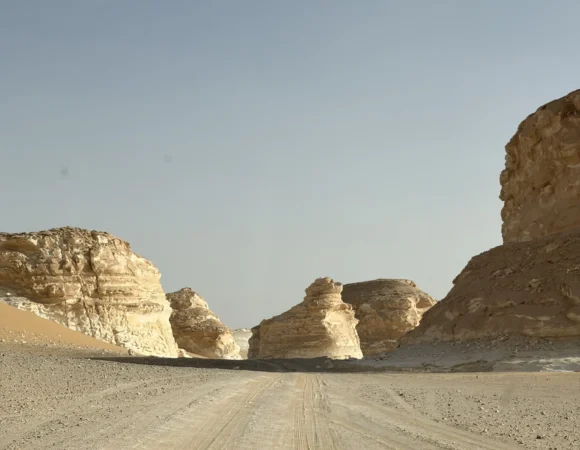
- Cross the recognized Black Desert, Crystal Mountain, Agabat and White Desert route.
- Camp for the first night.
- Travel off road to Djara with the authorized guide on day two.
- Return toward the White Desert and camp again.
- Complete the White Desert highlights on day three.
- Return to Bahariya, change to the road vehicle and drive to Cairo or Giza.
The active 3 Days / 2 Nights White Desert & Djara Cave Adventure follows this structure. The exact campsite, route and timing can change because of permits, weather, surface conditions or instructions from authorities.
Why Bahariya Oasis is the logistics hub
Bahariya is useful because it connects the Cairo road transfer with local desert operations. It is where travelers can:
- meet the specialist 4×4 driver and guide;
- confirm passenger documents;
- load water, food, fuel and camping equipment;
- eat before the off-road stage;
- use a conventional toilet;
- reorganize luggage;
- buy an overlooked basic item when available;
- begin the Black and White Desert circuit.
NASA’s Earth Observatory describes Bahariya as a large depression southwest of Cairo, with Bawiti as its main town. Egypt’s official tourism portal says the road journey from Cairo is approximately five hours and recommends licensed guides with 4×4 vehicles for excursions outside the oasis.
Bahariya is not the cave’s immediate location. It is the operating base from which a structured multi-stop expedition can begin.
Stage 1: Cairo or Giza to Bahariya Oasis
Elzaghandi Travel’s live itinerary currently lists pickup between 7:00 and 8:00 AM and an estimated four-to-five-hour drive. Treat these as planning figures rather than guarantees.
Travel time varies with:
- hotel location;
- Cairo traffic;
- number of pickups;
- road stops;
- checkpoint procedures;
- vehicle and driver;
- weather or road works;
- meals and toilet breaks.
A private pickup is the simplest option because the same company controls the connection to the Bahariya team. Confirm whether your address is included, especially for airport-area hotels, New Cairo, Sheikh Zayed, 6th of October City or locations outside central Cairo and Giza.
Keep passport, permit information, medicine, water and one warm layer in a small day bag. Do not place critical items in luggage that may become difficult to reach after the vehicle change.
Can you reach Bahariya by bus or public transport?
Transport services may connect Cairo and Bahariya, and Egypt’s official tourism portal notes that tour companies offer bus rides to the oasis. Reaching Bahariya, however, does not solve the Djara part of the journey.
A traveler arriving independently still needs:
- a pre-arranged licensed desert company;
- the permits for the exact itinerary;
- an official local guide;
- a suitable 4×4;
- fuel and recovery planning;
- food, water and camp equipment;
- a coordinated return.
Public transport also creates risks around missed connections, luggage, uncertain arrival time and permit coordination. It may suit an experienced traveler staying in Bahariya before a separately confirmed expedition, but it is not a direct public-transport route to Djara Cave.
Never arrive in Bawiti expecting to hire an unknown vehicle and depart immediately into the desert. Arrange the complete trip in advance.
Can you drive a rental car to Djara Cave?
No ordinary rental car is appropriate for the off-road route. The cave requires specialist desert navigation and a suitable 4×4 operated within current authorization.
UK travel guidance says off-road travelers in Egypt should use a qualified guide and obtain a Ministry of Interior permit. Rental agreements and insurance may also prohibit off-road driving, and consumer map apps do not show soft sand, route closures, security restrictions or recovery options.
Even driving a rental car only to Bahariya creates questions:
- Is the rental contract valid on that road?
- Where will the car be stored for two nights?
- Does the owner permit leaving it at the oasis?
- Who is responsible if the desert return is delayed?
- Will you be tired enough after the expedition to make the Cairo drive unsafe?
For most visitors, a professional Cairo-to-Cairo transfer is the clearer arrangement.
Stage 2: vehicle change in Bahariya
The transition from road vehicle to 4×4 should not be treated as a five-minute formality. Use it to verify the expedition.
Confirm:
- names and contacts for the guide and driver;
- number of guests;
- private or shared status;
- seatbelts and seating plan;
- where luggage is secured;
- food and dietary needs;
- quantity of water;
- first-aid supplies;
- sleeping equipment;
- headlamp availability;
- permit confirmation;
- route and expected no-signal period;
- emergency and delay procedure.
Move valuables, medicine, camera batteries, passport and a warm layer into the 4×4. Large suitcases may remain in Bahariya or be loaded differently, depending on the operator. Ask before leaving Cairo what luggage size is practical.
Why a 4×4 is required
The desert stage can include sand, rough tracks, limestone surfaces and areas where a normal road car lacks clearance, traction and durability. A 4×4 is one part of the solution; driver experience matters just as much.
The operating team should plan:
- correct tires and pressure;
- usable spare tire;
- jack and wheel tools;
- recovery equipment;
- sufficient fuel;
- drinking water;
- route knowledge;
- communication procedures;
- weather and daylight;
- passenger comfort.
Do not choose a vehicle only because it looks new. Ask how it is maintained and prepared for the specific route.
Passengers should remain seated and use seatbelts whenever available. Do not sit on the roof, stand through an opening or move around the cabin for a video.
Stage 3: the first desert day
The current live itinerary does not drive straight from Bahariya to Djara. It builds a wider route:
- Black Desert;
- El Hez area and lunch;
- Crystal Mountain;
- hidden rock features around the Agabat route;
- sunset;
- first overnight camp.
This sequencing serves two purposes. It includes the main landscapes travelers came to see, and it positions the expedition for the second-day Djara excursion.
The exact stop order may change. A guide can shorten a hike, move lunch or choose another campsite because of wind, heat, track condition or authorization. The route should remain flexible without becoming vague: ask what core destinations are planned and what realistic substitutes apply.
Stage 4: White Desert camp to Djara Cave
The active product currently states that the Djara journey takes around two hours round trip from the White Desert area. Treat this as the operator’s current itinerary estimate for its selected camp and route—not a universal GPS fact.
Travel time changes with:
- exact first-night campsite;
- authorized track;
- sand condition;
- stops;
- vehicle pace;
- route checks;
- weather;
- passenger needs.
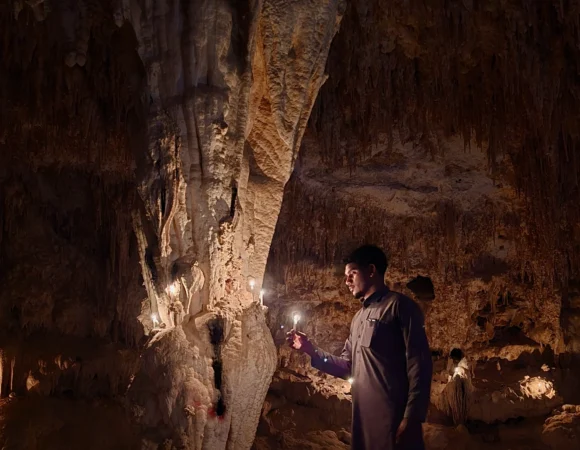
Djara lies in the center of its depression, with a scientific study describing a narrow entrance on a gentle slope. The arrival is therefore not like parking at a visitor center with a sign, ticket office and permanent lighting.
Follow the guide from the vehicle to the entrance. Do not spread across the surrounding archaeological landscape, move pottery or tools, or collect stones.
Visiting the cave
Inside, expect low light and natural ground rather than a developed show-cave pathway. The guide determines where guests can move.
Bring:
- reliable headlamp;
- backup light or batteries;
- closed shoes;
- small day bag;
- water;
- camera with dust protection;
- warm layer when seasonally appropriate.
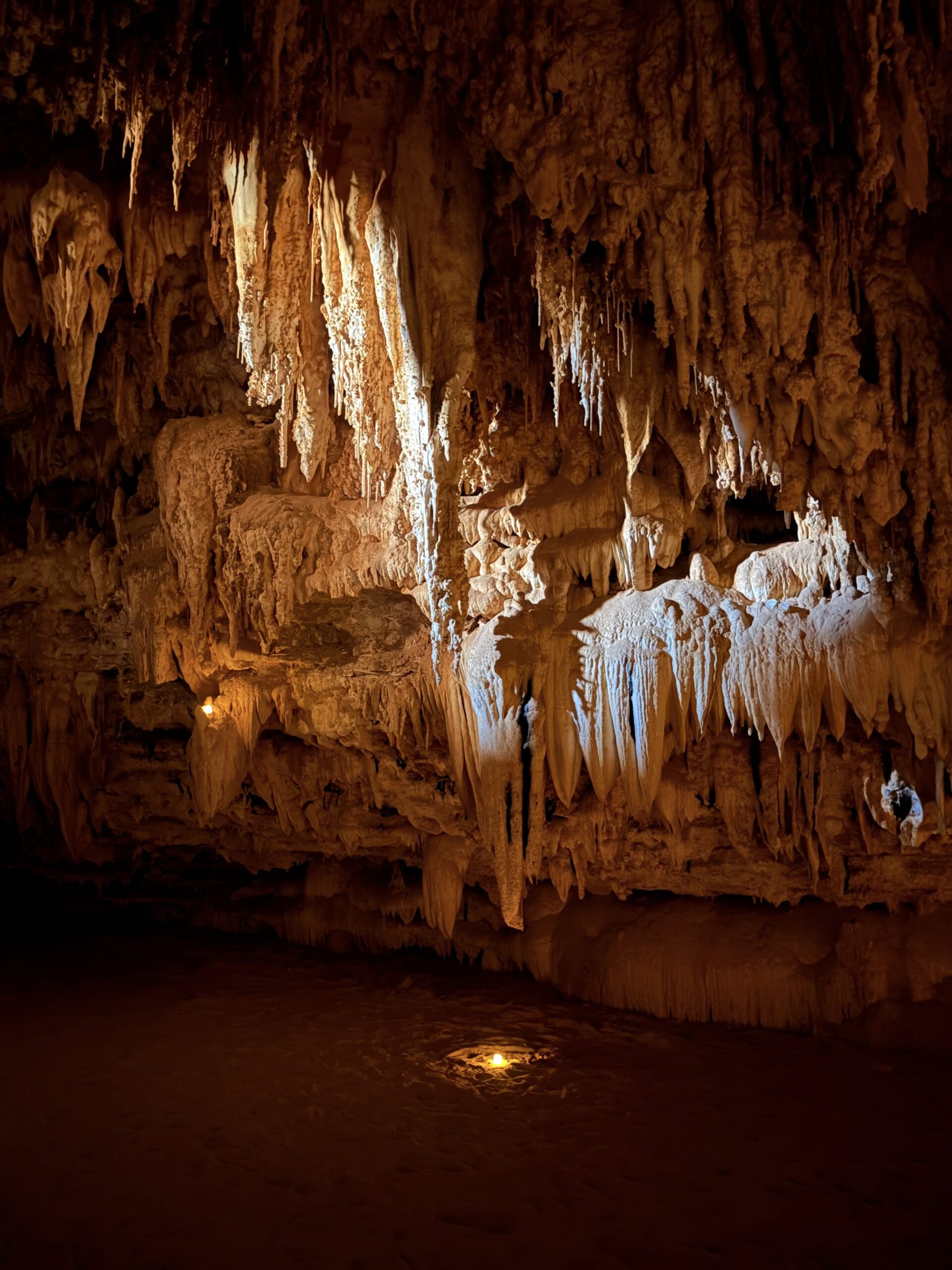
The cave contains speleothems and prehistoric incised or pecked rock art. Do not touch, trace, wet, chalk or illuminate a figure with heat-producing equipment. For the currently supported commercial route, use the published 3 Days / 2 Nights White Desert & Djara Cave Adventure.
The active tour currently lists lunch inside Djara Cave. Confirm the precise current arrangement. Every crumb, package and spill must be removed, and the operating team should choose the meal location according to conservation and safety.
Stage 5: return to the White Desert
The published program returns toward the White Desert for a second camp. This avoids forcing a direct long return to Cairo after the cave and provides another sunset, night and sunrise.
The second night matters because:
- the Djara day is already remote and active;
- daylight may be needed for navigation;
- guests need food and rest;
- the White Desert deserves more than a drive-through;
- the schedule retains some flexibility after delays.
The White Desert camping guide explains mattresses, sleeping bags, blankets, toilets, washing, meals, power and phone signal.
Stage 6: return to Bahariya and Cairo
On day three, the current tour includes major White Desert formations before returning to Bahariya. Travelers change back to the Cairo road vehicle and continue to the original pickup area.
Do not book an international flight on a tight connection after the planned return. Delays can result from:
- off-road conditions;
- checkpoint procedures;
- vehicle issues;
- extra rest stops;
- Cairo traffic;
- weather;
- a guest becoming unwell;
- route changes.
A buffer night in Cairo is safer than treating the website return estimate like an airline timetable.
Can you start the tour in Bahariya Oasis?
Potentially, yes, when you are already staying in Bawiti or another confirmed pickup point. The operator must coordinate the permit details, meeting time, 4×4, guide, luggage and return plan.
Starting in Bahariya can remove the same-day Cairo transfer from the first morning, which may give the family or group more rest. It does not necessarily shorten the desert portion or reduce permit requirements.
Ask whether the quote includes:
- Bahariya hotel pickup;
- parking or luggage storage;
- pre-tour meal;
- 4×4;
- permits;
- two camping nights;
- return to Bahariya;
- Cairo transfer after the tour, if needed.
For the road stage from Cairo, use the published How to Get to Bahariya Oasis from Cairo guide.
Can you visit Djara from Farafra or Asyut?
Geographically, academic sources place Djara between Farafra and Asyut and historical routes crossed the plateau. That does not establish a currently open tourist route from either point.
Do not plan an Asyut–Djara or Farafra–Djara self-drive based on an old caravan line or a pin. Ask an authorized operator whether the specific approach is currently permitted, supported and covered by insurance.
Elzaghandi Travel’s currently published and supported commercial format approaches Djara within a Bahariya–White Desert expedition. That is the route this guide can verify from the company’s live product.
Is a day trip to Djara from Cairo possible?
It is not a realistic or responsible format. Cairo to Bahariya already takes around four to five hours one way, before the 4×4 transfer and remote desert stage.
Attempting an out-and-back in one day would create:
- excessive driving;
- night-road pressure;
- little time at the cave;
- no meaningful White Desert visit;
- fatigue for driver and passengers;
- minimal contingency time;
- increased temptation to rush checkpoints or off-road sections.
Choose the three-day program or stay in Bahariya before the expedition.
Is two days enough?
A standard two-day White Desert trip already fills its schedule with the Cairo–Bahariya transfer, Black Desert, Crystal Mountain, Agabat, one camp and the chalk formations.
Adding Djara would compress the route and reduce buffer time. The three-day program adds:
- a dedicated Djara day;
- a second camp;
- more off-road time;
- more food and water;
- a second sunset and sunrise;
- better separation between the cave excursion and Cairo return.
If you are deciding between a shorter classic route and the longer Djara expedition, compare the published 2-Day vs 3-Day White Desert Tour guide.
Three days versus four days
Three days is the active core product. A fourth day may be useful for:
- slower photography;
- children or older travelers;
- reduced daily driving;
- additional Bahariya time;
- a second weather opportunity;
- travelers arriving in the oasis late;
- specialized archaeology or geology interest.
More days also mean more camping, food, fuel and cost. Request a custom itinerary rather than assuming the published route can simply be stretched.
Private versus shared transport
A private expedition is usually easier for Djara because the schedule can respond to:
- walking pace;
- photography stops;
- motion sickness;
- allergies and meals;
- toilet needs;
- cave anxiety;
- heat or cold;
- a decision to wait outside the cave.
A shared trip costs less per person in some cases but requires compromise. Confirm whether “private” covers:
- Cairo road vehicle;
- desert 4×4;
- guide;
- camp;
- Djara excursion.
Some products may combine one private stage with another shared stage.
What the current tour includes
The active product currently lists:
- Cairo and Giza transport;
- 4×4 desert safari;
- two camping nights;
- two lunches;
- two dinners;
- two breakfasts;
- soft drinks, water and juice;
- national park tickets;
- desert permits;
- camping equipment;
- personal mattress;
- pillow;
- sleeping bag;
- blanket.
Do not copy the list into an assumption months later. Ask for the current written inclusion sheet and the price for your dates and group size.
Items commonly needing clarification include:
- airport pickup supplement;
- private versus shared vehicle;
- helmet or cave lighting;
- hotel night in Bahariya;
- travel insurance;
- tips;
- special food;
- extra luggage;
- Cairo hotel after return.
How pricing is built
Djara quotes vary because the trip uses more than one vehicle, multiple crew days, permits, fuel, meals and two camps.
Price factors include:
- group size;
- pickup location;
- private or shared format;
- number of days;
- current permit costs;
- route and fuel;
- extra vehicle requirements;
- camp arrangement;
- dietary needs;
- extra hotel night;
- language guide;
- specialized photography timing.
A single headline price cannot describe every combination. Request an itemized quote and use the White Desert tour cost guide to compare inclusions without relying on invented price bands.
Permits and passenger information
Do not leave permit discussion until arrival. The operator may request:
- full name;
- nationality;
- passport number;
- passport copy;
- birth date;
- travel dates;
- group list;
- route details.
Requirements change. Send only what the verified company currently asks for and use a direct, secure channel. Avoid posting passport images in public travel groups.
UK advice specifically says tourists entering Bahariya, Farafra, the White and Black Deserts need advance permits and an official guide. It does not name Djara separately. The operator must therefore verify authorization for the exact extended route rather than assuming that one permit label covers every desert area.
Checkpoints and route changes
Checkpoints are a normal part of controlled desert travel. Keep passport accessible, remain patient and do not photograph security personnel or facilities.
A route may change because:
- a permit is delayed;
- authorities restrict a track;
- wind reduces visibility;
- sand condition changes;
- the vehicle requires attention;
- a traveler becomes ill;
- daylight is insufficient.
Do not ask the driver to bypass a checkpoint or find an unauthorized shortcut. A safe substitute is better than an inflexible promise.
Phone signal and communication
Reception can become limited or disappear after the oasis. Share these details with a trusted contact:
- operator name;
- guide contact;
- pickup date;
- planned route;
- expected return;
- normal no-signal period;
- office contact for overdue escalation.
Keep the phone in low-power or airplane mode when it cannot connect and carry a power bank. Satellite phones and radio equipment are regulated in Egypt; do not bring them without current approval.
Vehicle breakdown planning
A flat tire or mechanical issue is not automatically an emergency when the team has the equipment and experience to handle it. It becomes more serious when there is inadequate water, no spare, poor route communication or a lone vehicle far from support.
Ask:
- what recovery equipment is carried;
- whether a usable spare is present;
- how the office tracks the route;
- what communication method applies;
- when an additional vehicle is used;
- how passengers are sheltered during a delay.
Egypt’s official tourism portal recommends an additional support vehicle for overnight camping trips longer than two to three days. Ask how the operator applies that guidance to your exact duration and route.
Health and medical access
Djara is remote. Government travel advice warns of limited reception and poor medical facilities in desert areas. Before booking, disclose:
- heart or respiratory disease;
- diabetes;
- severe allergies;
- epilepsy;
- pregnancy;
- recent surgery;
- mobility limits;
- medication that needs refrigeration;
- severe motion sickness.
Carry medicine with you, not in luggage stored elsewhere. Travel insurance should cover the exact Western Desert route, off-road travel, camping and medical evacuation. Read Is the White Desert Egypt safe? for the current advisory comparison.
Heat, cold and weather
The cave may feel cooler than the exposed desert, but most of the expedition occurs outside or in vehicles. Plan for:
- strong daytime sun;
- dehydration;
- wind and dust;
- cooler evenings;
- cold winter nights;
- rapid temperature change.
Keep water accessible, use sun protection and add layers before becoming cold. The best time to visit the White Desert explains seasonal trade-offs. The operator should still check the immediate forecast.
Motion sickness and ride comfort
The route combines a long paved-road journey with uneven off-road movement. Tell the company about back or neck conditions, pregnancy or motion sickness.
Practical steps:
- use the seatbelt;
- sit facing forward when possible;
- avoid reading on rough sections;
- eat a light familiar meal;
- keep sick bags and wipes accessible;
- request breaks early;
- ask a clinician about suitable medication before travel;
- request gentle driving.
A passenger should never feel pressured to accept aggressive dune driving as part of the adventure.
Luggage strategy
Use three layers:
Road luggage
Large suitcase that may remain in Bahariya when the operator provides secure storage.
Camp bag
Warm clothing, sleep items, hygiene supplies and spare outfit for two nights.
Day bag
Passport, medicine, water, headlamp, power bank, sunscreen, camera and one warm layer.
Confirm storage before travel. Use the published White Desert packing checklist for general camping, then add a reliable headlamp, backup light and cave-appropriate footwear for Djara.
Who should not choose this route?
Reconsider or request a modified itinerary if:
- you have only one free day;
- you need hotel-standard bathrooms;
- you cannot tolerate two camping nights;
- off-road vibration causes significant pain;
- a medical condition needs rapid hospital access;
- you have uncontrolled claustrophobia;
- a child cannot use the available vehicle restraint;
- your insurance excludes the route;
- you expect continuous phone signal;
- you are unwilling to accept route changes.
A two-day White Desert trip or a Bahariya hotel-based visit may be more suitable.
Family travel
Children need an appropriate restraint in both the Cairo vehicle and the 4×4. Ask about belt compatibility before booking. The trip also demands hydration, supervision at camp, a headlamp, warm layers and acceptance of basic toilets.
A private itinerary is strongly preferable for a family. Review White Desert Egypt with kids before adding Djara.
Older travelers and mobility
The main barrier may be vehicle time rather than cave walking. Ask for:
- vehicle step height;
- seat position;
- planned breaks;
- entrance slope;
- head clearance;
- ground surface;
- ability to wait outside;
- mattress height;
- toilet setup.
A slow private trip can help but cannot turn the cave into a fully accessible attraction.
Photography planning
Djara combines bright desert light with a dark cave. Pack:
- lens cloth;
- dust-resistant bag;
- spare battery;
- headlamp;
- wide lens;
- tripod only if permitted and practical.
Do not touch formations or engravings, and do not use chalk or water to reveal a line. Side lighting can show shallow engravings, but the guide should approve the setup. The second camp also creates an opportunity for White Desert stargazing and photography.
Booking timeline
Before requesting a quote
Know your dates, group size, pickup location, passport nationalities, medical or dietary needs and preferred private/shared format.
When comparing offers
Compare route, days, permits, vehicles, camp equipment, water, meals, guide, insurance requirements and cancellation terms.
After confirmation
Send permit data through the verified channel, buy suitable insurance, share the itinerary and begin packing.
Two to three days before departure
Reconfirm pickup, guide contact, forecast, permit status, luggage storage, food needs and return window.
On departure morning
Keep phone charged, passport accessible, water and medicine in the day bag and breakfast appropriate for the drive.
A message template for the operator
“Hello, I would like a private Djara Cave and White Desert trip. Our dates are [dates], we are [number] travelers with nationalities [list], and pickup is from [hotel/area]. Please confirm the three-day route, permit requirements, vehicle arrangement, whether the Cairo transfer and desert 4×4 are both private, two-night camping setup, meals, water, cave lighting, luggage storage, expected return window and total quote. Our medical, mobility or dietary needs are [details].”
This gives the company enough information to answer accurately.
Common route-planning mistakes
- Treating Djara as a day trip from Cairo.
- Assuming Bahariya is beside the cave.
- Renting a car for the off-road stage.
- Booking transport to Bawiti without a desert operator.
- Sending passport details to an unverified contact.
- Assuming a White Desert permit automatically covers every extended route.
- Scheduling a flight immediately after return.
- Packing all medicine in the large suitcase.
- Expecting phone signal.
- Choosing two days because it is cheaper, then forcing Djara into the route.
- Comparing quotes without checking private/shared status.
- Believing a map pin replaces a local guide.
- Photographing checkpoints.
- Pressuring the driver to bypass an official restriction.
- Ignoring the second night’s cold.
Related Djara guides: Read the Djara Cave travel guide for the full destination overview, the history and rock-art guide for archaeology, the Djara Cave packing list for preparation, and the 3-day White Desert and Djara itinerary for the day-by-day route.
Frequently asked questions
How far is Djara Cave from Cairo?
A single straight-line or road number is misleading because the tourist journey is staged through Bahariya and the White Desert, then continues off road. Plan three days rather than treating the cave as a fixed-hour drive from Cairo.
How long is Cairo to Bahariya?
The active tour estimates four to five hours, and Egypt’s official tourism portal says approximately five hours. Traffic, stops and pickup location change the result.
How long is White Desert to Djara?
Elzaghandi Travel’s current itinerary states about two hours round trip from its White Desert area. The figure depends on the campsite, route authorization, track and stops.
Can I go from Bahariya directly to Djara?
A licensed operator can design the route, but the supported live product combines Bahariya, the White Desert and Djara over three days. Do not attempt a direct independent crossing.
Is there public transport to Djara Cave?
No practical public transport reaches the cave. Public or tour-bus transport may reach Bahariya, but Djara still requires a licensed off-road expedition.
Do I need a permit?
Yes, the operator should confirm and arrange the permits for the exact route. Requirements can change.
Do I need a guide?
Yes. Use a professionally licensed company and an official local guide who knows the terrain and current restrictions.
Can I drive my own 4×4?
Vehicle capability alone is insufficient. Permits, guide requirements, route knowledge, insurance, recovery and current official access all apply. Foreign visitors should not plan an independent crossing.
How many nights are needed?
The current product uses two nights of desert camping. That separates the Djara excursion from both the first-day Cairo transfer and final Cairo return.
Can I stay in a hotel instead of camping?
A Bahariya hotel can be added before or after, but replacing the expedition camps may change the entire route. Ask for a custom plan.
Is Djara suitable for a solo traveler?
Yes through a verified private or shared licensed tour, but not as a solo self-drive. Confirm who will share the vehicle and camp.
What happens if Djara access closes?
The operator should explain the substitute route, rescheduling and refund or price-adjustment terms before payment. Never use an unauthorized alternative.
Final route checklist
Before departure, confirm:
- Cairo/Giza pickup location and time;
- road vehicle;
- Bahariya meeting point;
- private/shared status;
- 4×4 and guide;
- passenger list;
- exact permit status;
- day-one route;
- first camp;
- current Djara day estimate;
- cave entrance and lighting;
- second camp;
- day-three return;
- meals and water;
- bedding and toilet setup;
- luggage storage;
- no-signal communication plan;
- medical and evacuation insurance;
- weather contingency;
- flight buffer.
The route to Djara is part of the experience, but it is also the main logistical challenge. Organize it as one Cairo-to-Cairo expedition with a licensed company rather than a set of disconnected transfers. That keeps the permits, vehicle change, camp supplies and return responsibility under one operating plan.
Sources checked
- Elzaghandi Travel: 3 Days / 2 Nights White Desert & Djara Cave Adventure
- Experience Egypt: Natural Wonders in Al-Bahariyya
- UK FCDO: Egypt regional risks
- UK FCDO: Egypt safety and security
- NASA Earth Observatory: Bahariya Oasis
- Abdel Maksoud, Baghdadi & Ruban: Djara Cave geoheritage study
To check your dates, current permits and the complete Cairo-to-Cairo Djara route, contact Elzaghandi Travel on WhatsApp.
Djara Cave History and Rock Art: What the Engravings Reveal
Recent Posts
Djara Cave History and Rock Art: What the Engravings Reveal
What to Pack for a Djara Cave Tour in Egypt
Black Desert vs White Desert Egypt: What’s Different?