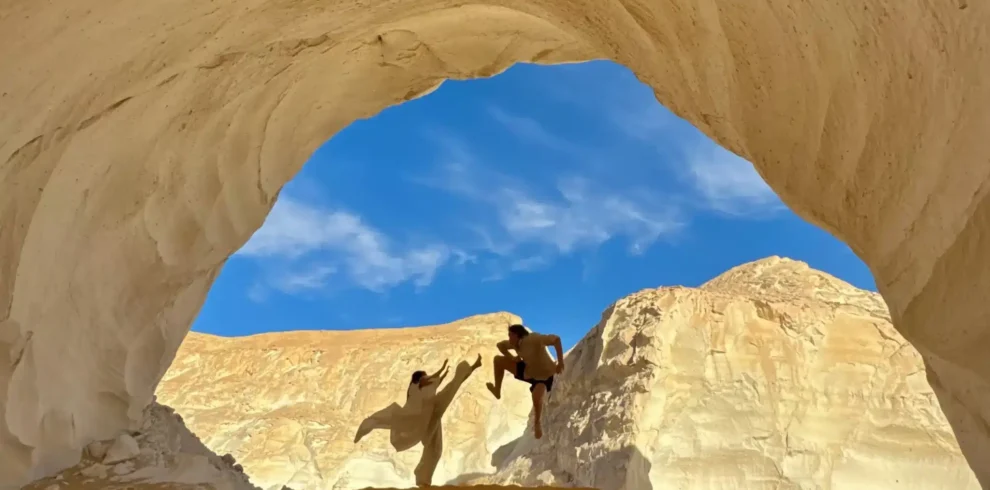
White Desert and Djara Cave 3-Day Itinerary from Cairo
Last reviewed: 8 September 2026
A three-day White Desert and Djara Cave itinerary from Cairo is the shortest practical format for travellers who want both the classic Bahariya–White Desert circuit and the much more remote Djara Cave. The route uses Bahariya Oasis as the operational gateway, includes two nights of desert camping, and separates the long Djara approach from the main sightseeing day so that the journey does not become an unsafe race between distant locations.
The active Elzaghandi Travel itinerary follows this logic. Day 1 covers the Cairo transfer, Bahariya, the Black Desert, El Hez, Crystal Mountain, Agabat Valley and the first camp. Day 2 is built around Djara Cave before returning toward the White Desert for a second camp. Day 3 visits additional White Desert formations and returns through Bahariya to Cairo.
This article explains how that itinerary works in practice, what the pace feels like, what should be confirmed before payment and who should choose a shorter or longer alternative. Exact timings are deliberately described as planning ranges rather than guarantees. Desert permissions, checkpoint procedures, road conditions, daylight, weather and the group's pace can change the sequence.
Quick answer: Allow three full days and two nights. Expect a long paved transfer between Cairo and Bahariya, substantial off-road driving, two camps, an early start for Djara and a late return to Cairo on the final day. Travel only after the operator has confirmed current access and permits.
Three-day itinerary at a glance
| Day | Main route | Overnight |
|---|---|---|
| Day 1 | Cairo or Giza to Bahariya, then Black Desert, El Hez, Crystal Mountain, Agabat and first desert camp | Desert camp |
| Day 2 | Remote 4×4 excursion to Djara Cave, cave visit, then return toward the White Desert | Second desert camp |
| Day 3 | White Desert formations, return to Bahariya, change vehicles and drive back to Cairo or Giza | Cairo or onward hotel |
This is a route framework, not a promise that every stop will happen at a fixed clock time. A responsible guide may reorder, shorten or omit a minor stop to protect the group, comply with instructions or keep the Djara sector within a safe driving window.
Is three days enough?
Three days are enough for the active combined itinerary, but they are not leisurely. The trip is suitable when the main goal is to experience the classic desert landscapes and reach Djara without adding extra hotel nights. It is not the same pace as a slow photographic expedition or a relaxed oasis holiday.
The first and third days include the Cairo–Bahariya road transfer. Egypt's official tourism material describes Bahariya as roughly four to five hours from Cairo under normal conditions. Actual door-to-door time can be longer because of pickup location, traffic, rest stops and checkpoints. Once in Bahariya, travellers normally transfer to a locally operated four-wheel-drive vehicle for the desert sector.
Djara creates the main logistical difference. It lies far beyond the compact group of White Desert stops and cannot be added casually to a standard overnight safari. A three-day plan gives it a dedicated day, but that day still involves extensive driving. If you dislike long vehicle days, need a slow walking pace or want several hours of photography at every location, ask for a four-day version through the custom trip page.
Who this itinerary is for
Choose the three-day route if you:
- Want Djara Cave to be a central objective rather than a last-minute detour.
- Are comfortable with two nights of basic desert camping.
- Accept long driving periods in both a road vehicle and a four-wheel drive.
- Prefer a private or small-group expedition with a flexible schedule.
- Can walk on sand, gravel and uneven cave ground without continuous assistance.
- Understand that mobile coverage and conventional facilities will be limited.
- Want to compare geology, archaeology and modern desert landscapes in one trip.
Consider another plan if you:
- Have only two calendar days from Cairo.
- Need a private bathroom or hotel room every night.
- Are uncomfortable with early starts and late arrivals.
- Have back, mobility or motion-sensitivity concerns that make off-road driving difficult.
- Want an oasis archaeology tour more than a remote desert expedition.
- Expect guaranteed wildlife sightings, fixed restaurant stops or continuous internet.
- Are booking without enough time to arrange permits and submit passport details.
For the shorter alternative, compare the 2-day White Desert Egypt itinerary from Cairo. It covers the classic circuit more comfortably but does not create enough time for a responsible Djara extension.
Why the route begins in Bahariya Oasis
Bahariya is the practical gateway from Cairo to the northern Western Desert. The paved road reaches the oasis before the journey changes to off-road tracks. This is where the local desert crew, vehicles, food, fuel, camping equipment and permission checks can be coordinated.
That handover is more than a transport detail. Cairo drivers and desert drivers perform different jobs. The remote sector requires knowledge of tracks, sand, tyre pressures, recovery and changing access instructions. A locally experienced crew also understands where camping is currently permitted and which routes should be avoided.
Read how to get to the White Desert from Cairo for a focused explanation of the paved transfer, the Bahariya vehicle change and realistic travel time.
Before Day 1: preparation in Cairo
A smooth departure begins before the vehicle arrives. Send clear passport scans and nationality details by the operator's deadline. Confirm the exact hotel address, traveller phone number and luggage size. Ask whether pickup is from central Cairo or whether an airport, Giza or New Cairo location changes the timing or price.
Pack one small overnight bag instead of a rigid suitcase. Large suitcases occupy valuable space in a loaded four-wheel drive and are awkward at camp. Leave unnecessary luggage at the Cairo hotel when possible.
The evening before departure:
- Charge your phone, camera and power bank.
- Put medication in your day bag, not deep inside luggage.
- Withdraw enough Egyptian pounds for personal expenses and tips.
- Check the weather for Cairo, Bahariya and Farafra rather than Cairo alone.
- Reconfirm pickup time through WhatsApp.
- Eat a normal dinner and sleep early.
- Avoid planning a flight or major appointment immediately after the expected return.
The combined route is less forgiving of a late departure than a simple overnight safari. A delayed start reduces daylight for the Day 1 desert stops and may affect the preferred camp location.
Day 1: Cairo, Bahariya and the classic desert landscapes
Early departure from Cairo
A typical departure is early in the morning, but the confirmed pickup time for your booking is the only time that matters. Traffic patterns differ between central Cairo, Giza, airport hotels and eastern districts.
The drive to Bahariya usually takes around four to five hours in ordinary conditions, plus any stops. The road passes from dense urban development into increasingly open desert. This is a transfer day, so bring water, sunglasses, tissues and something warm enough for strong vehicle air-conditioning.
Do not judge the whole expedition by the paved drive. The landscape changes much more dramatically after the four-wheel-drive sector begins.
Arrival and operational stop in Bahariya
On arrival, the group normally meets the local crew, changes vehicles and has lunch or a substantial meal before entering the desert. This is also the point for a final equipment and water check.
Use the stop to ask practical questions:
- Where will the two camps be located approximately?
- Is a toilet tent included?
- How much drinking water is carried?
- Are sleeping bags included or should you bring a liner?
- What communication and recovery equipment is in the vehicle?
- What time is the expected start for Djara on Day 2?
- Are all current permits confirmed?
The answer may change with group size and current conditions. What matters is that the crew has a defined operational plan before leaving Bahariya.
Black Desert
The Black Desert creates the first strong visual contrast of the trip. Dark material covers or caps many hills, giving the landscape its black appearance. Official Egyptian tourism material describes volcanic-shaped mountains scattered with black stones, but visitors should not assume every hill is a simple volcanic cone. The region's geology includes dark doleritic material, iron-rich surfaces and sedimentary formations.
The stop is usually for a viewpoint, a short walk and photographs rather than a long hike. The ground can be loose and sharp. Closed shoes are better than sandals.
From an itinerary perspective, the Black Desert works well on Day 1 because it lies along the transition from Bahariya toward the White Desert route. It introduces the northern landscape without consuming the dedicated Djara day.
El Hez area
El Hez is associated with settlements, cultivation and spring areas south of central Bahariya. Depending on the day's route and current operating conditions, the stop may be for lunch, tea, a short rest or a spring visit.
Do not assume that bathing is automatically included. Water temperature, cleanliness, privacy, local instructions and time may affect what is possible. Ask before the trip if a spring experience is important to you and bring quick-drying clothing only after it is confirmed.
The value of El Hez in the itinerary is partly practical: it provides a transition between oasis life and the deeper desert. It also helps travellers understand that the Western Desert is not one empty surface. Habitation clusters where groundwater and agriculture are possible, while the plateau beyond remains sparsely occupied.
Crystal Mountain
Crystal Mountain is a compact roadside geological stop known for its natural arch and sparkling calcite-rich surfaces. The name creates unrealistic expectations for some visitors. It is not a high alpine mountain and should not be mined for souvenir crystals.
Egypt's official tourism site describes it as a former underground cave exposed at the surface. Whatever simplified label is used in tourism, the responsible visitor rule is clear: look, photograph and leave every fragment in place.
A short stop is normally enough. Midday or angled sunlight can make crystalline surfaces more visible, but the exact effect depends on the time and weather. Do not climb fragile edges for a photograph.
Agabat Valley
Agabat—also written Aqabat—is one of the strongest landscape sections on the first day. Pale cliffs, sculpted outcrops, sand and wide sightlines create a scale that photographs rarely convey. Experience Egypt describes the valley as a dried ancient riverbed with golden sand, dunes and white cliffs.
The itinerary may include a viewpoint, a walk, sandboarding or a tea stop depending on the product and conditions. Sandboarding should never be assumed unless it is listed and equipment is present.
Agabat is also a natural point for the day to slow down. After the long paved transfer and several stops, a sunset area or first camp nearby can prevent the journey from becoming continuous driving.
First desert camp
The crew selects a legal, suitable campsite based on wind, route, ground and the following morning's plan. A good camp is sheltered enough for cooking and sleeping without placing tents against fragile formations or blocking tracks.
The normal sequence is simple:
- Sunset or a short walk.
- Tea while camp is prepared.
- Dinner cooked or reheated by the crew.
- Stargazing and quiet time.
- Sleeping in tents or the confirmed camp setup.
- Early breakfast before the Djara drive.
A desert camp is not a hotel room transferred outdoors. Expect sand, temperature change, limited washing water and basic toilet arrangements. The reward is silence and an unobstructed night sky, but only if everyone limits noise and artificial light.
For a detailed decision guide, read the White Desert camping guide.
Day 2: the Djara Cave expedition
Day 2 is the operational heart of the itinerary. It should begin early because Djara is a remote destination requiring substantial off-road travel. The exact departure time depends on the first camp, permits, route and season.
Why an early start matters
The objective is not to reach the cave at any cost. The crew needs enough daylight and contingency time for navigation, slow sections, tyre issues, checkpoint instructions and the return toward the second camp.
A responsible guide may reduce optional photo stops if the approach takes longer than expected. This is not poor service. It is correct expedition management. The cave visit and safe return matter more than an unplanned stop on an exposed plateau.
Breakfast should be efficient. Pack loose items before the crew loads the vehicle, keep your headlamp accessible and refill your personal water bottle. Dress in layers; the vehicle may feel cool early and warm later.
The drive toward Djara
Djara lies on the Egyptian Limestone Plateau between the Nile Valley and Farafra region. The approach leaves the compact tourism circuit and crosses remote, visually repetitive terrain. This is where professional navigation is essential.
Expect a long vehicle session rather than constant attractions every few minutes. The apparent emptiness is part of the experience. Subtle changes in surface, limestone relief, shallow depressions and old drainage features become more noticeable when a guide explains them.
Mobile service may be absent. There are no conventional roadside facilities. The group depends on the carried water, food, fuel, recovery tools and communication plan.
For the cave’s geology, archaeology and conservation context, read the Djara Cave Egypt travel guide. For the bookable route itself, see the 3 Days / 2 Nights White Desert & Djara Cave Adventure.
Arrival and cave briefing
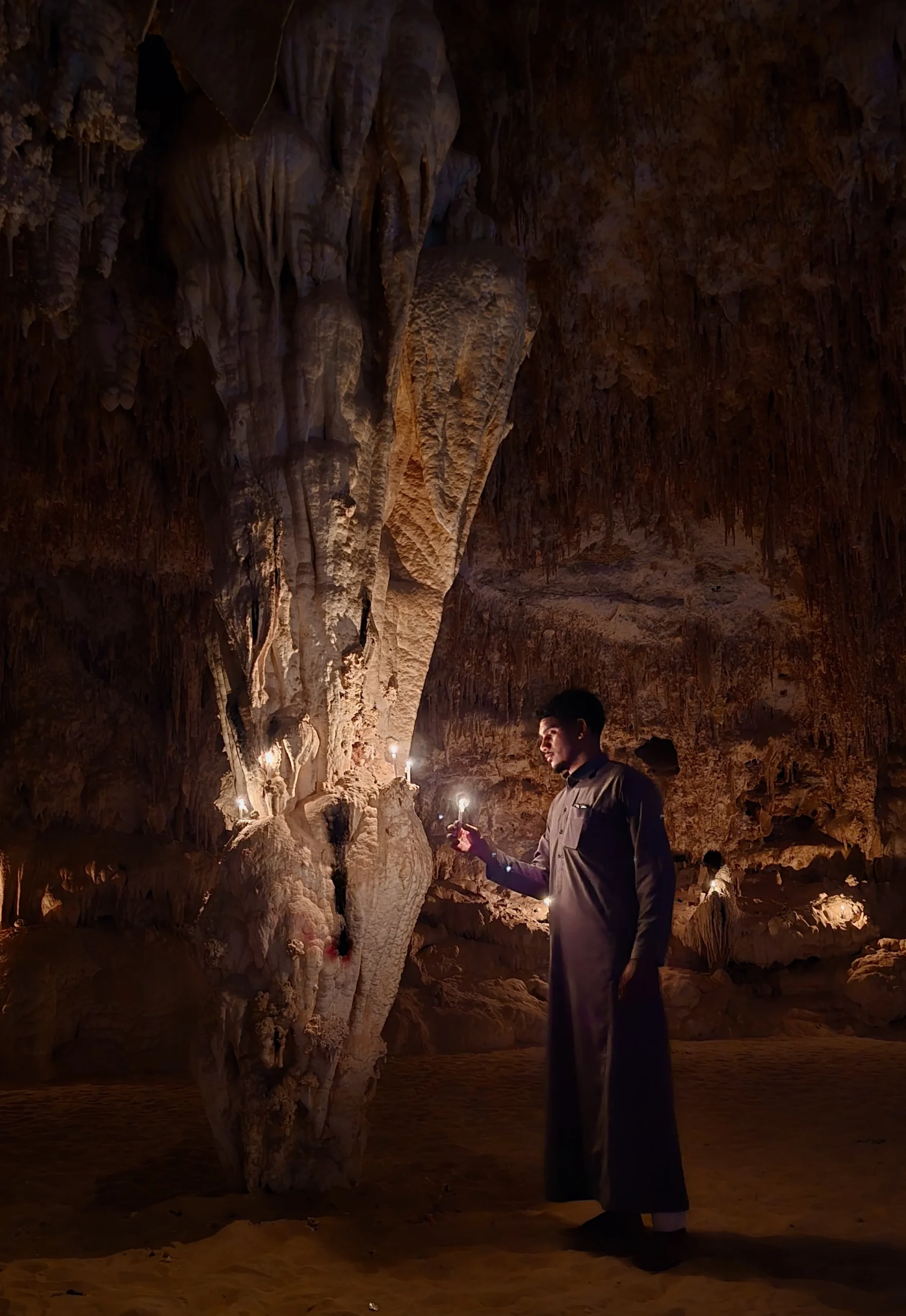
Before entry, the guide should explain the ground conditions, permitted route, lighting and conservation rules. The opening is not a monumental tourist entrance. A narrow access created by ceiling collapse leads toward a sand slope and the cave spaces.
Only carry what you need:
- Headlamp or compact torch
- Phone or camera secured by a strap
- Closed footwear with grip
- Small water bottle if permitted
- Dust protection if conditions require it
Leave walking poles, large backpacks and dangling metal equipment outside unless specifically needed. They can strike limestone formations or decorated surfaces.
Inside Djara Cave
Djara contains stalactites, stalagmites and prehistoric rock engravings. The principal archaeological publication documented 133 figures, including oryx, addax, ostriches, gazelles, human figures and unidentified cloven-hoofed animals.
The engravings are not hieroglyphs and they are not all directly dated to one exact year. Archaeologists use the cave's hearths, artefacts, animal remains, wider settlement record and environmental evidence to build a Holocene context. Read Djara Cave history and rock art before the trip if you want to recognize the difference between verified evidence and popular claims.
Some figures are shallow. Angled light may reveal them better than a frontal flash. Never wet, chalk, rub or trace a line. Do not collect a stone tool, pottery fragment, bone or crystal. Removing an artefact destroys its location data even if the object looks ordinary.
The visit length depends on access, group movement and conservation requirements. A smaller group usually moves more efficiently and hears the guide more clearly.
Lunch and the return drive
Lunch may be served as a picnic before or after the cave depending on heat and timing. Expect practical expedition food rather than a restaurant meal. Inform the company about allergies and dietary restrictions before departure; the remote day offers no easy replacement if the crew learns about them at lunchtime.
The return should begin with a safe daylight margin. The second camp is positioned back toward the White Desert route rather than beside the cave in the active itinerary. That choice supports the Day 3 return and provides a second night in a different desert setting.
Second night in the White Desert
The second camp often feels different from the first. The group now understands the routine, and the chalk landscape can create a brighter moonlit environment than the darker terrain farther north.
Dinner and camp setup follow the same basic format, but fatigue may be greater after the Djara drive. Drink water even if the evening is cold, change out of dusty clothing and organize luggage before sleeping. Leaving everything until dawn delays the final day.
This is the right night for quiet reflection rather than a loud camp. The White Desert is a protected area, and its management plan emphasizes sustainable recreation, wildlife and local community involvement. Food waste and artificial feeding can attract foxes and alter their behaviour. Keep supplies sealed and follow the crew's waste system.
Day 3: White Desert formations and return to Cairo
Sunrise and camp breakdown
Wake before or near sunrise if conditions allow. Morning light changes the chalk from grey-blue to warm cream and produces softer shadows than midday. Stay close enough to hear the crew and do not walk behind formations without telling the guide.
After breakfast, pack your bag, check the ground for small items and help ensure no waste remains. A clean site should show no obvious sign of the camp.
White Desert formation stops
The exact sequence varies, but Day 3 normally includes selected chalk formations and viewpoints before returning north. Popular shapes receive names such as mushroom, chicken or rabbit, but these names are informal visual associations, not separate geological categories.
The formations developed through erosion of chalk and limestone. Egypt's environmental management plan describes chalk stacks, inselbergs, dunes, cliffs and other landforms across the protected area. Wind action, temperature variation and occasional rainfall continue to shape exposed surfaces.
Enjoy the named formations, but also look at the broader pattern:
- White stacks rising from a sandy or chalky plain
- Joint lines controlling erosion
- Pitted and polished surfaces
- Darker material creating colour contrast
- Dunes moving around more resistant rock
- Cliffs marking the northern Farafra Depression
This wider observation makes the stop more meaningful than collecting a checklist of rock shapes.
Protected-area behaviour
White Desert National Park was declared a protected area in 2002. Different zones have different access and camping rules. Visitors should not decide independently that an open-looking surface is available for driving or camping.
Follow the established route and the guide's instructions:
- Do not drive or ask the driver to leave permitted tracks for a photograph.
- Never carve names into chalk.
- Do not remove crystals, fossils or rock fragments.
- Do not feed foxes or leave food outside.
- Use the crew's waste bags and toilet system.
- Avoid drones unless permission has been explicitly confirmed.
- Keep music and camp lighting low.
- Do not climb fragile formations.
The White Desert is visually robust but physically vulnerable. Chalk edges break, vehicle tracks persist and repeated camps concentrate waste.
Return through Bahariya
The four-wheel-drive sector returns toward Bahariya, where travellers normally change to the Cairo transfer vehicle. Depending on timing, there may be lunch, a wash stop or a short oasis break.
Keep essential medication, passport and electronics with you during the vehicle change. Check both vehicles before leaving, especially under seats and in door pockets.
Arrival in Cairo
Arrival is usually in the evening, but no responsible itinerary should promise a precise minute. Traffic, checkpoints, vehicle changes and the final desert route all affect the return.
Do not book a same-evening flight. Even a late-night departure creates unnecessary risk if the trip is delayed. A safer plan is to keep a Cairo hotel for the final night and fly the following day.
If you have a fixed train, domestic flight or international departure, give the operator the exact time before booking. The route may need an earlier Day 3 departure, which could reduce sightseeing.
How much driving should you expect?
Exact kilometres are less useful than understanding the pattern. Desert speed varies dramatically by surface, so a short off-road distance can take longer than a larger paved distance.
If a seller describes Djara as a quick addition to a standard one-night safari, ask for the complete route and driving plan. The dedicated second day is what makes the active three-day program credible.
What is normally included?
The active 3-day, 2-night White Desert and Djara Cave adventure is designed around transport, local four-wheel-drive service, meals, camping equipment, guiding and permit arrangements.
However, “included” must be checked against the written quotation you receive. Confirm:
- Cairo pickup and drop-off areas
- Private or shared vehicle status
- Number of travellers per four-wheel drive
- Two nights of camping
- Tents, mattresses, blankets and sleeping bags
- Toilet tent availability
- All meals from Day 1 lunch to Day 3 lunch or the stated alternative
- Drinking water and hot drinks
- Djara and protected-area permissions
- Entry or conservation fees
- English-speaking guide availability
- Dietary requirements
- Emergency and recovery equipment
- Any hotel night in Bahariya, if requested
- Price treatment for children
- Cancellation conditions if permits or access change
Do not rely on a social-media message that only states a total price. Ask for a dated written summary tied to your group size and travel date.
What may cost extra?
Common variables include airport or distant Cairo pickup, single-traveller supplements, private tents, upgraded sleeping equipment, hotel accommodation, specialist language guides, extra photography time and itinerary extensions.
Personal expenses, tips, soft drinks and optional items may not be included. Ask rather than assume. The website uses a request-price model because private group size, pickup, dates and permit conditions affect the quote.
Camping comfort: realistic expectations
A properly equipped camp can be comfortable without becoming a luxury glamping site. Expect a mattress, blankets or sleeping bag, a tent or confirmed open-air option, hot food and basic washing arrangements.
Expect no permanent bathroom, shower, power socket or room heating. A toilet tent may provide privacy, but the system remains simple. Night temperature can fall sharply, especially from late autumn through early spring.
Comfort improves with a few personal items:
- Clean sleeping-bag liner
- Warm base layer and insulated jacket
- Wool or synthetic hat
- Thick socks reserved for sleeping
- Small inflatable pillow
- Unscented wet wipes
- Hand sanitiser
- Headlamp with a red-light mode
- Earplugs for wind or vehicle noise
- Power bank kept warm inside luggage
For the full list, use what to pack for White Desert camping and the more specific Djara Cave packing guide.
Food and water
Meals on a desert expedition are normally simple, filling and designed for transport. Breakfast may include bread, cheese, eggs, beans, jam, fruit and hot drinks. Lunch can be a cooked or picnic-style meal. Dinner often includes soup, rice or pasta, vegetables and grilled or stewed protein.
The exact menu is less important than advance communication. Send dietary restrictions in writing and distinguish between preference, allergy and medical requirement. A severe allergy may require discussion of cross-contact, separate utensils and emergency medication.
Drink regularly rather than waiting for thirst. Cool weather and vehicle travel can disguise dehydration. Carry a personal bottle inside the vehicle and refill it at camp.
Do not consume untreated spring water. Use sealed or crew-supplied drinking water unless the operator explicitly confirms a safe alternative.
Best time for the three-day route
The cooler months are generally more comfortable for long drives, cave entry, walking and camping. October through April is the usual practical season, with the coldest nights in winter. Shoulder periods can provide a good balance, but wind and temperature remain variable.
Summer heat makes the long remote day more demanding and reduces the margin for outdoor stops. A route may still operate only if access and the operator's risk assessment permit it, but travellers should not choose a date solely because it is cheaper.
Winter is not automatically mild. Night temperatures can approach freezing in exposed desert conditions, and wind increases heat loss. Pack for the campsite, not Cairo's daytime forecast.
Read the best time to visit the White Desert before choosing dates.
Safety, permits and current travel advice
Desert safety has three layers:
- Operational risk: navigation, fuel, vehicle condition, recovery, water and communication.
- Environmental risk: heat, cold, wind, dehydration, uneven ground and remoteness.
- Access and security: permits, checkpoints, restricted zones and changing official instructions.
Egypt's official tourism website tells travellers to check permits and regulations with a travel agency or authorized guide. The current United States travel advisory states that travel in the Western Desert should only be undertaken with a professionally licensed tour company and warns against border areas and military zones. Travellers should also consult the advisory issued by their own government.
This article cannot confirm that a route will be open on your date. Only the operating company and relevant authorities can do that. A permit delay or instruction change may require rescheduling, rerouting or cancellation. That condition should appear in the booking conversation.
Review is the White Desert in Egypt safe? for a fuller risk framework.
Questions to ask before paying
Use this checklist in the WhatsApp conversation:
- Is Djara access confirmed for my nationality and exact dates?
- Which permits are included, and when do you need passport copies?
- Is the trip private or shared?
- How many passengers will be in each vehicle?
- Are there two separate desert camps?
- Which sleeping items and toilet arrangements are supplied?
- Are all meals and drinking water included?
- What happens if authorities do not approve Djara access?
- What is the refund or rescheduling policy?
- Who is the local desert operator and guide?
- What communication and recovery equipment is carried?
- When is the realistic Cairo return window?
- Can dietary, mobility or medical needs be accommodated?
- Is travel insurance required or recommended?
- Are any stops optional or dependent on timing?
Clear answers are more valuable than a long list of attractions.
Three days versus two days versus four days
A three-day route is the best commercial balance for most fit travellers specifically searching for Djara. It provides a dedicated cave day while keeping the overall trip manageable. A fourth day becomes valuable when comfort, photography or flexibility matters more than minimum duration.
Can the itinerary be customized?
Yes, but customization changes logistics rather than simply adding names to a list. Possible requests include:
- Private departure for a couple or family
- Extra night in Bahariya
- Four-day slower itinerary
- More White Desert photography time
- Specialist archaeological interpretation
- Vegetarian or allergy-aware meals
- Private tent or upgraded bedding
- Airport pickup or final drop-off
- Additional oasis sights
- Earlier Day 3 return
Each change affects permits, fuel, crew time, camp location and price. Use the customize your Egypt trip page or send the request through WhatsApp.
Responsible travel in the White Desert and Djara
Remote landscapes are not empty stages. They contain protected landforms, archaeological material, wildlife habitat and routes managed through local knowledge.
Follow leave-no-trace principles:
- Carry out every piece of waste.
- Use the toilet method explained by the crew.
- Never collect fossils, artefacts, crystals or chalk.
- Keep vehicles on authorized routes.
- Do not carve, stack or move rocks.
- Do not touch Djara's engravings or formations.
- Do not feed foxes.
- Keep noise low at camp.
- Limit bright lighting after dinner.
- Support experienced local drivers and guides.
- Accept a route change when conservation or safety requires it.
The Egyptian White Desert management plan specifically links sustainable ecotourism with resource protection and local community participation. Choosing an experienced local team is therefore part of responsible travel, not only a convenience.
Related Djara guides: Use the Djara Cave travel guide for the destination overview, how to visit Djara Cave from Cairo for access details, Djara Cave history and rock art for archaeology, and the Djara packing list before departure.
Frequently asked questions
Can I visit the White Desert and Djara Cave in three days from Cairo?
Yes. Three days and two nights are the practical minimum for the active combined route because Day 2 is mainly reserved for the remote Djara excursion.
Is Djara Cave inside the White Desert?
No. Djara and the White Desert are separate destinations in the wider Western Desert and are combined by a longer 4×4 expedition.
How long is Cairo to Bahariya Oasis?
Plan roughly four to five hours in normal conditions, with extra time possible for traffic, pickup location, rest stops and checkpoints.
Will I camp for two nights?
Yes on the active combined itinerary. Confirm the exact tent, mattress, sleeping bag, blanket and toilet setup in your written quote.
Do I need a 4×4?
Yes. The desert section from Bahariya and the Djara excursion require a suitable 4×4 with an experienced local desert team.
Do I need permits and a guide?
Yes. Current permits and route authorization must be arranged and reconfirmed through the operator, with an official or authorized guide for the controlled desert route.
Is the trip private?
It can be private, but confirm whether both the Cairo transfer and desert 4×4 are private or shared before booking.
Are meals and water included?
The active tour includes meals and drinking water, but confirm the exact meal schedule and any dietary requirements in writing.
Can children join?
Some families can manage the route, but long driving, two camping nights, cave darkness, uneven ground and suitable vehicle restraints must all be considered.
Is the itinerary suitable for older travelers?
It depends more on mobility, back comfort, vehicle tolerance and camping needs than on age alone. A private slower plan may be better for some travelers.
Is there phone signal?
Do not depend on it. Mobile coverage can be weak or unavailable during remote sections of the route.
Can I fly from Cairo on the evening the tour ends?
It is not recommended because the return can be delayed by desert conditions, checkpoints, vehicle changes or Cairo traffic.
What happens if Djara access changes?
The operator should explain the authorized alternative, rescheduling or cancellation terms before payment. Never substitute an unauthorized route.
Should I choose two days or three days?
Choose two days for the classic White Desert circuit. Choose three days when Djara Cave is a genuine priority and you accept more off-road driving and a second camp night.
How do I book the three-day route?
Send your dates, number of travelers, nationalities, pickup location and any dietary, mobility or medical requirements, then request written confirmation of permits, inclusions and the current Djara route.
Final decision
The three-day White Desert and Djara Cave itinerary is a strong choice when Djara is genuinely important to you and time is limited. It combines the Black Desert, El Hez, Crystal Mountain, Agabat, two camps, the cave and White Desert formations in a sequence that respects the distance between them.
Its main advantage is route efficiency. Its main trade-off is driving time. Travellers who accept that trade-off gain access to two very different desert experiences: the protected chalk landscape of the White Desert and the remote geological and archaeological setting of Djara.
Book only after permits, group format, camping equipment, meals, vehicle arrangements and the cancellation policy are clear. Treat the itinerary as an expedition with flexible timing, not a city tour governed by a minute-by-minute schedule.
Sources and further reading
- Elzaghandi Travel, 3 Days / 2 Nights White Desert & Djara Cave Adventure. First-party itinerary and inclusion framework.
- Egyptian Tourism Authority, Desert Excursions. Official overview of the White Desert, Black Desert, Agabat, Crystal Mountain and permit guidance.
- Egyptian Tourism Authority, Natural Wonders. Official context for Bahariya camping and licensed tour arrangements.
- Egyptian Environmental Affairs Agency, White Desert National Park Management Plan. Protected-area geology, ecology, zoning and visitor-management context.
- Claßen, E., Kindermann, K. and Pastoors, A. (2009), “Djara – Cave Art in Egypt's Western Desert”. Principal archaeological rock-art documentation.
- U.S. Department of State, Egypt Travel Advisory. Current security advice; travellers should also check their own government's guidance.
Request the private three-day trip
Message Elzaghandi Travel on WhatsApp with your preferred dates, number of travellers, nationalities and Cairo pickup location. Ask the team to confirm Djara access, permits, two-night camping setup and the complete written price before you book.

Things to Do in Cairo Egypt: 15 Best Attractions & Experiences

Cairo Egypt Travel Guide: Itinerary, Attractions & Practical Tips
Dahshur Pyramids Guide: Bent Pyramid, Red Pyramid & Visiting Tips
Recent Posts

Things to Do in Cairo Egypt: 15 Best Attractions & Experiences

Cairo Egypt Travel Guide: Itinerary, Attractions & Practical Tips
Dahshur Pyramids Guide: Bent Pyramid, Red Pyramid & Visiting Tips