Last reviewed: 4 October 2026.
Wadi El Rayan is one of Fayoum’s most important protected landscapes and one of the easiest desert-and-water combinations to reach from Cairo. The area is known for two large lakes, the waterfalls between them, dunes, wildlife habitat, desert tracks and its connection to Wadi Al-Hitan, the UNESCO-listed Valley of the Whales.
This Wadi El Rayan Egypt travel guide explains what the protected area is, how the lakes and waterfalls formed, what travelers can realistically see in one day, how it connects with Whale Valley and Magic Lake, what fees and transport to expect, and how to visit without damaging the landscape.
For a wider regional overview, start with the Fayoum Egypt travel guide, then compare the Fayoum Day Trip and the 2 Days / 1 Night Fayoum Adventure.
Wadi El Rayan at a glance
- Location: Fayoum Governorate, southwest of Cairo.
- Status: protected area established in 1989.
- Main features: upper and lower lakes, waterfalls, dunes, springs, desert habitat and fossil-rich landscapes.
- Best combined with: Wadi Al-Hitan, Magic Lake, Tunis Village and desert sunset.
- Typical visit: part of a full-day Fayoum route from Cairo or an overnight Fayoum itinerary.
- Vehicle: normal road transport reaches developed sections; a suitable 4×4 is useful for desert sectors.
- Conservation rule: stay on authorized routes and do not collect fossils, rocks, plants or wildlife.
What is Wadi El Rayan?
Wadi El Rayan is a large protected area in Fayoum that combines open desert with water. Egypt’s Environmental Affairs Agency describes it as an integrated desert environment containing sand dunes, natural springs, wide water bodies, varied plants, mammals, reptiles, birds and important marine fossils.
The protected area covers far more than the famous waterfall viewpoint. Visitors moving through the region can encounter lake shores, dry desert, dunes and routes toward the fossil landscape of Wadi Al-Hitan.
That scale matters for trip planning. A photograph of the waterfall does not represent the whole reserve. Wadi El Rayan works best as a sequence of landscapes rather than one single stop.
How were the Wadi El Rayan lakes formed?
The two lakes are modern water bodies created after drainage water from the Fayoum agricultural system was diverted into the depression. Environmental documentation explains that the system began developing in the late 1960s as a reservoir for excess agricultural drainage water.
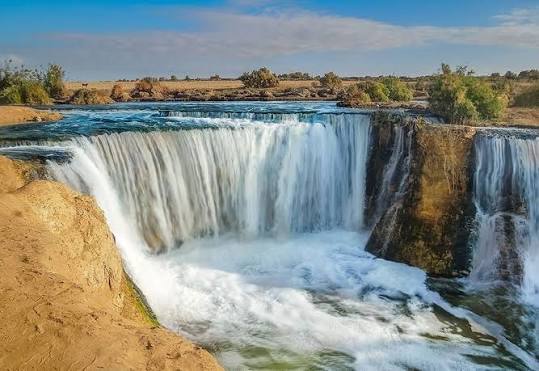
The upper and lower lakes sit at different levels. Water moving between them created the waterfall zone that visitors see today.
This means the waterfalls are not an ancient natural river cascade. They are a landscape feature produced by the modern hydrological system. The result nevertheless became an important wetland and wildlife habitat inside the desert.
Are the Wadi El Rayan waterfalls natural?
The landscape around them is natural desert, but the waterfalls themselves are connected to the man-made drainage-lake system. That distinction is useful because travel descriptions sometimes present them as if a natural river has always flowed through the desert.
The waterfalls remain a worthwhile stop because they create a rare water-and-desert contrast and are one of the easiest recognizable landmarks in Fayoum.
What can you see at Wadi El Rayan?
The waterfalls area
This is the most accessible and commonly photographed part of a standard Fayoum itinerary. It is usually a relatively short stop rather than the entire day’s destination.
The upper and lower lakes
The two water bodies define the protected area’s modern hydrology. Views change by route and water level. Do not assume that every shoreline is suitable for swimming or unrestricted access.
Dunes and open desert
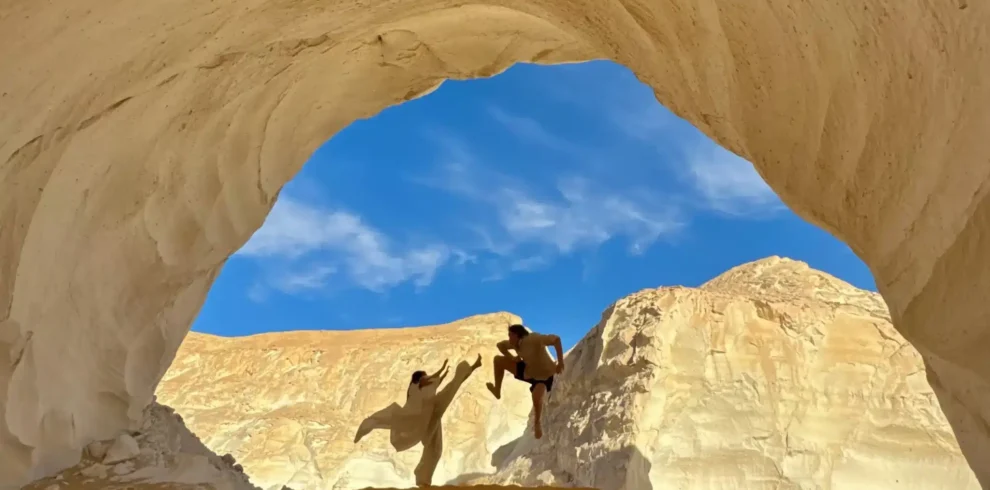
Sand dunes provide the setting for 4×4 travel, sandboarding and sunset stops. Vehicle routes should follow local guidance rather than creating new tracks across undisturbed surfaces.
Natural springs and desert habitat
EEAA documentation identifies natural springs and a variety of desert plants and wildlife in the protected area. These are ecological features, not amusement attractions, and should be approached with minimal disturbance.
Routes toward Wadi Al-Hitan
Wadi Al-Hitan lies within the wider protected landscape and is the most important scientific site in the area. Its early-whale fossils are internationally recognized by UNESCO.
Wadi El Rayan and Wadi Al-Hitan: how do they connect?
Wadi Al-Hitan is located within the wider Wadi El Rayan Protected Area, but the two names refer to different visitor experiences.
Wadi El Rayan is the broad protected landscape of lakes, waterfalls, dunes and desert habitat.
Wadi Al-Hitan is the fossil site famous for early whales and its World Heritage status.
Most well-planned Fayoum desert tours combine them because the route flows naturally from the waterfalls and lakes toward the fossil desert.
Read the dedicated Wadi Al-Hitan Whale Valley guide for the fossil story and visitor planning.
How far is Wadi El Rayan from Cairo?
The practical journey is best understood as part of a Fayoum day rather than one direct city-to-waterfall drive. Elzaghandi Travel’s current Fayoum programs plan roughly 2.5 to 3 hours from Cairo or Giza to the Fayoum region before continuing through the day’s attractions.
Traffic, pickup location and the order of stops affect total travel time. A visitor starting in western Giza may have a different road experience from someone starting in New Cairo.
Because Whale Valley and desert activities add substantial travel inside Fayoum, an early departure is important.
Can you visit Wadi El Rayan as a day trip?
Yes. A day trip works especially well when Wadi El Rayan is combined with Tunis Village, Wadi Al-Hitan, Magic Lake and sunset.
A realistic day usually begins early in Cairo or Giza and returns in the evening. The advantage is efficiency; the disadvantage is that the schedule can be long.
If you want to add Lake Qarun, Qasr Qarun or more relaxed village time, use an overnight itinerary instead.
Suggested one-day route
- Early Cairo/Giza pickup.
- Tunis Village.
- Wadi El Rayan waterfalls.
- Continue into the protected desert.
- Wadi Al-Hitan fossil site.
- Lunch.
- Magic Lake and dunes.
- Sandboarding if included and conditions are suitable.
- Sunset and tea.
- Return to Cairo/Giza.
What is Magic Lake?
Magic Lake is commonly included in desert itineraries through the Fayoum protected landscape. Travelers are drawn to the contrast between water, dunes and changing light.
The exact appearance and access can vary with water level and route conditions. Treat it as part of the living protected landscape rather than expecting one permanent postcard viewpoint.
It is often a good place to slow the pace after the more interpretive visit at Whale Valley.
Sandboarding in Wadi El Rayan
Sandboarding is a popular addition to the dunes. It is simple to try, but the guide should select a suitable slope based on sand condition and safety.
Wear closed shoes or secure footwear, protect cameras from blowing sand and empty pockets before sliding. Travelers with knee, ankle or back problems can skip the activity without missing the main value of the reserve.
Wildlife and biodiversity
EEAA information for Wadi El Rayan highlights mammals, reptiles and more than 100 species of resident and migratory birds. The reserve’s lakes and springs create habitat that would not exist across most surrounding desert.
Wildlife sightings are never guaranteed. The correct goal is not to approach or feed animals but to minimize disturbance and allow the landscape to function as habitat.
Bird activity can vary seasonally, and quiet observation near water is more responsible than chasing birds for photographs.
Current Wadi El Rayan entrance fees
Egypt’s Environmental Affairs Agency publishes official protected-area visit fees. At the time of this review, the official fee page lists a separate Wadi El Rayan entry charge for Egyptian and foreign visitors, plus camping and vehicle fees.
Because protected-area fees can be revised, use the current EEAA visitor-fee page rather than relying on an old blog article.
Elzaghandi Travel’s current Fayoum itineraries list entrance tickets as included, but confirm the exact package before departure.
Do you need permits?
For a normal tourist visit, the practical issue is protected-area entry and route management rather than arranging a complex expedition permit yourself. Rules can change, especially for camping, commercial activities or unusual routes.
If you are joining an organized tour, ask the operator what is included and whether any current protected-area procedure requires advance information.
Drone use should never be assumed to be allowed simply because the landscape feels remote. Egypt has strict rules governing drones and sensitive areas.
Do you need a 4×4?
You do not need a 4×4 for every paved road in Fayoum, but a proper desert vehicle is useful for routes involving dunes, remote lake viewpoints and the tracks used on a full Wadi El Rayan/Whale Valley safari day.
Do not drive a normal rental car onto sand just because tire tracks are visible. Sand condition, slope and protected-area rules matter.
Can you swim at Wadi El Rayan?
Do not assume every visible water body is an approved swimming area. Water quality, depth, access, shoreline condition and local restrictions can vary.
Ask the guide or protected-area staff about current conditions. Avoid jumping into water based on social-media photographs taken at a different season or location.
Best time to visit
Cooler months are generally more comfortable for desert travel, walking and outdoor lunch stops. Autumn, winter and spring reduce the heat burden compared with peak summer.
Winter evenings can still become cool, particularly with wind. Summer visits require early starts, substantial water, sun protection and shorter exposed stops.
Photographers may prefer late-afternoon light, while families may value moderate temperatures more than dramatic sunset conditions.
What to wear
- breathable clothing;
- closed comfortable shoes;
- sun hat;
- sunglasses;
- sunscreen;
- light scarf for dust;
- warmer layer in cooler months;
- clothing you do not mind getting sandy if sandboarding.
What to bring
- water if not clearly included;
- personal medication;
- power bank;
- camera dust protection;
- small cash;
- tissues and sanitizer;
- a small rubbish bag;
- light evening layer.
Visiting with children
Children often enjoy the variety of the day: water, dunes, fossils and sandboarding. The main challenge is the long drive and the amount of time spent outdoors.
Parents should confirm seat restraints, meal timing, toilet stops, walking distance and whether the return to Cairo will be late.
A two-day itinerary can reduce fatigue because the family does not need to drive back to Cairo immediately after sunset.
Older travelers and mobility
Wadi El Rayan is not a single walking trail. Some viewpoints are easy; sand, uneven terrain and 4×4 entry can be more demanding.
Ask the operator which stops require walking, how far the vehicle can approach and whether a traveler can remain at a viewpoint while others try sandboarding or a longer walk.
Photography tips
- Use a polarizer only when you understand how it affects reflections and sky.
- Protect lenses during windy dune stops.
- Keep camera bags closed when sandboarding.
- Do not climb fragile or restricted features for a higher angle.
- Allow time for wide landscapes and small details.
- Ask before photographing local people.
Responsible travel
Wadi El Rayan’s value depends on protecting the same water, desert and wildlife systems that attract visitors.
- Stay on designated or authorized routes.
- Do not create new vehicle tracks.
- Do not collect stones, fossils or plants.
- Carry out all litter.
- Do not feed wildlife.
- Avoid loud music near wildlife and other visitors.
- Use existing campsites and facilities where instructed.
- Respect ranger and guide directions.
Wadi El Rayan vs Fayoum city
Fayoum city is an urban center; Wadi El Rayan is a protected desert landscape outside it. Travelers sometimes say they are “going to Fayoum” without distinguishing the city, Tunis Village, Lake Qarun and the protected areas.
For a desert-focused trip, your time is likely to be spent west or southwest of the city rather than in central Fayoum.
Wadi El Rayan vs the White Desert
Wadi El Rayan is easier to fit into a day from Cairo and combines water, dunes and fossils. The White Desert is a deeper Western Desert experience centered on Bahariya Oasis, chalk formations and overnight camping.
If you have one free day, Fayoum is often the more efficient choice. If you have two or three days and want a true desert expedition, compare the White Desert destination.
Common mistakes
Thinking the waterfall is the whole reserve
It is one small part of a much larger protected landscape.
Skipping Whale Valley
If time allows, Wadi Al-Hitan is the most scientifically important stop in the region.
Starting late from Cairo
Late departure compresses the fossil visit and sunset.
Assuming every track is open
Protected-area and surface conditions can change.
Collecting fossil-looking material
Leave everything where it is.
Frequently asked questions
Is Wadi El Rayan worth visiting?
Yes, especially when combined with Whale Valley and the wider Fayoum desert route.
How much time do I need?
Plan most of a day if you are combining Wadi El Rayan with Wadi Al-Hitan, dunes and sunset.
Can I visit without a tour?
Developed areas can be reached independently, but a guided 4×4 route is more practical for the desert sectors.
Are the waterfalls natural?
They formed as part of the modern drainage-lake system rather than an ancient natural river.
Is Whale Valley inside Wadi El Rayan?
Yes, it lies within the wider protected-area landscape.
Can I camp?
Camping is subject to protected-area rules and fees. Confirm current requirements before planning it independently.
Is it suitable for kids?
Usually yes, provided the family is comfortable with road time, sun and desert travel.
Can I combine it with Lake Qarun?
Yes, but a two-day itinerary gives a more comfortable pace.
Plan your visit
For the classic one-day route, use the Fayoum Day Trip. For more time, an overnight and Lake Qarun/Qasr Qarun on Day 2, compare the 2 Days / 1 Night Fayoum Adventure.
For all current routes, see the Fayoum destination page.
Sources and further reading