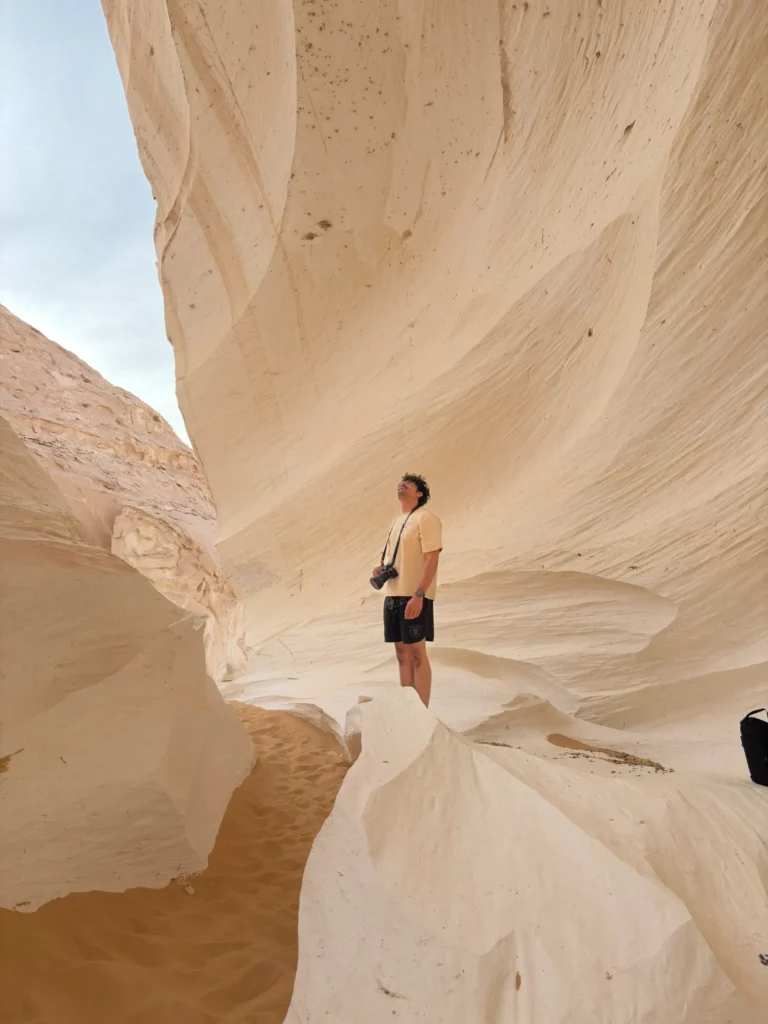

Last reviewed: 2 October 2026. Siwa Oasis is one of Egypt’s most distinctive desert destinations: a remote oasis of salt lakes, natural springs, palm and olive groves, historic kershef architecture, ancient temples and the dunes of the Great Sand Sea. It is not a quick add-on from Cairo. Reaching Siwa requires a long overland journey, and the destination rewards travelers who give it enough time to experience both the oasis and the surrounding desert.
This Siwa Oasis Egypt travel guide explains what to see, how to get there, how many days to stay, the best time to visit, how Siwa tours differ, what to pack and the practical points that matter before you travel.
Siwa Oasis at a Glance
| Best for | Salt lakes, springs, Amazigh culture, archaeology, desert scenery and Great Sand Sea safaris |
|---|---|
| Recommended stay | 3 days minimum; 4 days if you want a Great Sand Sea safari without rushing |
| Typical road time from Cairo | About 9-11 hours depending on traffic, stops and route conditions |
| Best general season | October to April for more comfortable daytime sightseeing and desert activities |
| Signature experiences | Shali Fortress, Siwa Salt Lakes, Cleopatra Spring, Temple of the Oracle, Mountain of the Dead, Fatnas sunset and Great Sand Sea safari |
| Travel style | Remote destination; best planned as a multi-day trip rather than a day tour |
What Is Siwa Oasis?
Siwa is an inhabited oasis in Egypt’s Western Desert, close to the Libyan border and far from the main Nile Valley tourism route. Its isolation helped preserve a strong local identity, including Siwi language and Amazigh cultural traditions, distinctive architecture and a landscape shaped by springs, salt lakes, palms and olive groves.
Egypt’s official tourism platform describes Siwa as a desert sanctuary known for its salt lakes, natural springs, archaeological sites and the Great Sand Sea. The same official source highlights Siwan culture as part of the destination itself, not simply a backdrop to the attractions. See the official Experience Egypt Siwa Oasis guide.
That combination is why Siwa feels different from Cairo, Luxor, Aswan and even Egypt’s other major oases. A visit can include ancient history in the morning, a salt-lake float at midday, sunset among palms in the evening and a 4×4 dune safari the next day.
Where Is Siwa Oasis? Location and Map
Siwa Oasis lies in the far north-west of Egypt, in the Matrouh Governorate, about 50 km from the Libyan border and roughly 300 km south of Marsa Matruh on the Mediterranean coast. On a map of Egypt it sits alone in the Western Desert, far from the Nile and from the other oases of Bahariya, Farafra, Dakhla and Kharga. The oasis lies in a depression below sea level, which is why it has so many springs and salt lakes. Siwa town is the only real town, surrounded by palm groves, olive orchards and smaller villages such as Aghurmi, where the Oracle Temple stands. Visitors searching for “Siwa Matruh” or “Siwa, Egypt” are looking at the same place: the oasis belongs to Matrouh Governorate, and the road from Marsa Matruh is the main way in.
Siwa and Alexander the Great
Siwa’s most famous visitor was Alexander the Great, who crossed the desert in 331 BC to consult the Oracle of Amun at Aghurmi. Ancient writers say the oracle greeted him as the son of the god, a story that helped cement his rule in Egypt. The ruins of the temple still stand on a rock above the palm groves, and they are one of the best viewpoints in the oasis at sunset.
Is Siwa Oasis Worth Visiting?
Siwa is worth visiting if you value remote landscapes, local culture, archaeology and a slower pace more than convenience. The main trade-off is travel time. A large part of the first and final day can be spent on the road, so a very short Egypt itinerary may not justify the detour.
For travelers who can allocate three or four days, Siwa offers a combination that is difficult to reproduce elsewhere in Egypt: bright salt lakes, freshwater and hot springs, historic mud-and-salt architecture, oracle temples, palm groves and access to the Great Sand Sea.
How Many Days Do You Need in Siwa Oasis?
Three days is the practical minimum for travelers starting in Cairo when the goal is to see the main oasis attractions. In that format, Day 1 is largely the journey to Siwa, Day 2 is the main sightseeing day and Day 3 includes free time before the return to Cairo.
Four days is better if you also want a dedicated Great Sand Sea safari, sandboarding and more time between stops. The extra day makes the itinerary feel less compressed and separates heritage sightseeing from the desert-adventure day.
Elzaghandi Travel currently offers both formats:
- 3-Day Siwa Oasis Adventure from Cairo or Giza – focused on the oasis, archaeology, salt lakes, springs and Fatnas sunset.
- 4-Day Siwa Oasis Tour with Great Sand Sea Safari – adds a dedicated safari day with sandboarding, Bir Wahed and dune sunset.
- 5-Day Siwa Oasis & White Desert Private Adventure – a longer Western Desert combination that requires more operational planning and route confirmation.
Best Things to Do in Siwa Oasis
The most useful way to plan Siwa is to divide the destination into four groups: historic Siwa, water landscapes, sunset locations and desert activities. Our dedicated things to do in Siwa Oasis guide goes deeper, but these are the core experiences most first-time visitors should know.
1. Explore Shali Fortress
Shali is the historic fortified heart of Siwa. The old settlement was built from a traditional material commonly called kershef, made from salt-rich mud and clay. Egypt’s Ministry of Tourism and Antiquities dates the settlement to the medieval period and notes that the restored site preserves its old passages, mosques, houses and deep wells. Read the official Shali Village information.
Shali is especially useful early in a visit because the elevated ruins help you understand the physical layout of the oasis: modern town, palm groves, lakes and desert beyond.
2. Float in the Siwa Salt Lakes
Siwa’s highly saline lakes and pools are among the oasis’s most photographed natural attractions. The density of the water can make floating feel almost effortless. The exact lake or pool visited can vary according to access, local conditions and the operating plan for the day.
Practical preparation matters. Salt can sting cuts, recently shaved skin and eyes. Bring swimwear, sandals or water shoes if advised locally, a towel and fresh water for rinsing. Do not assume every vivid blue pool seen on social media is an unrestricted public swimming site; some areas are working salt-extraction landscapes.
3. Visit Cleopatra Spring
Cleopatra Spring – also called Cleopatra’s Bath – is one of Siwa’s most famous freshwater springs. The name is a long-standing local and tourism tradition, but it should not be treated as proof that Cleopatra personally bathed there.
The spring is popular as a refreshing stop between archaeological sites and the salt lakes. Egypt’s official tourism platform lists Cleopatra’s Bath among Siwa’s signature experiences.
4. See the Temple of the Oracle
Siwa’s ancient identity is closely associated with the Oracle of Amun. Alexander the Great famously traveled to the oasis in antiquity to consult the oracle. Today, the temple area remains one of the central archaeological stops on a Siwa itinerary.
Different tour descriptions may use names such as Temple of the Oracle, Temple of Amun or Temple of Alexander the Great. Ask your guide which archaeological site is being visited so the historical context is clear.
5. Visit the Mountain of the Dead
Gebel Al-Mawta, usually translated as the Mountain of the Dead, contains rock-cut tombs and forms part of Siwa’s ancient funerary landscape. It is frequently combined with the oracle temples and Shali in a heritage-focused sightseeing day.
6. Watch Sunset at Fatnas
Fatnas is one of Siwa’s classic sunset stops. Palm silhouettes, water and western desert light create a very different atmosphere from sunset on the dunes. For many travelers, it is one of the most relaxed parts of a Siwa day.
7. Take a Great Sand Sea Safari
The Great Sand Sea is where a Siwa trip changes from oasis sightseeing to desert adventure. A typical professionally operated safari can include 4×4 dune driving, sandboarding, desert tea, sunset and selected springs such as Bir Wahed depending on the itinerary and current access.
Do not treat remote desert driving as an independent excursion. Route access, permits and local operating requirements can change, and desert travel should follow current official guidance and a qualified local operator.
How to Get to Siwa Oasis from Cairo
Siwa is reached overland. There is no practical passenger rail connection to the oasis, and most travelers choose between a private road transfer, an organized tour or a long-distance bus.
The standard road journey runs north-west toward the Mediterranean coast and Marsa Matruh before continuing inland to Siwa. Real travel time varies with your Cairo pickup point, traffic, rest stops, checkpoints and road conditions. For planning, treat it as a full travel day rather than an eight-hour sightseeing day.
For current bus operators, private-transfer planning, realistic timing and what to expect at stops, use our dedicated Cairo to Siwa transport guide.
Private Transfer or Organized Tour
A private transfer is usually the simplest option for travelers who want hotel pickup, flexible rest stops and a direct connection with their Siwa itinerary. It also avoids the need to arrange local sightseeing transport separately after arrival.
Bus from Cairo to Siwa
Long-distance buses and tourist transport services operate between Cairo and Siwa, but schedules and fares can change. Confirm the exact departure location, operator and travel date shortly before your journey. Because the trip is long, overnight departures are common.
Self-Driving
Self-driving is possible only if your documents, rental conditions and current route rules allow it, but first-time visitors should consider the road distance, night-driving risks, checkpoints and the separate requirements for off-road desert excursions. A normal rental car should never be treated as a substitute for a professional 4×4 desert safari.
Best Time to Visit Siwa Oasis
For most travelers, the most comfortable period is October through April. Days are generally easier for walking, archaeological visits and 4×4 desert activities than in high summer. Winter nights can feel surprisingly cold, especially away from town, while the hottest months can make exposed daytime sightseeing tiring.
There is no single best month for every traveler. October and November often balance warm days with cooler evenings; December through February suit visitors who prefer cooler daytime sightseeing; March and early April can be excellent before stronger late-spring heat.
See our detailed best time to visit Siwa Oasis guide for a month-by-month planning framework.
Siwa Weather: What to Expect
Siwa has a desert climate with strong differences between daytime and nighttime temperatures. That matters more than a simple monthly high.
- Winter: comfortable to mild days, but cold mornings and evenings are possible.
- Spring: increasingly warm days; conditions can be good for touring before late-spring heat becomes stronger.
- Summer: very hot daytime conditions; exposed ruins and dunes can be demanding.
- Autumn: temperatures gradually become more comfortable, making it a popular period for desert travel.
Whatever the month, pack for sun exposure and temperature changes rather than relying on a single daytime forecast.
3-Day vs 4-Day Siwa Tour: Which Is Better?
The right length depends on whether you want the Great Sand Sea.
| 3 days | Best for a tight schedule; usually one main sightseeing day in Siwa between the Cairo transfers. |
|---|---|
| 4 days | Better for separating oasis sightseeing from a Great Sand Sea safari and avoiding an overly compressed itinerary. |
If your priority is Shali, the temples, salt lakes, Cleopatra Spring and Fatnas, three days can work. If your priority also includes sandboarding, Bir Wahed and a full 4×4 safari, four days is usually the stronger structure.
Where to Stay in Siwa Oasis
Siwa accommodation ranges from simple local hotels to eco-lodges and more design-focused desert properties. The best location depends on whether you prioritize town access, quiet palm-grove surroundings or an immersive eco-lodge experience.
For a first visit, consider how your hotel affects early departures, evening transport and access to the main sightseeing route. A beautiful remote lodge can be excellent, but only if the transport plan is clear.
What to Eat in Siwa
Part of visiting Siwa is slowing down enough to experience the oasis beyond attractions. Dates, olives and locally produced ingredients are central to the region. Tour itineraries may include hotel meals, local restaurants and Bedouin-style meals during desert excursions.
If you have allergies, dietary restrictions or require specific meal arrangements, confirm them before departure rather than assuming every desert stop can adapt at short notice.
What to Pack for Siwa Oasis
Your packing list should reflect both the oasis and the desert:
- Comfortable walking shoes.
- Lightweight daytime clothing and modest layers.
- A warmer layer for cool evenings, especially in winter.
- Hat, sunglasses and high-SPF sunscreen.
- Swimwear and towel for salt lakes and springs.
- Personal medication and basic toiletries.
- Power bank and charging cables.
- Small day bag for sightseeing.
- Clothing that can handle dust and sand if you are taking a Great Sand Sea safari.
When your itinerary includes the salt lakes, bring a change of clothes and something to rinse or protect sensitive skin after highly saline water.
Is Siwa Oasis Safe to Visit?
Travel advice differs by government and can change. As of the latest review, the UK Foreign, Commonwealth & Development Office lists the oasis town of Siwa and the Marsa Matruh-Siwa road as exceptions to its broader Western Desert warning, while separately advising against all but essential travel on the road between Bahariya and Siwa. The U.S. State Department takes a more restrictive approach to the Western Desert and advises using professionally licensed tour companies.
Before booking, read the latest advice for your nationality and insurer. Useful official references include UK FCDO regional advice and the U.S. State Department Egypt advisory.
For desert excursions, follow current local rules, use qualified guides, respect checkpoints and do not improvise cross-desert routes based on old maps or outdated travel blogs.
Can You Combine Siwa with the White Desert?
Yes, but this is not the same as adding a nearby day trip. Siwa and Bahariya/White Desert are separate Western Desert destinations, and route access between oasis regions can be operationally sensitive. The direct Bahariya-Siwa road should not be assumed open.
If you are considering a combined itinerary, the transfer and permits must be reconfirmed for the actual travel date. See the published 5-Day Siwa Oasis & White Desert Private Adventure together with its route note before treating that combination as operational.
Responsible Travel in Siwa
Siwa is not only a landscape; it is a living community with its own cultural norms. Dress respectfully, ask before photographing people, avoid entering private agricultural areas without permission and follow local guidance around springs, salt-working areas and archaeological sites.
In the desert, avoid leaving waste, do not drive over fragile areas unnecessarily and use established operators rather than creating new off-road tracks for photographs.
Explore Siwa: Browse the Siwa Oasis destination page for the current tour collection, and use the Siwa Salt Lakes guide for swimming and photography planning.
Frequently Asked Questions About Siwa Oasis
How far is Siwa Oasis from Cairo?
The road journey is long enough to require most of a day. Depending on the starting point, route, traffic and stops, travelers commonly plan around 9-11 hours rather than treating Siwa as a nearby Cairo excursion.
Can you visit Siwa Oasis in 2 days?
It is technically possible to spend one night, but the road time makes a two-day Cairo-to-Siwa trip very compressed. Three days is a more realistic minimum for most first-time visitors.
Is 3 days enough for Siwa?
Three days can cover the main oasis attractions if Day 1 and Day 3 are primarily transfer days. Four days is better if you also want a dedicated Great Sand Sea safari.
What is Siwa Oasis famous for?
Siwa is famous for its salt lakes, natural springs, Shali Fortress, the Oracle of Amun, the Mountain of the Dead, Amazigh heritage, palm and olive groves and access to the Great Sand Sea.
Can you swim in Siwa’s salt lakes?
Visitors commonly float in selected high-salinity pools, but access varies. Follow local guidance, protect cuts and eyes from salt and rinse afterward.
Do you need a 4×4 in Siwa?
Not for normal town sightseeing. A 4×4 with an experienced local driver is used for Great Sand Sea and other off-road desert excursions.
What is the best month to visit Siwa?
October, November, March and early April are strong choices for travelers who want a balance of comfortable daytime temperatures and manageable evenings. Winter is cooler; summer is significantly hotter.
Does Siwa have an airport?
Most visitors should plan on overland access from Cairo, Alexandria or Marsa Matruh rather than relying on a regular commercial flight connection to Siwa.
Plan Your Siwa Oasis Trip
If you are still deciding how to structure the journey, start with our Siwa Oasis destination and tour options. It compares the transport logic, itinerary length and the difference between a three-day sightseeing-focused route and a four-day program with the Great Sand Sea.
For a ready itinerary, compare the 3-Day Siwa Oasis Adventure and the 4-Day Siwa Oasis Adventure with Great Sand Sea safari.

Born and raised in Bahariya Oasis, Eyad has guided travellers through the Western Desert for 7+ years. He drives the 4×4, cooks on the fire and sets up camp himself.
Read his story →