Last reviewed: 4 October 2026.
Saqqara is one of the most important archaeological sites in Egypt and one of the best places to understand how pyramid building began. Located about 40 km southwest of Cairo, it served as a major cemetery for ancient Memphis for more than three thousand years and contains royal pyramids, elite tombs, underground galleries, temples and museums from many periods of Egyptian history.
This Saqqara Egypt travel guide explains what to see, how much time to allow, the current official opening hours, which tickets may be separate, whether the Step Pyramid interior is worth entering, how Saqqara connects to Memphis and Dahshur, and how to plan the site as a day trip from Cairo or Giza.
For a practical private route, see the Saqqara, Memphis & Dahshur Day Tour, or browse the Cairo & Giza destination page.
Saqqara at a glance
- Location: around 40 km southwest of Cairo.
- Historical role: major necropolis of ancient Memphis.
- Most famous monument: Step Pyramid Complex of Djoser.
- Official site hours: the Ministry currently lists Saqqara from 8:00 AM to 5:00 PM daily.
- Best for: Old Kingdom history, pyramid evolution, decorated tombs and archaeology.
- Typical visit length: 3–5 hours for a first visit, longer for specialists.
- Best combined with: Memphis and Dahshur.
- Main planning issue: Saqqara has many separate monuments, so you must prioritize rather than trying to see everything.
Why Saqqara matters
Egypt’s Ministry of Tourism and Antiquities describes Saqqara as one of the most important cemeteries of Memphis. The site contains burials from the earliest dynasties, Old Kingdom royal pyramids, elite mastabas, later-period tombs and monuments from many centuries of ancient Egyptian history.
Its importance comes from continuity. Giza is dominated by the monumental royal pyramids of the Fourth Dynasty, but Saqqara preserves a much broader sequence. You can see the architectural experiment that produced the first pyramid, later pyramids with the earliest Pyramid Texts, elite tombs decorated with daily-life scenes and evidence from later periods that reused the necropolis.
The Step Pyramid of Djoser
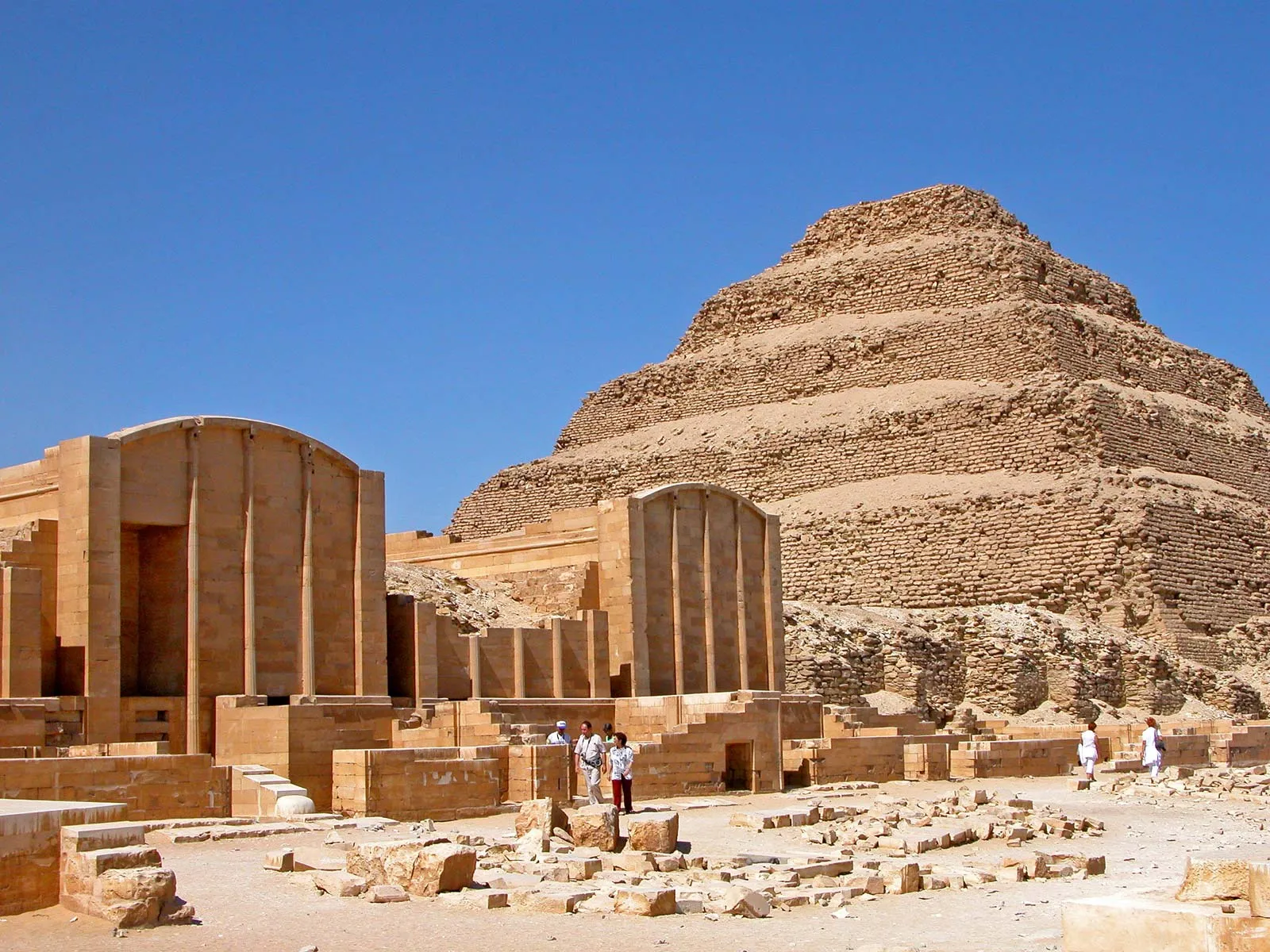
The Step Pyramid is the central landmark of Saqqara and one of the most important buildings in architectural history. The Ministry identifies it as the earliest large-scale stone pyramid complex in Egypt.
The monument was built for King Djoser of the Third Dynasty. Instead of a single rectangular mastaba, the design developed into six stacked stages, creating the stepped profile that changed royal funerary architecture.
Imhotep is traditionally associated with the design. His later reputation became extraordinary, but for visitors the most important point is simpler: the complex demonstrates a major technical and conceptual shift from earlier mastaba tombs to monumental stone pyramid construction.
What to see in the Djoser complex
The Step Pyramid is only one part of a much larger ceremonial enclosure. A good visit should also pay attention to:
- the entrance colonnade;
- the Heb-Sed courts;
- the ceremonial courtyards;
- the enclosure wall;
- the South Tomb area;
- the relationship between ritual buildings and the pyramid.
The Ministry explains that parts of the complex reproduce elements of the Sed Festival, a royal ceremony associated with renewing the king’s power. The stone architecture therefore represents not only burial but an eternal ritual landscape.
Can you enter the Step Pyramid?
Current official information lists a separate ticket for the Pyramid of Djoser. The Ministry currently publishes opening hours of 8:00 AM to 5:00 PM for the Step Pyramid complex and lists separate admission for the pyramid interior.
Interior access should never be assumed for every visitor or every date because conservation and operational conditions can change.
Enter if you are comfortable with enclosed underground spaces and want to experience the monument physically. Skip it if you have claustrophobia, mobility limitations, significant back or knee issues, or if you would rather spend your limited time exploring more of the necropolis.
Is the Step Pyramid interior worth it?
It depends on what you value. The exterior and complex explain the architectural revolution more clearly than the interior alone. The underground spaces add another layer, but they should not replace time spent understanding the overall site.
For a first-time visitor with only a few hours, the exterior complex, one or two decorated tombs and a second pyramid can often produce a more balanced visit than spending too much time underground.
The Pyramid of Unas and the Pyramid Texts
One of Saqqara’s most important later Old Kingdom monuments is the Pyramid of Unas. Its burial chamber is famous for the Pyramid Texts, among the earliest large bodies of religious writing carved inside a royal pyramid.
The texts were intended to help the deceased king reach the afterlife and join the divine world. They later influenced funerary literature used by non-royal people in subsequent periods.
For travelers interested in ancient Egyptian religion, Unas provides a completely different experience from Djoser. Djoser’s importance is architectural; Unas adds written funerary theology.
Tombs of nobles
Saqqara’s elite tombs are among the best places in Egypt to see detailed scenes of daily life. Depending on what is open and included with the ticket you choose, tombs may show agriculture, food production, fishing, craftwork, animals, offerings and family life.
These scenes are not simple photographs of everyday life. They also served religious purposes by ensuring continued provision and identity for the deceased in the afterlife.
A good guide helps distinguish documentary value from ritual meaning.
The Serapeum
The Serapeum is one of Saqqara’s most unusual monuments: an underground burial complex associated with the sacred Apis bulls.
It is known for its long subterranean galleries and massive stone sarcophagi. Access and ticketing may be separate, so confirm current availability before building your whole visit around it.
The Serapeum is especially worthwhile for repeat visitors or anyone interested in Late Period religion and animal cults.
Imhotep Museum
The Imhotep Museum at Saqqara was created in honor of the architect associated with Djoser’s pyramid complex. The Ministry describes six galleries displaying statues, coffins, stelae, vessels, architectural elements and objects from excavations at the site.
The museum is useful because Saqqara is enormous. Objects found across the necropolis can be understood more easily when displayed with context.
Saqqara is much bigger than the Step Pyramid
One of the most common mistakes is treating Saqqara as a one-monument site. In reality, it includes royal monuments and cemeteries across a very large area.
For a first visit, choose priorities such as:
- Djoser complex;
- one pyramid with Pyramid Texts;
- one or two decorated tombs;
- Imhotep Museum or Serapeum if time allows.
Trying to see everything creates a rushed experience and weakens the historical story.
How Saqqara connects to Memphis
Saqqara was one of the principal cemeteries serving ancient Memphis. The city and necropolis were part of the same wider political and religious landscape.
Memphis functioned as a major capital and religious center, while Saqqara preserved the dead. Visiting both in one day makes the relationship much clearer than treating them as unrelated attractions.
Read the dedicated Memphis Egypt travel guide for the city side of the story.
How Saqqara connects to Dahshur
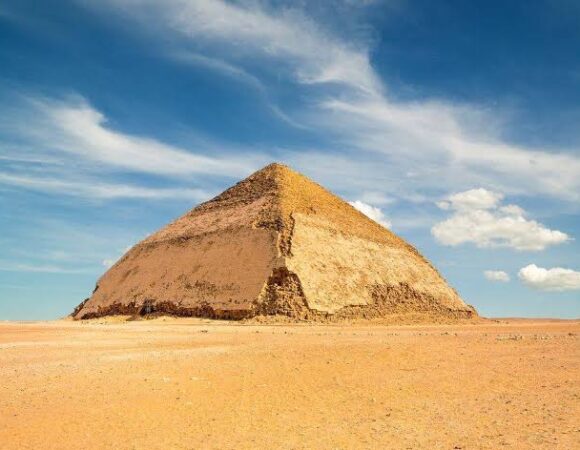
Dahshur shows the next major stage in pyramid development. At Saqqara, Djoser’s Step Pyramid introduces the monumental stacked form. At Dahshur, Sneferu’s Bent Pyramid records a major experiment in creating a true smooth-sided pyramid, and the Red Pyramid represents a successful version of that form.
This makes Saqqara + Dahshur one of the best architecture-focused day trips in Egypt.
Continue with our Dahshur Pyramids guide.
How long should you spend at Saqqara?
2 hours: only enough for Djoser and one nearby highlight.
3–4 hours: better for a first visit.
5+ hours: suitable for archaeology-focused travelers who want extra tombs, museums and pyramid interiors.
If you are combining Saqqara with Memphis and Dahshur in one day, you need to prioritize rather than treat Saqqara as a full-day site.
Current opening hours and tickets
The Ministry currently lists Saqqara’s archaeological area from 8:00 AM to 5:00 PM daily. It also lists separate tickets for some monuments, including the Step Pyramid interior.
Ticket products and prices can change. Use the official Ministry pages shortly before travel instead of relying on a copied price from an old article.
Best time of day
Morning is best, especially in warmer months. Saqqara is exposed and shade is limited.
Starting early also makes a combined Saqqara–Memphis–Dahshur day more efficient and leaves enough time for Dahshur before closing.
Best time of year
Autumn through spring generally offers more comfortable temperatures for walking. Summer visits are possible but require earlier timing, water, sun protection and realistic pacing.
What to wear
- comfortable closed shoes;
- breathable clothing;
- hat;
- sunglasses;
- sunscreen;
- light scarf for dust;
- a warmer layer in cooler winter mornings if needed.
What to bring
- water;
- personal medication;
- power bank;
- camera or phone;
- small cash;
- ticket confirmation;
- small lightweight bag.
Photography at Saqqara
The site offers strong architectural and desert compositions. Wide-angle lenses work well inside enclosed courtyards, while moderate telephoto lenses help isolate pyramid forms and tomb details from a respectful distance.
Photography rules can differ inside tombs and museums. Follow current signage and staff instructions.
Saqqara with children
Saqqara can be very engaging for children if the day is framed around simple ideas: the first pyramid, how tombs changed, what pictures tell us about ancient life and how pyramid building developed.
The main challenge is heat and walking. Keep the visit selective rather than turning it into a long list of tombs.
Older travelers and mobility
Vehicle access helps reduce walking between distant sectors, but tombs, ramps, underground chambers and uneven desert surfaces can still be difficult.
Ask the guide which monuments can be appreciated without stairs or enclosed passages. The site remains worthwhile even if pyramid interiors are skipped.
Common mistakes
Visiting only Djoser
The Step Pyramid is essential, but Saqqara’s broader value comes from its long history.
Trying to see everything
The site is too large. Prioritize.
Assuming every monument uses one ticket
Several interiors and special areas can require separate admission.
Going late in the day
You lose time for Memphis and Dahshur if combining the three.
Entering every underground space
Choose the ones that match your interests and physical comfort.
Suggested first-time itinerary
- Arrive near opening.
- Djoser entrance colonnade and Step Pyramid complex.
- Optional Step Pyramid interior.
- One decorated elite tomb.
- Pyramid of Unas or another accessible royal monument.
- Imhotep Museum if time allows.
- Continue to Memphis.
Frequently asked questions
Is Saqqara worth visiting if I already saw Giza?
Yes. Saqqara explains how pyramid architecture and royal burial traditions developed before and after Giza.
How far is Saqqara from Cairo?
The Ministry places it about 40 km southwest of Cairo. Travel time depends heavily on traffic and pickup location.
Can I enter the Step Pyramid?
Current official information lists a separate ticket for the Djoser Pyramid interior, subject to current operating conditions.
How long do I need?
Three to four hours is a good first-visit target if Saqqara is your main archaeological stop.
Can I combine Saqqara with Memphis and Dahshur?
Yes. It is one of the most logical archaeology day trips from Cairo or Giza.
Is Saqqara older than Giza?
Djoser’s Step Pyramid predates the major Fourth Dynasty pyramids at Giza.
Is Saqqara good for kids?
Yes, especially when the visit focuses on the first pyramid and visually strong tomb scenes.
Do I need a guide?
You can visit independently, but a knowledgeable Egyptologist makes the site’s chronology and large number of monuments much easier to understand.
Plan your Saqqara day
The most efficient complete route is the Saqqara, Memphis & Dahshur Day Tour. For the Giza side of pyramid history, compare the Grand Egyptian Museum & Pyramids Day Tour.
Sources and further reading